The origins of gaming-capable PCs can be traced back many decades. In the early days of home computing, computers came in limited forms; typically large towers or desktop-style PCs, with expensive components and hardware. While less capable than their modern-day equivalents, these vintage systems offered access to powerful gaming experiences. They allowed users to do everything from create rudimentary 3D graphics and sound, to launch classic arcade games from early consoles.
At the start of the 1980s, gaming PCs began to gain popularity. Computers of this era featured prominently in arcades, but they didn’t come with the same features or power as modern systems. Instead, they relied on 8-bit processors and predefined ROM chips, capable of running code at speeds of up to a half million instructions per second. While advanced for their time, these computers were no match for today’s supercharged gaming desktops.
The first gaming PC came out of IBM’s IBM PC program, released in August 1981. This computer utilized Intel 8088 chips, a processor that had 3 MHz speed and 16 kilobytes of RAM. It was the first PC to use a memory management unit, allowing for the sharing of RAM between multiple programs. In addition, it used a 5¼-inch floppy disk drive for storage and came preloaded with MS-DOS, giving users access to a more user-friendly interface than previous computers.

As the 1980s progressed, PCs grew increasingly powerful and gaming-worthy. During this period, computers were becoming more accessible, leading to the commercialization of home gaming. Games like Wolfenstein 3D and Doom were among the first to make use of the power of PCs, and later on consoles like the Nintendo Entertainment System and the Sega Master System began to rival PC gaming.
The first true gaming PC was the IBM PC/AT, released in 1984. Featuring 8-bit Intel 8086 processors running at 6 MHz and 512 kB of RAM, it was a marked improvement over the earlier PC, but still limited by comparison to modern computers. One of the biggest advances in this era was the introduction of hard drives, allowing gamers to store larger software libraries and save games.
By the 1990s, gaming PCs had settled into the role as an affordable alternative to console gaming. Some of the popular hardware of the decade included the Pentium processor from Intel, capable of running code at speeds up to 50 MHz, as well as ATI and 3DFX graphics cards, which could power advanced 3D games. These systems were the first to be truly capable of running current games, making them a popular choice for gamers who had been limited to previous consoles.
The turn of the 21st century marked a new era in PC gaming. With the introduction of powerful processors like the Intel Core series and GPUs like Nvidia’s GeForce lineup, it was now possible to run games with large-scale 3D graphics and detailed textures. Today, gaming PCs are just as capable as consoles, offering gamers access to a wide range of games with some of the best performance in the industry.
The Evolution Of The Gaming PC
The gaming PC has come a long way since its inception in the early 1980s. As hardware has developed over the years, so too have the capabilities of gaming PCs. From the early 8-bit processors of the 1980s to the incredibly powerful processors of today, the evolution of this technology has been rapid and remarkable.
In the early days of gaming, PCs relied on 8-bit processors and basic graphics chips. These systems were capable enough to run arcade-style games, and some early 3D shooters, but they couldn’t compete with the consoles of the time. The first true gaming PC, the IBM PC/AT, was a marked improvement over the earlier PC, with a faster processor, more RAM, and a hard drive, but it still couldn’t compete with today’s powerful systems.
As the 1990s saw the emergence of console gaming, the PC languished in comparison. While PCs were capable of running games, the hardware was nowhere near as powerful as that of the consoles. PCs were still limited to low-resolution graphics and two-dimensional worlds. It wasn’t until the turn of the millennium that PCs began to catch up, thanks to improvements in processor technology and graphics card design.
Today, gaming PCs are as powerful as their console counterparts, and in some cases, more powerful. With the introduction of processors like the Intel Core series and GPUs like Nvidia’s GeForce lineup, gamers now have access to high-resolution gaming experiences with dynamic lighting and detailed textures. In addition, gaming PCs are capable of running games with 4K resolution, virtual reality, and more.
The evolution of gaming PCs has been nothing short of remarkable, and it looks set to continue at a rapid pace. As hardware continues to improve and software catches up, gamers are set to experience gaming on a level never before seen.
Advantages of a Gaming PC
The advantages of gaming PCs over their console counterparts are numerous. For starters, the hardware is much more powerful; gaming PCs can run games at higher resolutions and faster frame rates than consoles. This leads to more detailed graphics, smoother gameplay, better lighting and particle effects, and larger scale environments.
In addition to its superior hardware, the PC also has a greater selection of games. Many developers release their games on multiple platforms, but many triple-A titles are exclusive to PC. This means that gamers who purchase a gaming PC have access to a much wider range of games. It also means that the PC often receives exclusive content and updates.
Another advantage of PC gaming is the ability to customize your rig. PCs are highly modular, and components can be replaced if they become outdated. This allows gamers to upgrade their hardware incrementally, rather than having to purchase an entirely new system every few years. This is something that consoles are incapable of doing.
Finally, gaming PCs are much more affordable than consoles. On top of the initial cost of the system, gamers can also purchase games without the need for shelling out for pricey discs. Online stores like Steam and Origin offer deep discounts and bundle deals, allowing gamers to get their hands on the latest games for a fraction of the cost.
Disadvantages of a Gaming PC
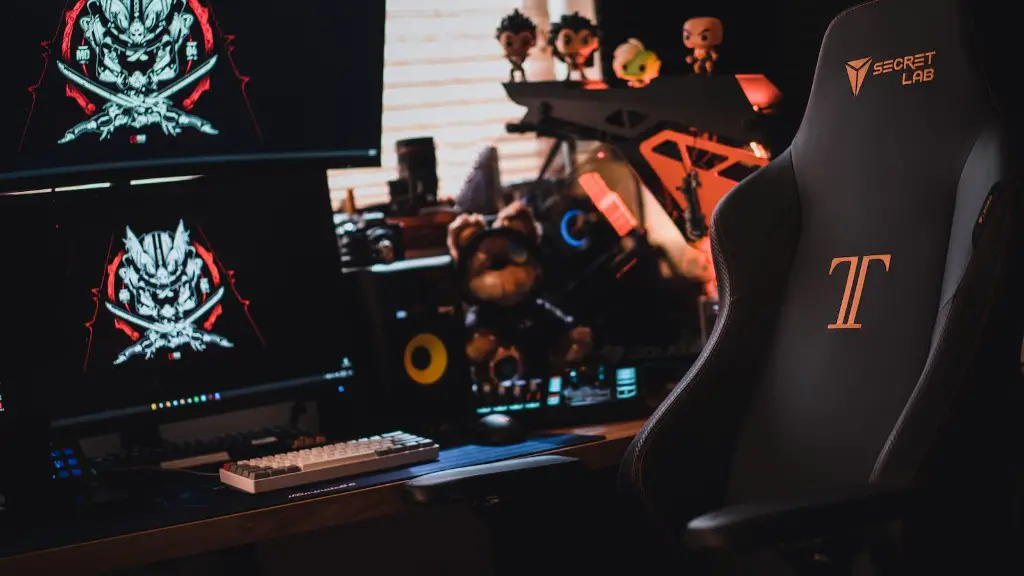
Despite the numerous advantages offered by gaming PCs over their console counterparts, there are still some significant drawbacks. The most egregious of which is the lack of dedicated hardware. PCs are not designed with gaming in mind, and as such, they lack the advanced controls, peripherals, and exclusive features that consoles have.
In addition, PCs can be more complicated to set up. Not all PCs are compatible with all games, and some require additional configuration. This can be time-consuming and frustrating, especially for players who are new to the platform.
Finally, PCs are expensive to build and maintain. They require a significant investment, both in terms of initial cost and ongoing maintenance. Not only do you have to purchase the hardware, but you also need to updates, replace components, and purchase games. All of this can add up to a considerable expense over time.
The Future Of Gaming PCs
As hardware continues to improve, so too will gaming PCs. With more powerful processors, higher resolution graphics, and increasingly sophisticated AI, the future of gaming PCs looks bright. In addition, as technology becomes more advanced, so too will the types of games we’re able to play.
VR is also set to be a major part of the future of gaming PCs. With the introduction of powerful VR headsets, gamers now have the ability to play games in a more immersive way. This technology will continue to develop over time, and we expect to see radical improvements in VR technology in the not-so-distant future.
Finally, the cloud is set to revolutionize the way we play games. This technology allows players to access streaming games from any device with an internet connection, creating an entirely new type of gaming experience. Cloud-based gaming is still in its infancy, but it has the potential to be as revolutionary as the internet itself.
Conclusion
Gaming PCs have come a long way over the past few decades. From the early 8-bit systems of the 1980s, to the powerful rigs of today, the evolution of gaming PCs has been rapid and remarkable. While gaming PCs still have their drawbacks, such as the expense of hardware and the complexity of set up, the advantages offered by PCs over their console counterparts are plentiful. And, with the introduction of technologies like VR and cloud-gaming, the future of gaming PCs looks certain to be just as exciting.
