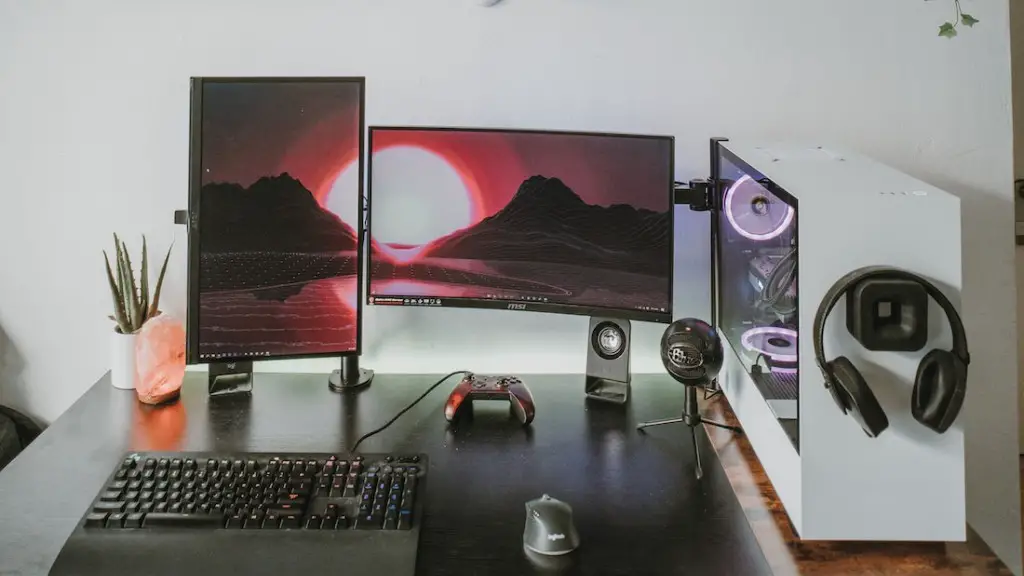
Many gamers are now debating whether a gaming laptop or a gaming PC is the better choice. Though there are several factors that come into play, this article will cover the main differences between the two and help the reader to determine which is more suitable for their needs.
A laptop, as opposed to a gaming PC, is extremely portable but usually is not as powerful, due to its smaller form factor. A laptop can be taken anywhere, making it ideal for those who need work done on the move, or for gaming tournaments or LAN parties. The trade-off is that laptops can often be more expensive and have less powerful hardware than a gaming PC.
A gaming PC boasts more powerful components than a laptop and is designed to be used at a stationery desk, making it more ideal for extended gameplay. What’s more, gaming PCs usually have better cooling systems, allowing them to handle longer gaming sessions and preventing them from overheating.
Another factor to consider is that usually, but not always, gaming PCs have the expandability to upgrade the hardware over time. This may mean that the cost of owning a gaming PC can be spread out over a period of time.
On the other hand, while gaming laptops may not be as powerful, they benefit from the convenience of portability that gaming PCs do not have.
Overall, when considering a gaming laptop or gaming PC, gamers should factor in the cost, the type of gaming they plan on doing, the power needed, and the portability.
No one type of system can easily be considered the better choice, as it depends largely on the individual’s needs.
Portability
A laptop, as compared to a gaming PC, is far more portable and can be taken anywhere, making it ideal for those who prefer to play on the go or at tournaments or travel to LAN parties. The tradeoff is that laptops are usually more expensive and are not as equipped hardware wise, when compared to a gaming PC body.
Since they are designed to be used at a stationery desk, gaming PCs boast more powerful components and a better cooling system. It must be noted that gaming PCs provide a much more suitable gaming environment, as the user is granted more luxury in terms of the size of the screen and device. The user will be able to engage in longer gaming sessions on a gaming PC since it has the advantage of being able to provide an environment that is noise free and cool.
Though laptops may lack the power of a gaming PC, they make up for this with their portability. With a laptop, its easy to take it wherever one is going and have a gaming experience regardless of location. Therefore, laptops are preferred by those who are always on the move or in different locations on a regular basis.
Upgradeability
When considering a gaming PC or laptop, upgradeability must be taken into account. Usually, but not always, gaming PCs have an ability to upgrade the hardware over time. This means that cost of owning a gaming PC can be spread out over a period of time.

On the other hand, gaming laptops usually do not come with the ability to upgrade the hardware. Therefore, it is important to purchase a laptop that has all the features you require. Additionally, gaming laptops usually come with the highest specs that can be found on a laptop, they are more expensive than mainstream laptops and they may be outdated faster than a desktop which can be repeatedly upgraded.
Ultimately, it will depend on the user’s financial situation in terms of whether a laptop or PC is the better choice as far as upgradeability goes.
Personal Preference
At the end of the day, whether one opts for a gaming laptop or gaming PC will come down to personal choice. It is important to take into account what kind of gaming you plan on doing, the power you require, and the money you are willing to spend on the device.
Portability should be an important factor in your decision, since the absolute key differentiating factor between a gaming laptop and a gaming PC is how and where you intend to use it. Additionally, you should also consider the upgradeability of the device, as this may extend its useful life.

Once all of the factors are taken into consideration, gamers can decide which type of system is the more suitable choice.
Power Differences
Though laptops are designed to be more portable, power wise they are usually not as capable as a gaming PC. Therefore, the user may sacrifice some performance if they opt for a gaming laptop. Manufacturers design gaming laptops to be powerful enough to provide a gaming experience on the go. But, due to the form factor of a laptop, the user will not be able to enjoy as powerful a gaming performance that a gaming PC that is connected to an extensive monitor can offer.
In comparison, a gaming PC is designed to be a powerful and more advanced gaming environment. Although it lacks the portability that a laptop has, many people choose to use gaming PCs due to the high power capabilities and expandability of the hardware.
Another factor to consider when looking at power differences between the two types of systems is the noise level. Gaming PCs have higher quality cooling systems that are designed to manage the high temperature of its components over long gaming sessions. This means that the user will enjoy a noiseless performance from their gaming PC. On the other hand, laptops can often be quite loud due to their smaller cooling systems and the fact that they are designed to be more portable.
Price Range

When it comes to price, gaming laptops are generally more expensive than gaming computers because of their portability. There is a wide range available for both, with various features and capabilities.
Generally speaking, gaming laptops usually start around $1000 and can easily get up to $3000 or more whereas the higher end gaming PCs cost $1700-$5000 depending on the specs. They can often be found at lower prices, but those laptops usually don’t come with the features needed for gaming.
As far as gaming PCs go, they usually cost less at around $1200 – $3000 depending on the hardware. However, they do require an additional investment in screens and other components, so including that cost, the user’s budget should be taken into account to determine which is more suitable for the specific requirements.
