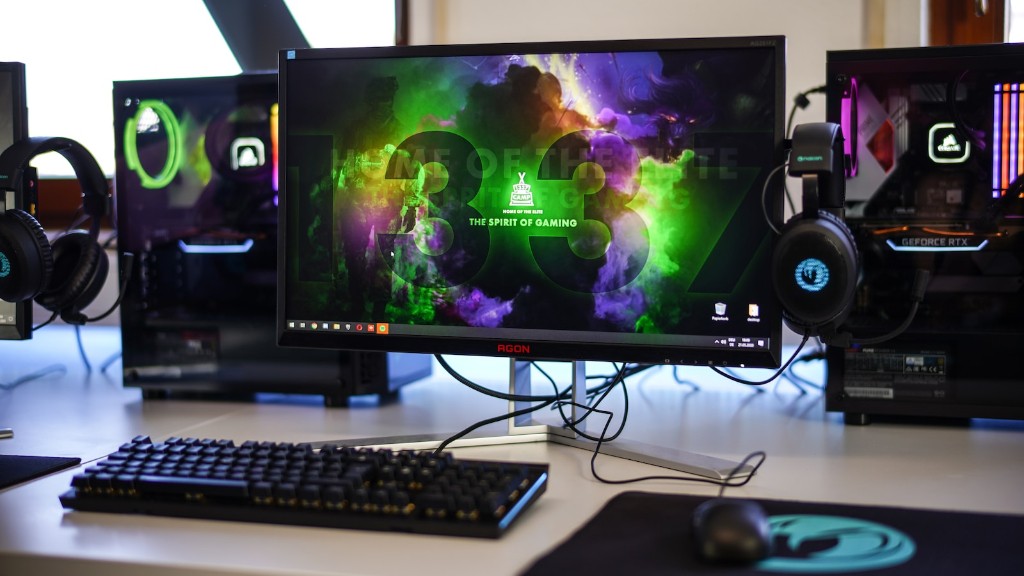
Building a gaming PC requires some technical skill and knowledge in order to ensure the best results. Firstly, the processor is the most important component for gaming. Players need to select the most powerful processor that their budget allows, since it provides the best level of performance. Secondly, an efficient power supply is critical for powering the components and maintaining reliable operation. Thirdly, an appropriate motherboard is essential for efficiently running the processor, memory and storage. Fourthly, the appropriate amount of RAM should be chosen to ensure that the games run smoothly. Fifthly, a powerful GPU can provide optimal image rendering and frame rate performance. Sixthly, varied types of storage should be included, such as an SSD for the operating system, and HDDs for games and other programs. Finally, a quality gaming case should be selected to contain all the components and aide in efficient cooling.
GPU
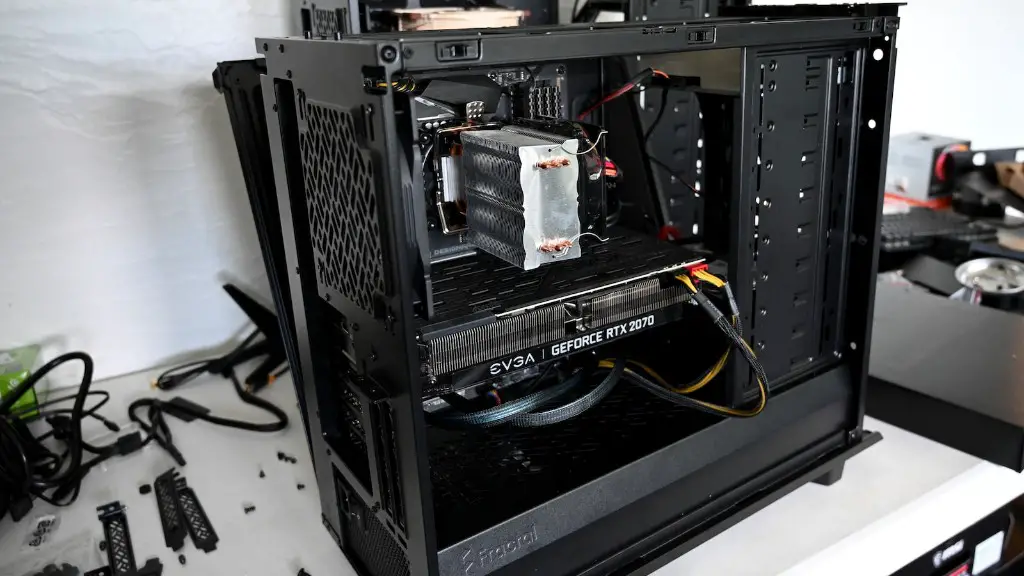
A powerful and high-quality Graphics Processing Unit (GPU) is the most important component in a gaming PC. This is the device that is responsible for rendering graphical elements on the display, and its power will determine the quality and performance of the experience provided by a gaming PC. A high-end GPU is capable of providing much higher visual fidelity and frame rates than mid-range or low-end GPUs. Additionally, the type of GPU should be selected based on the specific types of games being played. For example, a GPU intended for PC gaming should be different from a GPU intended for console gaming.
Cooling
Cooling is a critical aspect of any gaming PC build, and various components should be included to ensure efficient cooling for the processor and other sensitive components. Most gaming PCs include multiple internal fans to draw out the hot air generated by the components. Additionally, water cooling should also be considered if excessive heat is a concern. Water cooling systems can provide much more efficient cooling than fans, and they can be invaluable in helping to reduce system temperatures when coupled with quality case ventilation.
RAM
Random Access Memory (RAM) is an important component of any gaming PC build, as it determines the amount of information that can be stored in the system. Higher amounts of RAM are associated with better multitasking performance and smoother gaming performance, so it is important to choose the right amount of RAM for the intended use. Generally, RAM amounts of 8GB or higher are recommended for gaming builds, as this is sufficient for playing the majority of the current generation of games.
Power Supply
The Power Supply Unit (PSU) provides the power that is distributed to the various components in the gaming PC, and is critical for keeping the system running. A high-quality PSU should be chosen to ensure reliable operation and provide sufficient power to the components. Additionally, if the system is being built for overclocking purposes, then a higher wattage PSU may be required to ensure that the system is not overloaded.
Storage
Storage is another crucial component in any gaming PC build. Generally, two types of storage should be considered, namely Solid State Drives (SSDs) and Hard Disk Drives (HDDs). SSDs provide faster loading times, while HDDs offer higher capacity storage. An ideal situation would be to have both types of storage in order to provide the best of both worlds. Additionally, users may also want to invest in an external storage solution if they need to store large amounts of data.
Case
The result of any gaming PC build should be contained in a quality case. A well-ventilated case can make all the difference in keeping components cool and efficient. Additionally, some cases can also provide extra features such as convenient cable routing, windowed side panels, and built-in liquid cooling support. Therefore, it is important to consider various cases when selecting the overall look and feel of the gaming PC.