
It is widely debated whether a gaming PC is better than a laptop for gaming. While both options offer considerable gaming performance, the decision ultimately comes down to personal preference. Firstly, it is important to consider portability and power. Ultimately, the laptop offers more portability by nature of its mobile form factor, but it cannot match the power of a gaming desktop. Secondly, cooling performance should be taken into consideration. A gaming laptop will have much more passive cooling than its desktop counterpart, making it cool and quiet, but the fan noise can be intrusive on the desk.
Thirdly, price is another major factor. Desktops offer better value for money and the modular nature of PCs makes them much easier to upgrade. Laptops, however, can often offer a more premium experience, with workstation class CPUs and powerful dedicated graphics cards.
Fourthly, input and output configuration can also be a factor. Desktops have a much greater range of I/O options, including multiple PCI-E slots, lots of RAM and extra drive bays. Laptops, while they do offer more flexibility in terms of portability, often require additional adapters. Fifthly, upgradability should not be ignored. Many modern laptops are not easily upgradable, while desktops are simpler to upgrade, whether it’s a new GPU or extra RAM.
Finally, the form factor should be taken into consideration. Laptops offer more portability, but desktops offer more flexibility and can be placed in any location. They are much easier to get used to as well, and many gaming PC setups are now incorporated into furniture for a more immersive experience.
Power
Power is one of the most important considerations when deciding between a gaming PC and laptop. Desktops are capable of running the most powerful processors and graphics cards, while laptops have to make do with more limited hardware and limited cooling potential. While modern laptops have become more powerful, and offer dedicated GPUs, they still cannot match the sheer power of a gaming PC.
A desktop, with its more modular setup, allows for much more flexibility and upgradability. With more PCI-E slots, additional RAM and plenty of drive bays, you can easily upgrade your system when you need more power. This allows the user to have more options with regards to tweaking performance and pushing gaming potential.
A laptop, on the other hand, is bound by a more limited hardware and cooling potential. While gaming laptops can offer a powerful gaming experience, they are often expensive and limited in upgradability. This means that when you want to upgrade for more power, you are most likely stuck with the hardware that was originally in the laptop.
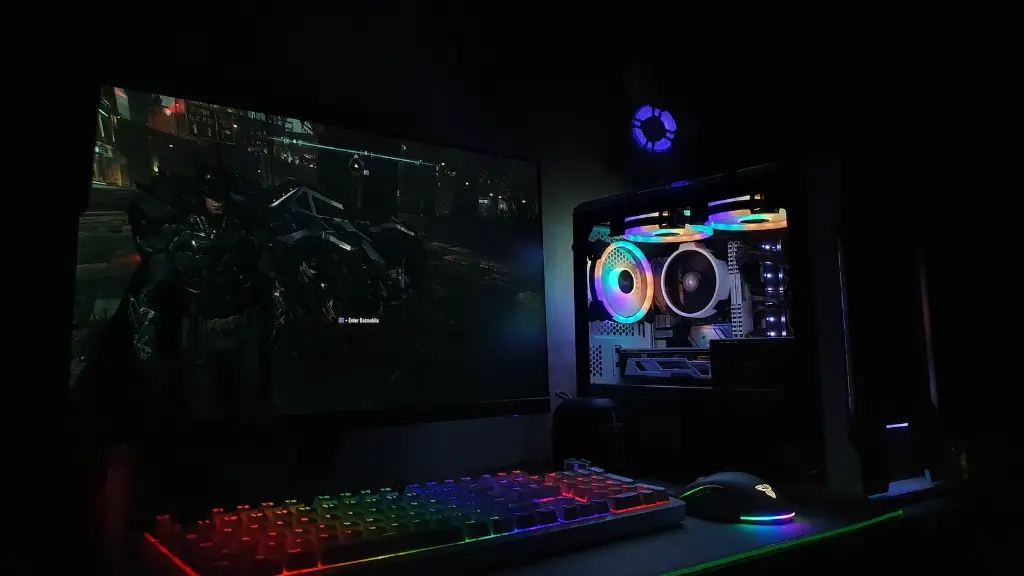
It should be noted that for those users who are primarily after portability, a laptop may be the best option. Desktops are fixed, and require more space, while laptops offer a much more portable, albeit less powerful, gaming experience.
Ultimately, however, a gaming desktop will offer more power and greater gaming potential than any laptop.
Price
The price of a gaming PC will generally be cheaper than that of a laptop, particularly when factoring in upgradability and the cost of components. Desktops are easier to upgrade at a lower cost, allowing the user to tailor the machine to their needs. This can significantly reduce the cost of buying a gaming computer in the long run.
The price of laptops, particularly gaming laptops, is generally higher due to the cost of the laptop itself and the cost of additional hardware such as processors and dedicated graphics cards. Battery life and weight also factor into the equation and can drive up the price when choosing a laptop.
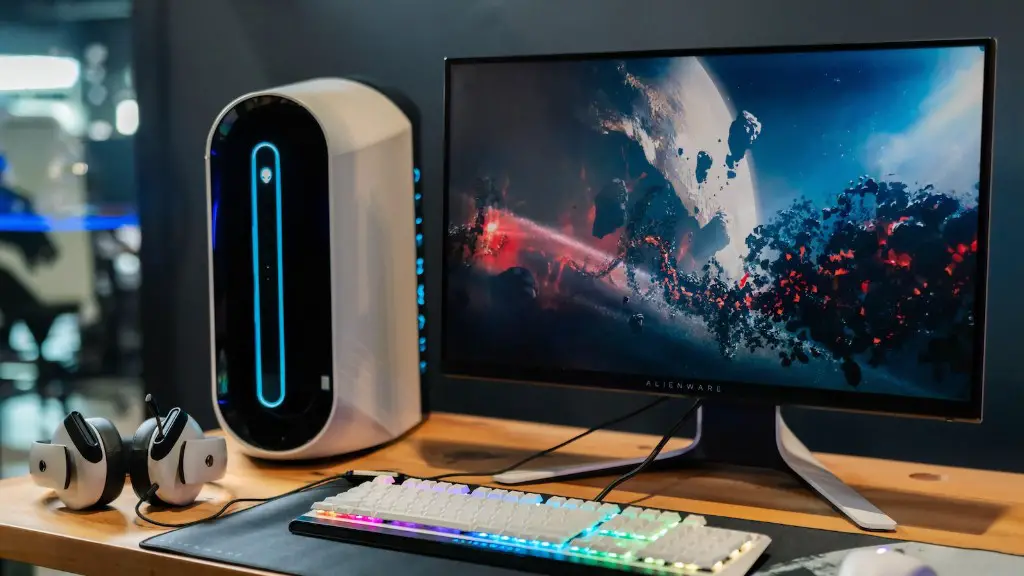
When taking into account the cost of components and upgradability, as well as the amount of space required for a desktop, desktops provide much better value for money. They offer more flexibility in terms of configuring a system, as well as being easier to upgrade.
That said, for those who truly want the added convenience and portability of a laptop, the cost may be worth it depending on the user’s needs.
Input and Output
When comparing gaming PCs and laptops, input and output configuration should also be taken into consideration. Desktops offer a wide range of I/O options, including multiple PCI-E slots, lots of RAM, and extra drive bays. This allows gamers to configure the system to their own requirements, with more flexibility and performance.
Laptops, on the other hand, require additional adapters if using dedicated graphics cards. They are also limited by their form factor, and thus cannot offer the same degree of customizability or flexibility that desktops can.

Additionally, desktop PCs offer external I/O options such as multiple video outputs and high-end audio solutions, which laptops simply cannot match. This is not necessarily a major consideration for many gamers, but it should be considered if you plan to use external monitors or high-end audio solutions.
In terms of power and upgradability, desktops offer much more flexibility and value for money than laptops, and thus make for a better choice when it comes to configuring an optimal gaming experience.
Form Factor
The form factor of a gaming PC or laptop is also something to consider. Desktops allow for a larger, more immersive gaming experience, but can take up more room than a laptop. Laptops, on the other hand, are much more portable and can be taken on the go. They also often offer a more premium experience, with advanced hardware and components.
Desktops are often easier to get used to than laptops, as the setup is more familiar and streamlined. Additionally, many modern gaming PC setups are now incorporated into furniture, allowing for an even more immersive experience. It should be noted, however, that desktops are not as easily moved around, and may require more permanent space.
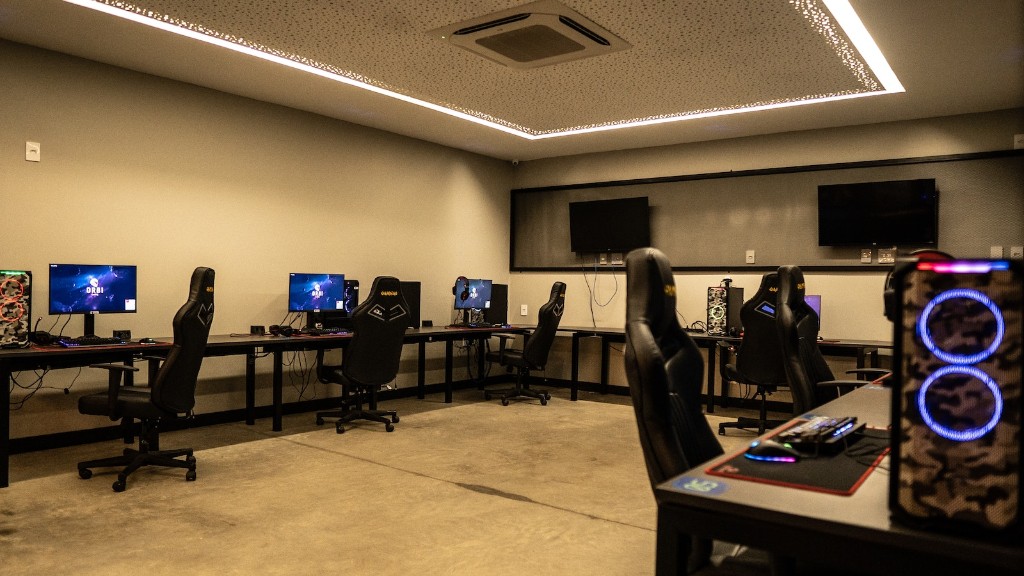
Ultimately, the choice of form factor is dependent on the user’s needs and preferences. Desktops offer more flexibility and value, while laptops provide more portability and a more premium experience.
Cooling Performance
Cooling performance should also be taken into consideration when deciding between a gaming PC and laptop. Desktops generally have more powerful fans and air-cooling solutions, but this also can mean more noise from the fans. Desktops also require more space to dissipate the heat, and may need additional fans for better cooling.
Laptops, on the other hand, offer passive cooling and are much quieter, but the hardware is limited in terms of cooling potential. This can mean that laptops can overheat during periods of intense gaming, which can cause performance issues or even damage the hardware.
It should also be noted that laptops often require more frequent maintenance, as the hardware and fans can become clogged with dust and dirt more easily. Desktops, however, can have larger fans and better air-cooling solutions, thus providing better overall cooling performance.
In summary, cooling performance should be taken into consideration when deciding between a gaming PC and laptop. Desktops offer better cooling performance, but laptops can offer better portability and a more premium experience.
Conclusion
When it comes to gaming, both gaming PCs and laptops offer considerable performance, but the decision ultimately comes down to personal preference. Desktops offer better power and value for money, while laptops can offer more portability and a more premium experience. Cooling performance should also be taken into consideration, as desktops provide better cooling potential but laptops offer quieter operation.