Every serious gamer who wants to take gaming to the next level should be looking for the best gaming PC out there. But what is “the best?” That’s a subjective term, and the answer is going to depend on the individual who’s asking it. Here are the key variables to consider when shopping for the best gaming PC.
Firstly, budget. How much money can you spend on your new gaming PC? Set a budget and stick to it. If you want the very best out there, you’re probably looking at shelling out more money than you might be comfortable with. That’s why it’s important to decide on a budget ahead of time.
Next is performance. This is a tough one, since there is no single best answer that applies to everyone. You’ll need to find the balance between cost and performance. In general, more powerful CPUs and GPUs tend to result in better performance, but this also depends on the game you’re playing and the other pieces of hardware in your system.
Thirdly, build quality. Building a gaming PC means choosing components that are well-made and durable. This means spending extra for high-end parts that will hold up to the stress of gaming over an extended period of time. The more you can invest in building a machine that will last, the better.
Fourthly, connectivity. You’ll need to make sure that your gaming PC has enough ports and connections to support the games and peripherals you plan on using. Make sure that the motherboard and graphics card you choose can handle the number and kind of devices you’re planning to attach to your system.
Finally, upgradability. This is especially important if you plan on gaming intensively in the future. You should try to find parts that you can upgrade as time goes on, or pick a system that is easy to upgrade.
Choosing a CPU
When it comes to choosing the best CPU for gaming, the most powerful one for your budget is the way to go. The latest Intel and AMD CPUs offer more power and efficiency than older models, making them well-suited to gaming. When shopping for a processor, pay particular attention to the number of cores, thread count, and the clock speed. This will give you an idea of how powerful the CPU is and how well it will run the games you want to play.
Another thing to consider is the size of the CPU. Processors come in a variety of sizes, from the large, bulky desktop models to the more compact laptop and mini-PC variants. The larger ones tend to offer more power, but the smaller models are often more portable and require less power.
It’s also important to check what kind of technology the CPU uses. The latest Intel CPUs use Hyper-Threading technology, while AMD CPUs use Simultaneous Multi-threading (SMT) technology. Both of these technologies offer better performance and better gaming, so if you plan to play the latest and greatest games, you’ll want a CPU that supports either Hyper-Threading or SMT.
Finally, look at the cost of the CPU. While more powerful CPUs tend to be more expensive, you should still be able to find a good deal if you shop around. Be sure to read reviews, compare prices, and make sure that you’re buying a CPU that will give you the performance you want for the price you’re willing to pay.
Choosing a Graphics Card
The graphics card is the centerpiece of any gaming PC, so it pays to invest in a good one. The key question is: how powerful of a graphics card do you need? This will depend on your budget and the games you plan on playing. When shopping for a graphics card, check the card’s memory, clock speed, and number of cores.
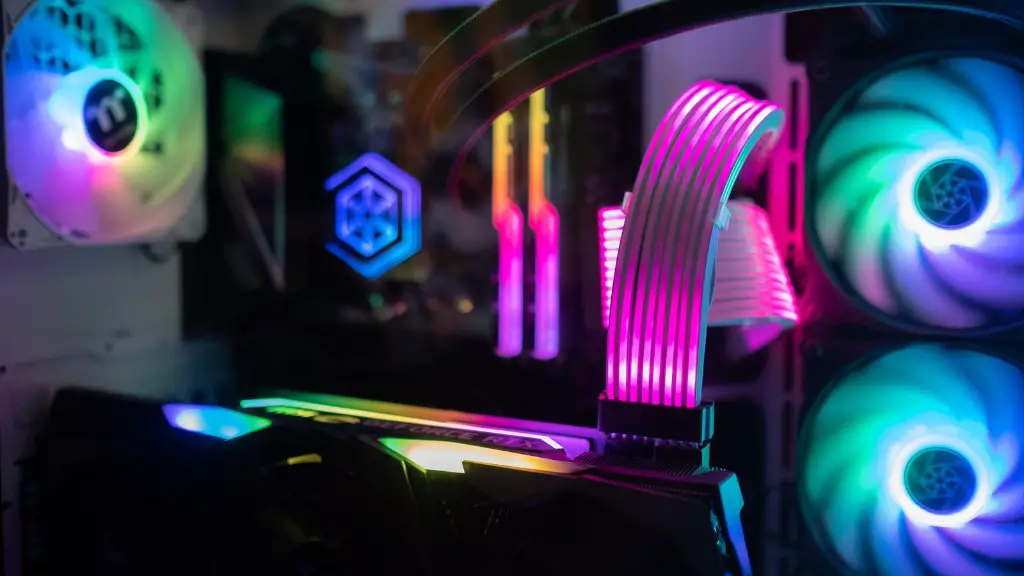
You should also look for features like HDR and FreeSync. HDR can make your games look more vivid and realistic, while FreeSync helps reduce screen tearing. Many graphics cards also come with accessories like RGB lighting, which can give your PC a unique look.
It’s also important to look at the ports and connections. Are there enough ports and connections to support the games and peripherals you plan on using? Some graphics cards also come with their own USB ports, which can be handy for adding extra peripherals.
Finally, factor in the cost. Graphics cards can be very expensive, so it’s important to find one that fits within your budget. Be sure to read reviews, compare prices, and make sure that you’re getting a graphics card that will give you the performance you want for the price you’re willing to pay.
Choosing a Motherboard
The motherboard is the backbone of your gaming PC, so it pays to invest in a good one. Look for a motherboard with support for the latest processors and components. This means looking for features like PCI Express 4.0, USB 3.1, high RAM capacity, and support for multiple graphics cards.
It’s also important to look at the number of ports and connections. You’ll need to make sure that your motherboard has enough ports and connections to support all the games and peripherals you plan on using. Make sure that your motherboard can handle the number and type of devices you plan to attach to your system.
When it comes to price, motherboards can vary significantly in price. You should try to find one that fits within your budget, but without sacrificing features or performance. Be sure to compare prices and read reviews to make sure that you’re getting a motherboard that will give you the performance you need for the price you’re willing to pay.
Choosing an SSD and HDD
When it comes to storage, most gamers opt for a combination of a solid state drive (SSD) and a hard disk drive (HDD). The SSD is the faster of the two, offering faster load times and improved performance in games. The HDD is the slower of the two, but offers more storage space for those who need it. It’s important to choose an SSD and HDD that fit your budget and offer the speed and storage you need.
It’s also important to look at the ports and connections. Check that the SSD and HDD you choose have enough ports and connections to support the peripherals you plan to use. Make sure that the drives you choose are compatible with your motherboard, too.
Finally, factor in the cost. SSDs and HDDs can be expensive, especially if you need a large amount of storage. Be sure to read reviews, compare prices, and make sure that you’re getting drives that will give you the performance you want for the price you’re willing to pay.
Putting It All Together
Once you’ve chosen all the components for your gaming PC, it’s time to put it all together. This can be a daunting task if you’re not familiar with building computers, so it’s a good idea to read up on some tutorials and practice on an old PC before tackling your gaming PC.
It’s important to be careful when assembling your gaming PC, as a misstep can cause permanent damage to the components. Make sure that all of your components are compatible and that you’ve chosen the right cables and connectors for the job. If you don’t feel confident about building the PC yourself, consider hiring a professional to do it for you.
Once you’ve put your gaming PC together, it’s time to enjoy the fruits of your labour. Fire it up, install some games, and get ready to play. Your new gaming PC should give you years of gaming pleasure, and if you decide to upgrade it in the future, you should be able to do it without too much trouble.