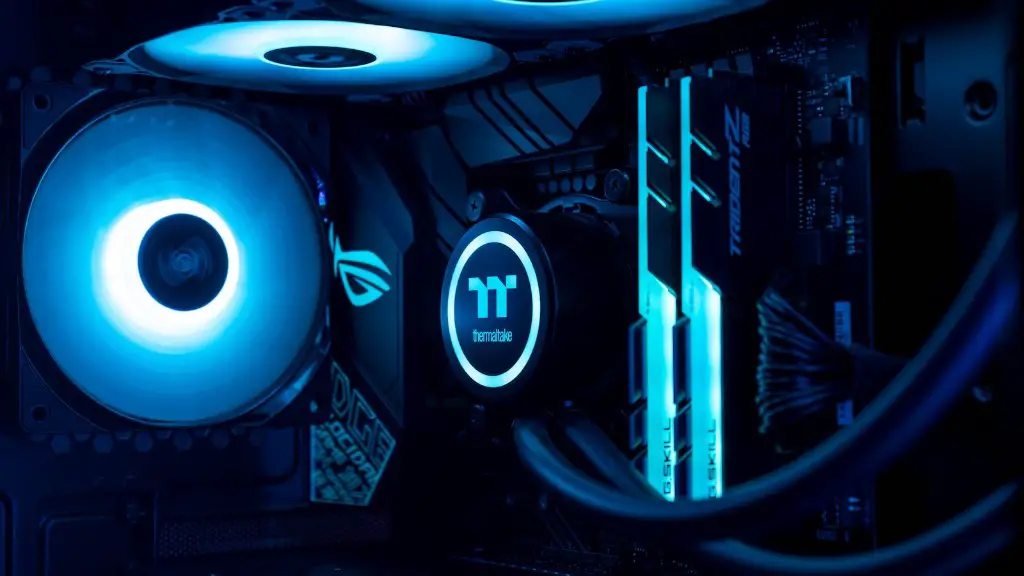
<p>The question of how many amps a gaming PC draws has become increasingly important as more and more people use gaming PCs for their entertainment or professional needs. To put it simply, the amount of amperage a gaming PC draws depends on the wattage of the parts that make up the PC. Generally speaking a gaming PC will draw anywhere from 20 to 55 amps depending on the size of the computer, its processing power and what components are included in the build.</p>
<p>For an accurate calculation of how many amps a gaming PC draws, one needs to determine the power consumption of each component. This can be done by looking at the product specification or doing an online search for the wattage of the part. Once one has collected the wattage of each component, the end wattage of the computer is just the sum of all those wattages.</p>
<p>Then, the total wattage of the gaming PC must be converted to amps. To do this, one might need to use a power supply calculator, which can be found online. This calculator can input the wattage of the PC and then automatically determine the amperage draw. Generally, one should err on the side of caution when calculating the amperage draw of a gaming PC, as it can be dangerous to have too few amps running through the power supply.</p>
<p>Another important factor to consider when calculating the amperage draw of a gaming PC is the type of power supply and the voltage. A gaming PC may draw more or less amperage based on the type of power supply used. For example, a gaming PC with a 220V power supply may draw less amperage than one with a 120V power supply.</p>
<p>It is also important to note that the wattage and amperage draw of a gaming PC can vary due to overclocking and other settings. To ensure that a gaming PC has the correct wattage and amperage draw, one should always double check the wattage and amperage draw of their PC by doing an electrical test.</p>
<h2>Power Supplies</h2>
<p>When building a gaming PC, the power supply is as equally important as the other components as it determines how much power is available. If a power supply does not supply enough wattage or amperage, it may lead to system instability or other issues such as underperforming components.</p>
<p>There are a few considerations to take into account when selecting a power supply. The first is the wattage of the power supply, which should be sufficient for the parts it is powering. As a rule of thumb, it is recommended to have a power supply rated for one and half times the total wattage of all of the parts.</p>
<p>The second consideration should be the type of power supply. For gaming PCs, one should opt for a modular power supply. Modular power supplies are more efficient and provide more flexibility in where you can place your components, as they come with all the cables and connectors you need, and the unused cables can be removed.</p>
<p>Finally, it is important to purchase a power supply with a sufficient amperage rating. For a gaming PC, at least 55 amps should be sufficient, but if one is overclocking or using multiple GPUs, a higher rating may be necessary.</p>
<h2>Advantages of Power Supplies</h2>
<p>Power supplies are important for gaming PCs for a number of reasons. The most important is stability and reliable performance. With the correct amperage drawn, a gaming PC is able to operate reliably and perform as expected under high loads.</p>
<p>Power supply units can also help conserve energy and reduce electricity costs. PSU’s typically come with manual wattage and amperage ratings, meaning they can be adjusted according to the system’s power demands. This allows the user to save money on electricity by manually setting the PSU’s wattage and amperage ratings lower than their maximum capacities.</p>
<p>One of the most overlooked advantages of a power supply is longer component life. As mentioned earlier, incorrect amperage can be dangerous for a gaming PC, as sudden power surges or drops can cause damage to components. By utilizing a power supply with the correct amperage rating, the longevity of the components is increased and the risk of component failure is reduced.</p>
<p>Finally, having the correct amperage draw can also help with cooling. The more amperage drawn, the more heat generated in the system, resulting in warmer components and noisier fans. By having a sufficient amperage draw, components can be kept cooler and the fans can run more quietly.</p>
<h2>Calculating Amps</h2>
<p>In order to accurately calculate the amperage draw of a gaming PC, one needs to know the wattage of each component as well as the type of power supply in use. This can be done through a power supply calculator, which can be found online, or by using a multimeter.</p>
<p>When using a power supply calculator, one can input the wattage of all their components, as well as the type of power supply and voltage in use, and the calculator will automatically determine the amperage. This is the most efficient way to calculate the amperage draw of a gaming PC.</p>
<p>Multimeters, however, can also be used to calculate amperage. This method involves manually analyzing the power supply and components with the device and manually calculating the amperage. This is a more precise and accurate way to do the calculation, but is more time consuming and can be dangerous if done incorrectly.</p>
<h2>Considerations</h2>
<p>When calculating the amperage draw of a gaming PC, there are a few considerations to keep in mind. Cables should be long enough to reach all the components, but should not be too long, as this can lead to voltage drops and an inaccurate amperage draw.</p>
<p>Overclocking can also have an impact on the power consumption of the system, and should be taken into account when calculating the amperage draw. Additionally, any manual ‘undervolt’ settings, such as those used to reduce the power consumption of GPUs, should also be taken into consideration.</p>
<p>Finally, one must consider the power distribution in the system. A gaming PC with multiple GPUs can draw more power than one with a single GPU, as the power is split among the GPUs. It is essential to keep these subtle differences in mind when calculating the amperage draw of a gaming PC.</p>
<h2>Testing</h2>
<p>After calculating the amperage draw of a gaming PC, it is important to make sure that it is sufficiently powered. This can be done through an electrical test using a multimeter or a power supply tester.</p>
<p>It is also important to carry out a stress test after building the PC. This test can be used to identify any potential power supply or component issues, as well as to accurately determine the power consumption of the PC. Doing this can help avoid future issues or component failure.</p>
<p>Finally, it is important to periodically check the amperage draw of the system to ensure that it is still sufficiently powered. This can be done through a power supply calculator or a multimeter, and can help identify any potential problems before they become more serious.</p>
<p>For an accurate calculation of how many amps a gaming PC draws, one needs to determine the power consumption of each component. This can be done by looking at the product specification or doing an online search for the wattage of the part. Once one has collected the wattage of each component, the end wattage of the computer is just the sum of all those wattages.</p>
<p>Then, the total wattage of the gaming PC must be converted to amps. To do this, one might need to use a power supply calculator, which can be found online. This calculator can input the wattage of the PC and then automatically determine the amperage draw. Generally, one should err on the side of caution when calculating the amperage draw of a gaming PC, as it can be dangerous to have too few amps running through the power supply.</p>
<p>Another important factor to consider when calculating the amperage draw of a gaming PC is the type of power supply and the voltage. A gaming PC may draw more or less amperage based on the type of power supply used. For example, a gaming PC with a 220V power supply may draw less amperage than one with a 120V power supply.</p>
<p>It is also important to note that the wattage and amperage draw of a gaming PC can vary due to overclocking and other settings. To ensure that a gaming PC has the correct wattage and amperage draw, one should always double check the wattage and amperage draw of their PC by doing an electrical test.</p>
<h2>Power Supplies</h2>
<p>When building a gaming PC, the power supply is as equally important as the other components as it determines how much power is available. If a power supply does not supply enough wattage or amperage, it may lead to system instability or other issues such as underperforming components.</p>
<p>There are a few considerations to take into account when selecting a power supply. The first is the wattage of the power supply, which should be sufficient for the parts it is powering. As a rule of thumb, it is recommended to have a power supply rated for one and half times the total wattage of all of the parts.</p>
<p>The second consideration should be the type of power supply. For gaming PCs, one should opt for a modular power supply. Modular power supplies are more efficient and provide more flexibility in where you can place your components, as they come with all the cables and connectors you need, and the unused cables can be removed.</p>
<p>Finally, it is important to purchase a power supply with a sufficient amperage rating. For a gaming PC, at least 55 amps should be sufficient, but if one is overclocking or using multiple GPUs, a higher rating may be necessary.</p>
<h2>Advantages of Power Supplies</h2>
<p>Power supplies are important for gaming PCs for a number of reasons. The most important is stability and reliable performance. With the correct amperage drawn, a gaming PC is able to operate reliably and perform as expected under high loads.</p>
<p>Power supply units can also help conserve energy and reduce electricity costs. PSU’s typically come with manual wattage and amperage ratings, meaning they can be adjusted according to the system’s power demands. This allows the user to save money on electricity by manually setting the PSU’s wattage and amperage ratings lower than their maximum capacities.</p>
<p>One of the most overlooked advantages of a power supply is longer component life. As mentioned earlier, incorrect amperage can be dangerous for a gaming PC, as sudden power surges or drops can cause damage to components. By utilizing a power supply with the correct amperage rating, the longevity of the components is increased and the risk of component failure is reduced.</p>
<p>Finally, having the correct amperage draw can also help with cooling. The more amperage drawn, the more heat generated in the system, resulting in warmer components and noisier fans. By having a sufficient amperage draw, components can be kept cooler and the fans can run more quietly.</p>
<h2>Calculating Amps</h2>
<p>In order to accurately calculate the amperage draw of a gaming PC, one needs to know the wattage of each component as well as the type of power supply in use. This can be done through a power supply calculator, which can be found online, or by using a multimeter.</p>
<p>When using a power supply calculator, one can input the wattage of all their components, as well as the type of power supply and voltage in use, and the calculator will automatically determine the amperage. This is the most efficient way to calculate the amperage draw of a gaming PC.</p>
<p>Multimeters, however, can also be used to calculate amperage. This method involves manually analyzing the power supply and components with the device and manually calculating the amperage. This is a more precise and accurate way to do the calculation, but is more time consuming and can be dangerous if done incorrectly.</p>
<h2>Considerations</h2>
<p>When calculating the amperage draw of a gaming PC, there are a few considerations to keep in mind. Cables should be long enough to reach all the components, but should not be too long, as this can lead to voltage drops and an inaccurate amperage draw.</p>
<p>Overclocking can also have an impact on the power consumption of the system, and should be taken into account when calculating the amperage draw. Additionally, any manual ‘undervolt’ settings, such as those used to reduce the power consumption of GPUs, should also be taken into consideration.</p>
<p>Finally, one must consider the power distribution in the system. A gaming PC with multiple GPUs can draw more power than one with a single GPU, as the power is split among the GPUs. It is essential to keep these subtle differences in mind when calculating the amperage draw of a gaming PC.</p>
<h2>Testing</h2>
<p>After calculating the amperage draw of a gaming PC, it is important to make sure that it is sufficiently powered. This can be done through an electrical test using a multimeter or a power supply tester.</p>
<p>It is also important to carry out a stress test after building the PC. This test can be used to identify any potential power supply or component issues, as well as to accurately determine the power consumption of the PC. Doing this can help avoid future issues or component failure.</p>
<p>Finally, it is important to periodically check the amperage draw of the system to ensure that it is still sufficiently powered. This can be done through a power supply calculator or a multimeter, and can help identify any potential problems before they become more serious.</p>