A good CPU is essential for a high-performance gaming PC. It needs to be powerful enough to provide your PC with the muscle to handle high-end gaming titles and intensive applications. Modern CPUs offer considerable leaps in performance and today’s gaming CPUs can also be heavily overclocked, providing even greater levels of processing power.
Choosing the right CPU for a gaming PC requires an understanding of processing power, clock speed, cores and threads, and which ones offer the best performance at the right price. Intel’s current gaming processors include the Intel Core i9-10900K, i7-10700K, and i5-10600K.
The i9-10900K is Intel’s flagship gaming CPU and its 10 cores, 20 threads and 5.3GHz max clock make it one of the fastest processors available today. It can be overclocked up to an outstanding 5.3GHz, allowing you to push your gaming PC to its limits. Of course, you’ll also need a beefy power supply unit (PSU) capable of providing enough wattage to support the overclocked CPU.
Meanwhile, the i7-10700K is the middle tier model and it comes with 8 cores and 16 threads, with a base clock of 3.8GHz and max clock of 5.1GHz. While it’s slightly slower than the i9-10900K, it is significantly cheaper and represents excellent value for money. Finally, the i5-10600K is the last of Intel’s offerings. It offers 6 cores and 12 threads, with a base clock of 4.1GHz and max clock of 4.8GHz.
Overall, if you’re looking for the best gaming CPU for your budget, then the Intel Core i7-10700K is hard to beat. It offers a great balance between price and performance, and its 8 cores and 16 threads make it ideal for gaming and multimedia tasks. Additionally, it can easily be overclocked to increase its performance even further.
However, if you have a larger budget and want the best possible performance, then you should opt for the Intel Core i9-10900K. It is the fastest processor available and can power even the most demanding gaming titles. Moreover, its support for overclocking, as well as its 10 cores and 20 threads make it an excellent choice for a gaming PC.
Difference in Gaming Performance of CPUs
When it comes to gaming performance, the difference in how the various CPUs perform is minimal. However, there are some differences, some of which may be noticeable and some that may not be. For example, the i7-10700K has 8 cores and 16 threads, making it better for multitasking and more intensive applications, while the i5-10600K has 6 cores and 12 threads, and is better for gaming only.
In terms of frame-rates, the i9-10900K can easily reach frame-rates of over 100 fps on the highest settings in most modern games, while the i7-10700K can reach frame-rates in the low 90s. The i5-10600K can still manage a respectable frame-rate in the mid-80s, and it can easily handle most games at high settings. Ultimately, the frame-rate differences between the CPUs are minimal.
All three CPUs also feature Intel’s integrated graphics, which should be enough to run most modern games at low settings and 1080p resolution. The i9-10900K offers better performance than the i7-10700K, which offers slightly better performance than the i5-10600K. However, all three are more than capable of running most games at low settings.
Overall, if your budget and needs are relatively modest – say for casual gaming – then the i5-10600K is a good choice. However, if you want the best gaming performance then the i9-10900K is the one to go for. Moreover, all three CPUs are surprisingly capable when it comes to overclocking, so you can easily push them to their limits.
Difference in PC Components
In addition to picking the right CPU, your PC’s other components – such as its motherboard, RAM, and graphics card – need to be chosen carefully in order to get the best gaming performance. The motherboard should be of a size and type compatible with the CPU – such as an ATX or mATX motherboard – and have sufficient RAM slots, storage connectors, and ports to ensure your computer has enough space to accommodate all your peripheral devices. In addition, it should be able to provide enough power for your CPU.
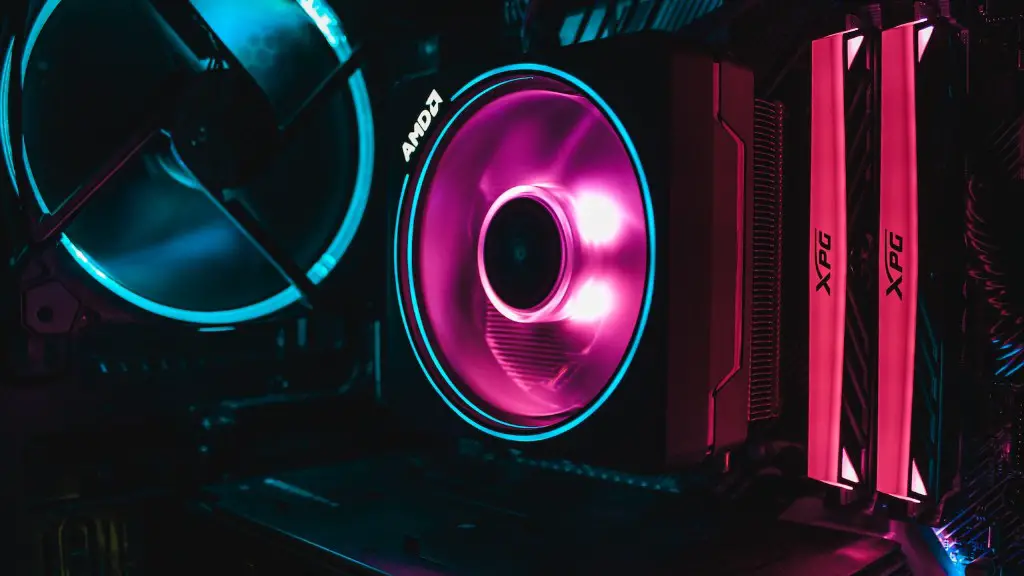
In terms of RAM, it’s important to pick a type that’s compatible with your motherboard and processor. For the best gaming performance, you’ll want at least 8 GB of RAM, although 16 GB is preferable. DDR4 RAM is the most common type these days and you should look for RAM that runs at 2666MHz or higher.
The graphics card you choose should also be powerful enough to run the games you’re keen on playing. For example, if you want to play modern titles at high settings, you’ll need a high-end graphics card with 4GB or more of dedicated video memory. If you’re looking to play older or less demanding titles at lower settings, then a mid-range graphics card should do the job.
In terms of the power supply unit, it should be strong enough to meet your system’s power needs, including providing enough wattage for your CPU and graphics card. If you plan to overclock, you should opt for a higher wattage PSU, as overclocking increases the power draw of your components. A high-quality power supply is also recommended for systems containing components with high wattage requirements, such as the Intel Core i9-10900K.
In general, your gaming PC’s other components should support and complement the performance of your chosen CPU. For example, if you opt for the powerful Intel Core i9-10900K CPU, then you’ll need to pick other components that can keep up with it, such as a beefy power supply and high-end graphics card.
Considerations When Choosing a CPU
When choosing a CPU for a gaming PC, there are several factors to consider. Firstly, it’s important to consider your budget and how much you are able to spend on the CPU. If you have a more limited budget, then the Intel Core i5-10600K or i7-10700K are good choices, offering excellent performance and value for money. However, if you’re looking for the highest level of performance, then the Intel Core i9-10900K is the best choice.
Secondly, you should also consider your other components, as the CPU cannot perform on its own. You should pick components that are compatible and powerful enough to provide your PC with a balanced system that is optimized for gaming. Lastly, it’s important to consider overclocking, as this can help to boost the performance of your CPU and other components. If you plan to overclock, then it’s important to have a powerful PSU in order to provide your components with enough power.
Alternative CPUs
Intel’s gaming CPUs are excellent in terms of performance, but they are also quite pricey. AMD’s Ryzen series are also excellent choices and can be much more affordable. For example, the Ryzen 5 5600X offers 6 cores and 12 threads, with a base clock of 3.7GHz and max clock of 4.6GHz. It also comes with with AMD’s Wraith Stealth cooler.
Meanwhile, the Ryzen 7 5800X provides 8 cores and 16 threads, with a base clock of 3.8GHz and max clock of 4.7GHz. Finally, the Ryzen 9 5900X offers 12 cores and 24 threads, with a base clock of 3.7GHz and max clock of 4.8GHz. All three CPUs feature AMD’s cooling solutions and are ideal for gaming PCs.
Overall, AMD’s Ryzen series offer good performance, excellent value for money, and good support for overclocking. While they are not as powerful as Intel’s higher-end CPUs, they are still more than capable of powering a high-end gaming PC. Moreover, they offer good cooling solutions and should provide you with plenty of performance.
Cooling and Thermal Performance
Cooling is an essential part of any PC, as it helps to keep your components cool and running at optimal temperatures. When it comes to cooling, both AMD’s and Intel’s CPUs come with cooling solutions. For example, Intel’s i9-10900K comes with the Wraith Prism cooler, which is an effective cooler for mild overclocking. Meanwhile, AMD’s Ryzen 5 5600X comes with AMD’s Wraith Stealth cooler.
In terms of thermal performance, Intel’s i9-10900K is the clear winner. It has a higher thermal limit than AMD’s Ryzen 5 5600X, meaning it can be overclocked more aggressively without throttling. Additionally, the included Wraith Prism cooler does an excellent job of keeping the CPU cool, even when heavily overclocked.
Overall, both Intel’s and AMD’s CPUs offer good cooling solutions and their thermal performance is good enough for mild overclocking. However, if you plan to push your CPU to its limits with aggressive overclocking, then Intel’s i9-10900K is the better choice, as it has a higher thermal limit than AMD’s CPUs.
