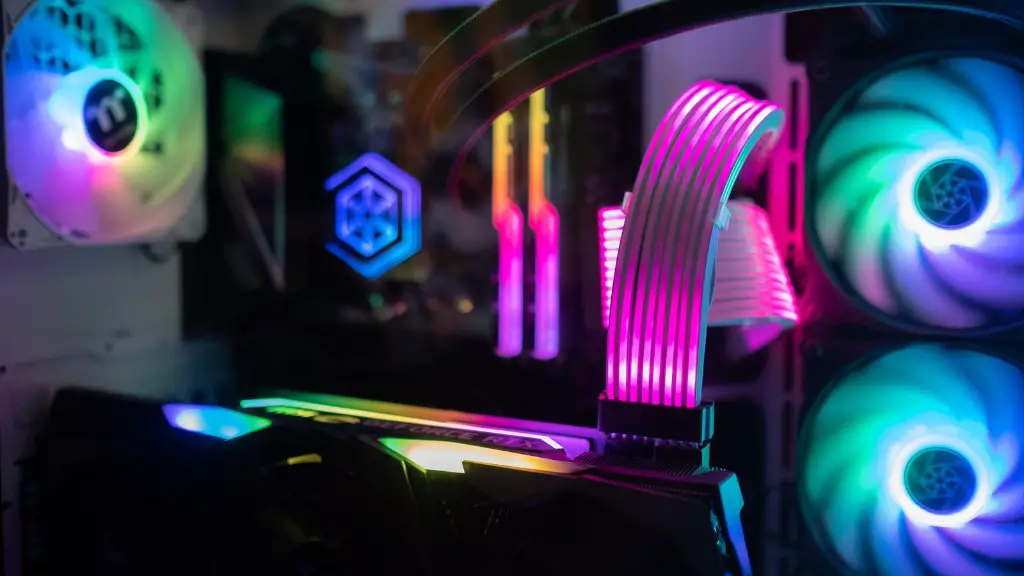
When building a gaming PC, one of the most important components is the power supply – also known as a PSU. It’s responsible for supplying power to all the computer’s hardware, so it’s essential to get one that’s powerful enough, reliable and efficient. In this article, we’ll cover the important elements of the PSU and what to consider when buying one for your gaming PC.
The first thing to look out for is the wattage. The number of watts is an indication of how much power the PSU can supply to all the hardware components. A higher wattage means you can attach more hardware, such as higher-spec graphics cards, extra drives, and more cooling systems. Typically, the power supply needs to be at least 500 watts for a decent gaming PC.
As well as wattage, it’s also important to think about the efficiency rating of the PSU. An efficiency rating of 80 Plus Gold means the PSU is incredibly efficient, as it only loses 20% of the electricity it receives from the mains. This can also save on electricity costs over time.
It’s important to take into account the physical size of the PSU. Some cases have limited internal space for a PSU, so make sure yours fits in the available space. It’s also important to think about the type of connectors it has, as you need them to be compatible with the hardware. Lastly, you need to decide if you want a modular or non-modular PSU.
Modular PSUs have their cables connected separately, so you can remove them when not needed. This keeps things neat and tidy inside the PC case, as you’re only connecting the cables you actually need. Alternatively, non-modular PSUs have all the cables wire-tied together, so there’s no flexiblity in terms of cabling.
There are many things to consider when choosing a PSU for a gaming PC, but as long as you do your research and check the wattage, efficiency rating, size, connectors and modularity, you can’t go wrong. With these factors in mind, you can be sure that your gaming PC’s power supply will be up to the job.
Power Supply Wattage
The most important factor when choosing a power supply for a gaming PC is the number of watts, which is the amount of power the PSU can deliver to all the computer’s hardware. For a decent gaming PC, the wattage should typically be at least 500 watts. Although it’s also possible to get lower wattage PSUs, it’s worth thinking about future upgrades, such as more powerful, higher-spec graphics cards, to ensure the maximum potential power.

Picking a power supply with the right wattage is crucial for running multiple components, as well as for overclocking. For example, running an overclocked CPU and a high-end graphics card simultaneously can draw a large amount of power, so it’s important to have a PSU that can meet the demand. Many PSUs even come with extra wattage compared to what is actually needed, allowing more powerful upgrades later.
It’s important to note, though, that higher wattage PSUs can be more expensive than lower wattage ones. So, it’s worth doing the research and finding out which is the right wattage for your needs.
Efficiency Rating
Alongside the wattage, it’s important to look at the efficiency rating of a power supply. The most common ratings are 80 Plus Bronze, 80 Plus Silver, 80 Plus Gold and 80 Plus Platinum. The higher the rating, the more efficient the PSU, as it only loses a certain percentage of the electricity it receives from the mains. For example, an 80 Plus Gold PSU only loses 20% of the electricity, meaning it’s incredibly efficient.
Having an efficient PSU isn’t only good for the environment, as it reduces energy costs, but also for the longevity of the components. Efficient PSUs don’t get overly hot, as they don’t waste too much energy in the form of heat, which contributes to component wear and tear.
In addition, an efficient PSU also has a longer lifespan, as it was produced with higher-quality components. They tend to be more expensive than lower efficiency PSUs, but over the long term, the savings can be immense.
Physical Size And Connectors
When looking at the power supply, it’s important to think about the physical size, as some cases have limited internal space for a PSU. The size of a PSU is typically either ATX or SFX, and most cases have room for an ATX PSU. If the PSU is an SFX model, then an adapter is required to fit it.
Another factor to consider is the type of connectors, which should be compatible with the hardware components you are using. The number of cables and types of connectors that come with the PSU should be enough to meet your needs. The bundled cables also should all fit inside the computer case easily.
Modularity
When choosing a power supply, it’s important to decide if you want a modular or non-modular unit. Modular PSUs have their cables connected separately so that you can remove them from the PSU when not in use. This reduces clutter inside the PC case and allows for a cleaner look. Non-modular power supplies have all the cables wired together, leaving no flexibility in terms of cabling.
Although modular power supplies are generally more expensive and heavier than non-modular ones, they also provide more flexibility. This makes them a great choice for anyone who wants to keep their PC tidier and have easier access to cables when tweaking the components.
Modular PSUs also tend to have better cooling and more efficient components than their non-modular counterparts, increasing the lifespan of the components, which will be beneficial in the long run.
Cables And Type Of Power Supply
It’s important to think about the type of cables that come with the power supply, as some models come with certain types of connectors and others may not. Make sure the cables will fit into the computer case and the ports on the hardware components, as this can significantly impact their performance. In addition, some components require additional cables, such as graphics cards, so make sure to check the power supply’s specs before buying.
Lastly, it’s also important to check the type of power supply. Most power supplies come in either ATX or SFX form factors and you need to make sure the one you choose fits in the computer case and has the right connectors for your hardware. ATX power supplies are usually recommended, as they are more common and can be found in most gaming PCs. SFX power supplies are smaller, but they need an adapter if they are to fit in most cases.
Noise And Brand

When selecting a power supply, it’s important to consider the noise levels of the unit. Some PSUs are noisier than others, so make sure to select one that is quiet and won’t affect your gaming experience. Some brands, such as Seasonic, Corsair or Be Quiet!, have power supplies with silent fan technology, which can be beneficial for those looking for a quiet gaming experience.
It’s also important to consider the brand of the power supply. Although some brands are more expensive than others, they typically have better build quality, higher efficiency and better warranties. This can be advantageous in the long run, as these power supplies tend to be more reliable and last longer.
It’s possible to save money by buying more affordable power supplies, but this can be a gamble, as they often don’t have the same quality components or as much versatility. Low-quality power supplies can also fail quickly, leading to costly repairs and replacements.