
Comparison of features
The comparison between 24-inch monitors and gaming laptops depends on a range of features like size, weight, display resolution, and features such as G-sync or Freesync. When discussing size, 24-inch monitors have a much larger surface area where gaming laptops revolve around the more portable 15-inch and 17-inch sizes. 24-inch monitors typically weigh about 7-12lbs compared to the 5lbs and under of most gaming laptops. Display resolution is next. Most 24-inch monitors range around a resolution of 1920 x 1080 pixels which is the highest resolution comparison associated with a laptop screen. Gaming laptops typically include 1080 and 1440 pixel resolutions.
The next difference between a gaming laptop and a 24-inch monitor is the refresh rate and smoothness of the gaming experience. Monitors offer a refresh rate of up to 180hz versus the 144hz usually available on gaming laptops. As a result, games played on 24-inch monitors can be smoother than gaming on laptops. But this smoothness comes at a price. High-end 24-inch monitors are typically priced at around $500, where gaming laptops can range from $500 to $1500, depending on the features.
Similar comparison of the features between gaming laptops and 24-inch monitors are G-Sync and Free-Sync technology. G-Sync is a technology developed by Nvidia and Free-Sync is developed by AMD. Both technologies help to reduce screen tearing and other related visual issues.
responsiveness
Responsiveness is also an important factor to consider when comparing gaming laptops to 24-inch monitors. Monitors have much faster response times than laptops, which is important for gamers that need fast display updates in-game. Monitors also include multiple input options like DisplayPort and HDMI, while gaming laptops may restrict a user to just one option. Lastly, when it comes to picture quality, monitors typically offer a much better color accuracy and brightness than gaming laptops screens.
Unique Uses
Sometimes, a 24-inch monitor isn’t enough, especially if a user wants to take their gaming experience to the next level. This is where gaming laptops come in. Gaming laptops allow users to take their gaming experience on the go and play without having to be stationary all the time. Furthermore, gaming laptops can draw less power than 24-inch monitors, making them more energy efficient than traditional monitors.
Ergonomics
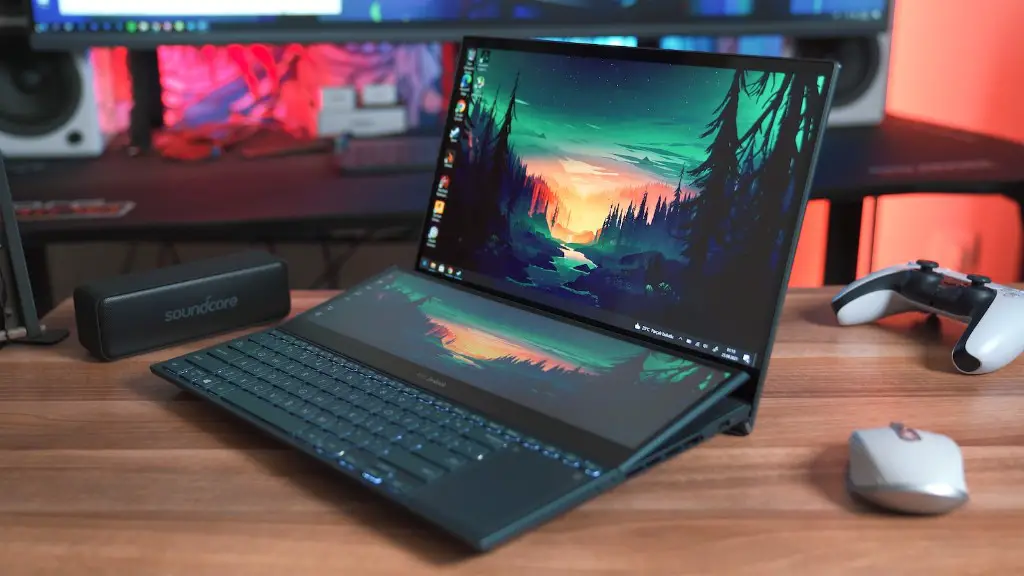
When it comes to ergonomics, monitors have an advantage since they can be placed at a height that is comfortable for the user. However, gaming laptops may offer more flexibility since they can be used in many places like a couch, bed, or even on the floor.
Overall Performance
Overall, gaming laptops and 24-inch monitors have many advantages and disadvantages. Laptops provide the convenience of being mobile, while monitors offer the advantages of better color accuracy and larger screen sizes. Gaming laptops usually have a lower refresh rate than monitors, but they can also provide faster response times and graphics. In the end, it is up to the user to determine which device works best for their needs.
Battery Life
A laptop’s battery life is significantly shorter than that of a monitor. With most gaming laptops having to be plugged into the AC power, and monitors not needing any sort of power source to operate, monitors have the edge in terms of battery life. Furthermore, some gaming laptop batteries may not last a long session of gaming and as a result, will require users to carry a spare or wait until the laptop is recharged. On the other hand, monitors require no such recharge and can provide hours of gaming if necessary.
Cost
Price is also an important consideration when comparing gaming laptops and 24-inch monitors. Depending on the configuration and the brand, gaming laptops can range from $500-1500, while 24-inch monitors can cost around $500 or less. Choosing the right device for gaming needs may come down to budget and performance.
Audio Quality
Gaming laptops also offer superior audio quality, as most gaming laptops have better-quality speakers than monitors. A monitor will typically have built-in speakers, but these can be tinny and don’t offer surround sound. On the other hand, gaming laptops have more advanced audio technology, allowing for a more immersive and rich soundscape.
Upgradeability
24-inch monitors have the edge in terms of upgradeability. Monitors can be easily upgraded, allowing for a higher refresh rate, increased resolution or faster response times. On the other hand, most gaming laptops are designed with a limited upgradeability. Some gaming laptops can be upgraded but will require specialist equipment and knowledge of computer hardware.
