Gaming has become a popular activity for many people, and having the right monitor for it can make all the difference. But what should you look for when choosing a gaming monitor? In this article, we’ll explore what aspects you should prioritize when selecting a gaming monitor.
First and foremost, you’ll need to determine the type of gaming you’ll be doing and the hardware specifications you’ll need. If you’re a casual gamer, your needs may be significantly different than those of an enthusiast or professional. You’ll also want to consider factors like size, resolution, refresh rate, and compatibility.
It’s important to choose a monitor with a high refresh rate. This will ensure a smooth, seamless experience. This is especially important for fast-paced games, as you don’t want the slightest lag to be an issue. Look for a monitor with a refresh rate of at least 144Hz for the best performance.
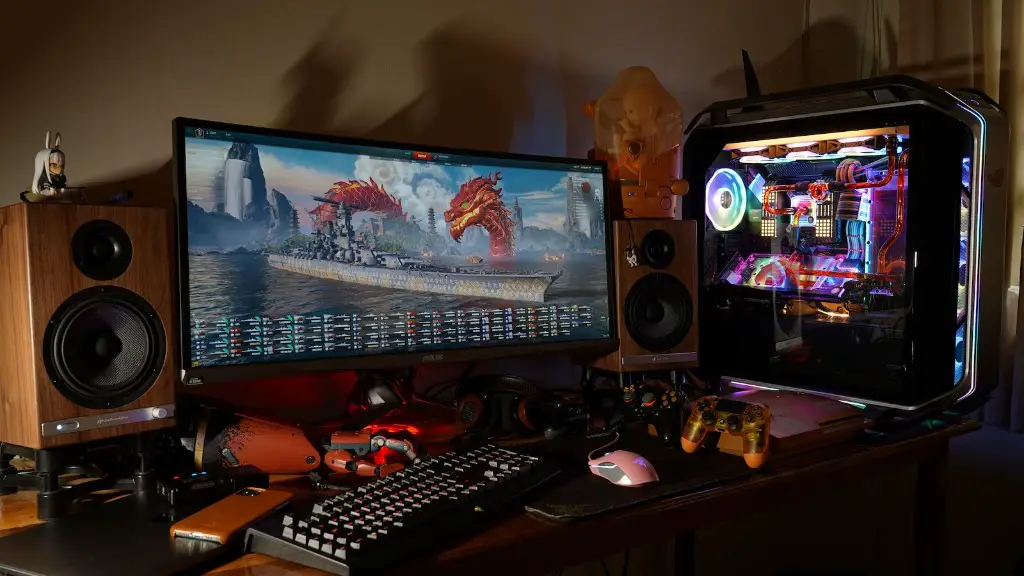
When it comes to resolution, some gamers prefer 4K. This provides an incredibly sharp display. There are also some monitors with a resolution of 1080p. Keep in mind that a bigger resolution usually means more graphics processing from your graphics card, so you’re going to want to make sure your hardware can support it.
The size of your monitor can also be a factor. Here, it really depends on your preferences. Do you want a thin and light monitor that’s easier to set up and move around? Or do you prefer something larger that provides a greater level of immersion?
Lastly, you’ll want to make sure your new monitor is compatible with your gaming-ready hardware. You don’t want to be stuck playing on a monitor that’s incompatible with your system, as this can lead to lag, choppiness, and other issues.
Size of Monitor
When it comes to selecting the size of your gaming monitor, there are several types to choose from. The most common sizes include 21.5-inch, 24-inch, 27-inch, 32-inch, and even larger. But the size you choose depends on the dimensions of your gaming area and how much you value immersion. A larger monitor will create a more immersive experience, but it will also take up more space in your gaming setup. Monitor sizes can also vary when it comes to resolution. Generally, a larger monitor will have a higher resolution.
Contrast Ratio
Another aspect to consider is the contrast ratio. The contrast ratio is a measure of how dark the darkest image is compared to the lightest image. A higher contrast ratio means that the darkest image will be much darker than it would be with a lower contrast ratio. This is important for games with very dark areas, as you don’t want to miss out on any of the action. Look for a monitor with a contrast ratio of at least 1000:1 for the best experience.
Color Accuracy
In addition to the contrast ratio, you’ll want to consider the color accuracy of your monitor. This is especially important for gamers who want to make sure that the colors on the screen are accurate. Look for a monitor with a high color accuracy of at least 8-bit or 10-bit to get the best experience. Advanced monitors may even have 12-bit accuracy.
Adaptive Sync Technology
Finally, many gaming monitors will feature adaptive sync technology to reduce screen tearing and input lag. This technology works by synchronizing the refresh rate of the monitor with the frame rate of the graphics card. Many monitors have either AMD FreeSync or NVIDIA G-Sync technology built-in, while some monitors may offer both. This will help ensure smooth, lag-free performance.
Inputs and Connectors
When selecting your monitor, you’ll also want to make sure it has the right inputs and connectors for your gaming setup. Make sure there is a suitable video output for your graphics card, as well as any additional ports you may need. Some monitors even offer USB ports for charging devices and connecting other peripherals.
Price Point

Finally, you’ll want to consider the price of the monitor you’re looking at. There are a variety of monitors available at different price points, so you’ll need to determine your budget and try to find a monitor that fits it. Keep in mind that a higher priced monitor can mean better quality, so be sure to do your research before making a purchase.
