Does a gaming monitor increase FPS? Yes, monitors equipped with features such as higher refresh rates, lower response times, NVIDIA G-SYNC and AMD FreeSync technology can make a difference to how FPS (frames per second) is seen in games. Those who want the best performance out of their gaming monitor must understand the technology behind these features and make informed decisions when deciding on a monitor.
High refresh rate monitors offer smoother gameplay for gamers. This is due to their ability to update what is seen on the screen at a faster rate of hertz (Hz). A PC monitor with a higher refresh rate can accurately display up to 165 FPS, depending on the monitor and the features it has. Generally speaking, higher refresh rates are always preferable, but they are more expensive than normal monitors.
The response time of gamers also plays an important role in improving their in-game performance. Lower response times mean faster reaction time, which leads to better gaming experiences. A gaming monitor with a response time of 1 ms is ideal for competitive video game players who require a screen that can keep up with fast-paced gaming. If a monitor has a response time of 2-4 ms, then it is good enough for general gaming.
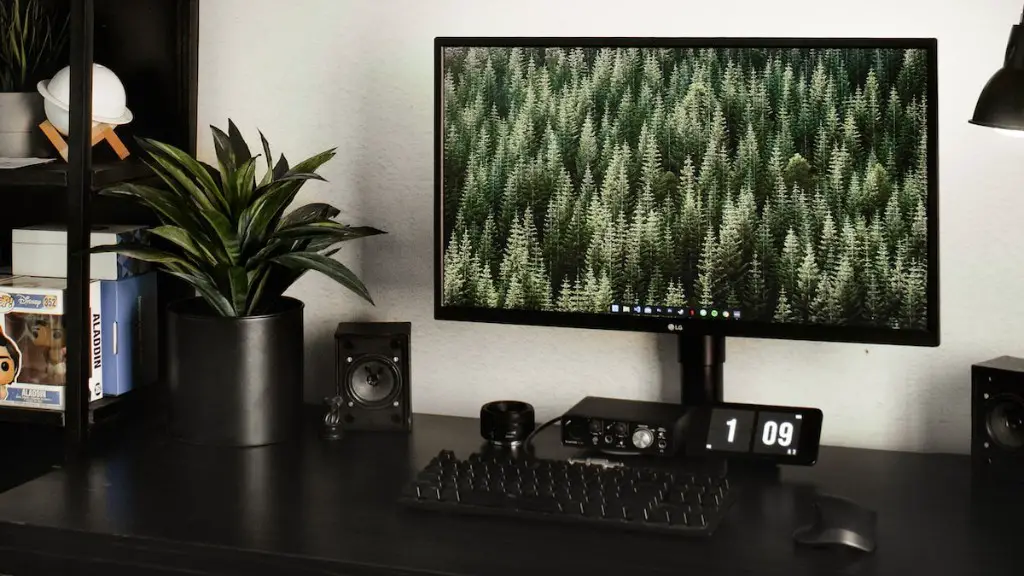
The NVIDIA G-SYNC and AMD FreeSync technologies also have a significant impact on gaming performance. These technologies reduce screen tearing and lag by synchronizing the refresh rate of the monitor with the frame rate of the GPU. By doing so, G-SYNC and FreeSync eliminate stuttering and artifacts, creating a smoother and more enjoyable gaming experience.
Many gaming monitors also come with various other features such as adjustable overclocking. Overclocking is the process of increasing the speed at which components such as the GPU and the processor operate. This allows the components to run faster, resulting in faster loading times and improved gaming performance. However, overclocking may also lead to instability and other issues, so it is important to understand the risks before making any adjustments.
Finally, one should always be aware of the type of panel used in the monitor. TN panels offer the fastest response times, but their image quality is sometimes subpar. On the other hand, IPS panels offer the highest image quality, but they have slower response times. VA panels offer a decent compromise between both these options, but they have their own drawbacks.
Refresh Rates
Refresh rate, also known as hertz (Hz), is a measure of how many frames per second (FPS) can be displayed on a monitor. A gaming monitor with a higher refresh rate will be able to accurately display more frames per second on the screen. The higher the refresh rate, the smoother the game will appear. Generally, higher refresh rates are more expensive, but they are worth it if gaming performance is a top priority.

The most common refresh rates are 60Hz, 120Hz, 144Hz, and even 240Hz. Lower refresh rates can limit the number of frames seen in a game, meaning that animations and certain in-game actions could appear slower than intended. Higher refresh rates offer smoother gameplay, especially for fast-paced games. For most gamers, a 144Hz monitor will be great for their gaming needs, but for those looking for the best performance available, a 240Hz monitor is ideal.
When it comes to gaming monitors, it is important to understand the differences between the various refresh rates and how they affect performance. The higher the refresh rate, the smoother and more responsive the gaming experience will be. This could mean the difference between an average and an excellent gaming experience.
It is also essential to consider the type of games that will be played on the monitor. For more demanding games, a higher refresh rate monitor is recommended. For less intensive games, a lower refresh rate monitor may still offer a satisfactory gaming experience.
When selecting a gaming monitor, it is also important to consider the GPU, as some GPUs cannot handle higher refresh rates. Finally, other features, such as response time, G-Sync and FreeSync technology, should also be considered when selecting the perfect gaming monitor.
Response Time
Gaming monitor response time, also known as the input lag, is an indication of how quickly a monitor can process the data from the GPU and display the image on the screen. The lower the response time, the faster the image will appear on the screen. This is important for competitive gamers who require fast reaction times. Gaming monitors with a response time of 1 ms is ideal for competitive gamers, while a 2-4 ms response time is suitable for more general gaming.
When shopping for a gaming monitor, it is vital to pay close attention to the response time. It is also essential to consider the type of games that will be played. For competitive gamers, a monitor with a low response times is essential. However, for less competitive gaming, a monitor with a slightly higher response time is sufficient.
There are other features to consider when selecting the best gaming monitor. Such features may include the size of the monitor, the display resolution, and the aspect ratio. All of these should be taken into consideration when making a decision as to which monitor to buy. Other important considerations include the design and stand assembly of the gaming monitor.
Finally, the price is an important factor that cannot be overlooked. Some gaming monitors are more expensive than others, so it is important to compare the features and specifications of models before making a purchase. By doing so, it is possible to get the best gaming monitor to meet the needs and budget.
NVIDIA G-SYNC and AMD FreeSync

A gaming monitor can be further improved with the NVIDIA G-SYNC and AMD FreeSync technologies. Both of these technologies synchronize the refresh rate of the monitor with the frame rate of the GPU, reducing screen tearing and stuttering for smoother gameplay. G-SYNC and FreeSync can be found in most gaming monitors and can make a substantial difference in gaming performance.
When selecting a gaming monitor, it is important to pay attention to the specifications to ensure that it is equipped with G-SYNC or FreeSync. If a monitor is not equipped with either of these technologies, then it is possible to purchase an adapter to enable it. However, most gaming monitors come with the technologies preinstalled.
It is also important to consider the limitations of both G-SYNC and FreeSync. A monitor equipped with one technology may not be able to take advantage of the features offered by the other. Additionally, not all monitors will be able to support the highest refresh rates when G-SYNC and FreeSync are enabled. It is important to research and understand these technologies before investing in a gaming monitor.
Finally, G-SYNC and FreeSync also have different levels of implementation, so it is important to ensure that the monitor is compatible with the GPU or graphics card. Not all monitors will be compatible with all GPUs, so it is important to check the manufacturer’s website to ensure that a monitor is compatible. By doing so, it is possible to get the most out of G-SYNC or FreeSync technology and improve gaming performance.
Overclocking
When looking for the best gaming monitor, it is also important to consider overclocking. Overclocking is the process of increasing the speed at which components such as the GPU and processor operate. This can improve gaming performance, as faster components can lead to faster loading times. However, overclocking may also lead to instability, so it is essential to understand the risks involved.
Many gaming monitors come with adjustable overclocking, which can be beneficial when looking to push the limits of performance. However, it is important to understand how overclocking works and the potential risks before adjusting any settings. Additionally, some GPUs are not capable of being overclocked, so it is important to ensure the GPU is compatible before making any adjustments.
Regardless of whether overclocking is used, a good gaming monitor can still provide an enjoyable gaming experience. By understanding the features of a gaming monitor and making informed decisions based on the type of games being played, it is possible to get the most out of a gaming experience.
The most important factors to consider are the refresh rate, response time, and panel type. Additionally, G-SYNC and FreeSync technologies, as well as adjustable overclocking, can further improve performance. By understanding these elements and making informed decisions, it is possible to find the best gaming monitor without breaking the bank.
