Does the GTX 1080 Ti have enough power to run an Alienware 34 Curved Gaming Monitor? The short answer is yes, the GeForce GTX 1080 Ti is powerful enough to keep up with the Alienware 34 Curved Monitor. The long answer requires a closer look at the specifications of each device.
The GTX 1080 Ti is a powerful 8 gigabytes Nvidia Graphics Processing Unit (GPU). It runs at 1,506MHz and is capable of delivering performance rates as high as 11.3 TFLOPS across five display outputs. In comparison, the Alienware 34 Curved Gaming Monitor has a resolution of 3440 x 1440 providing sharp, crisp visuals for all your gaming needs. It also boasts a refresh rate of up to 120Hz, and a response time of 4ms.
When we consider the power requirements, the GTX 1080 Ti can handle the Alienware 34 Curve with ease. The GTX 1080 Ti requires a minimum of 500 watts of power, but can support up to 470W for more graphics-heavy applications. The Alienware 34 Curve only requires a measly 59W, so the GTX 1080 Ti more than satisfies the power needs of this monitor.
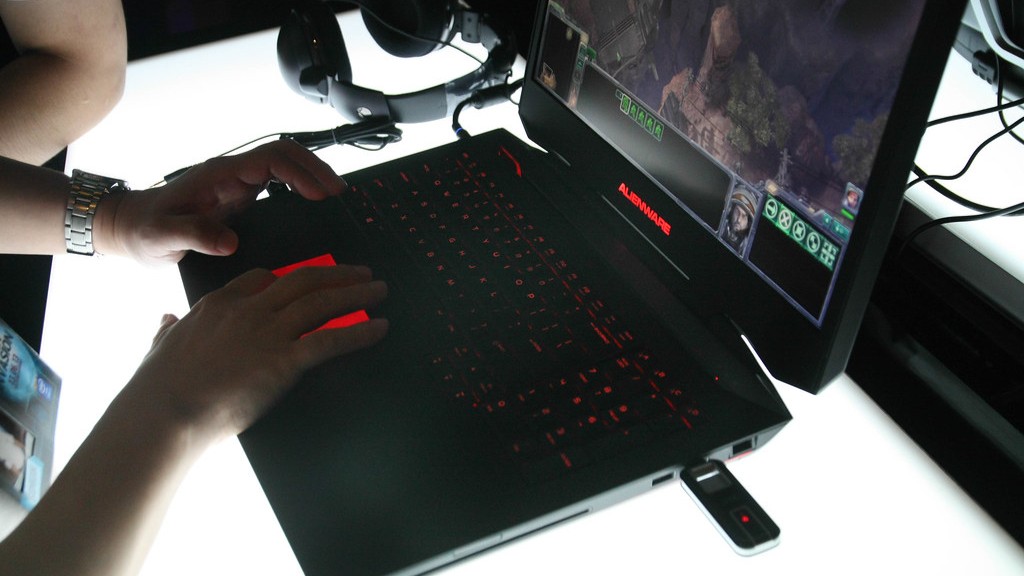
Moreover, the GTX 1080 Ti offers plenty of connectivity options when paired with the Alienware 34 Curve. The GTX 1080 Ti offers 3 DisplayPorts, 1 HDMI port and 1 DVI port, all of which can be used to connect the Alienware 34 Curve for immersive visuals. Users don’t have to worry about any compatibility issues as the GTX 1080 Ti can support up to five displays.
When it comes to performance, the GTX 1080 Ti can easily handle the load of the Alienware 34 Curve. While the refresh rate and response time of the monitor are impressive, the GTX 1080 Ti can further increase the performance of the system. The GPU is powerful enough to support up to 4K resolutions with ease, thereby delivering smooth and enjoyable gaming experiences. Furthermore, the GTX 1080 Ti also supports NVIDIA G-SYNC technology, allowing gamers to have the ultimate gaming experience.
To sum up, the GTX 1080 Ti is definitely powerful enough to support the needs of the Alienware 34 Curve Gaming Monitor. With its immense power, connectivity options and support for immersive 4K resolutions, users can rest assured that the GTX 1080 Ti is up to the task for all their gaming needs.
What Benchmarks Does the GTX 1080 Ti Achieve?
The GeForce GTX 1080 Ti is capable of achieving impressive benchmarks. With its 1.51GHz core clock, the GTX 1080 Ti can deliver up to 11.3 TFLOPS of compute performance, making it an ideal choice for gamers who demand the best. Furthermore, the GTX 1080 Ti has 8GB of GDDR5X VRAM, which means it can handle smooth graphics processing on even the most demanding gaming titles.

But the GTX 1080 Ti is not just a powerhouse in gaming performance. Its Gigaflops performance rating, which measures the throughput of the GPU, reaches a peak of around 11.71GFLOPS. This means that the GTX 1080 Ti can achieve impressive results even in compute-heavy tasks such as 3D rendering and AI models. It can also handle VR workloads with ease, allowing gamers to enjoy a smooth virtual reality experience. With all these impressive benchmarks, it’s no surprise that the GTX 1080 Ti is the choice of many top gamers and professionals.
The GTX 1080 Ti is also capable of delivering impressive frame rates when paired with the Alienware 34 Curve Gaming Monitor. Thanks to its incredible power, the GTX 1080 Ti can support resolutions of up to 3440 x 1440 and a refresh rate of up to 120Hz. This ensures smooth and responsive visuals, allowing gamers to have the ultimate gaming experience.
And thanks to the low-video latency of modern GPUs, gamers can enjoy immersive visuals with minimal stuttering and tearing. This contributes to an overall smoother gaming experience, making the GTX 1080 Ti a great choice for gamers looking for the best in both performance and visuals.
What are the Specifications for the GTX 1080 Ti?
The GeForce GTX 1080 Ti is an incredibly powerful graphics card, boasting 8GB of GDDR5X VRAM and 1.51GHz core clock. It supports up to 5 displays and has a maximum power draw of 470W. Furthermore, it offers a maximum compute performance of 11.3 TFLOPS, and can deliver up to 11.71GFLOPS when used for compute-heavy tasks.

Finally, it comes equipped with three DisplayPorts, an HDMI port, and a DVI port, to support multiple configurations. This allows users to enjoy smooth visuals with minimal stuttering and tearing, while being able to experience immersive 4K resolutions and smooth high refresh rates.
Does the GTX 1080 Ti Support 4K Gaming?
Yes, the GTX 1080 Ti supports up to 4K gaming. With its 8GB of GDDR5X VRAM and 1.51GHz core clock, the GTX 1080 Ti can handle 4K resolutions with ease. Additionally, users can also enjoy immersive gaming experiences thanks to the support for NVIDIA G-SYNC technology, allowing for smooth and responsive visuals.
The GTX 1080 Ti also offers plenty of support for high refresh rate monitors. When paired with the Alienware 34 Curve Gaming Monitor, the GTX 1080 Ti can deliver smooth and immersive visuals with up to a 120Hz refresh rate. This makes it an ideal GPU for those who want to achieve the best gaming experience.
How Do We Test the Performance of the GTX 1080 Ti?
The performance of the GTX 1080 Ti can best be tested using benchmarking software. Benchmarking software allows users to measure and compare the performance of their GPUs, with NVIDIA’s own benchmarking suite, GeForce Experience, being the most widely used.

Using benchmarking software, users can measure the performance of their GPUs in a variety of tasks, such as 3D rendering, gaming, VR loads and more. This allows users to get an accurate reading of the performance of their GPU, and compare it to that of other GPUs on the market.
To test the performance of the GTX 1080 Ti, users can run it through a graphics benchmark, such as 3D Mark. This can be used to measure the compute performance and frame rates that the GPU is capable of achieving. In addition, users can also measure the power efficiency of their GPUs, allowing them to get an accurate reading of their GPU’s performance levels.
What is the Recommended System Requirements for the GTX 1080 Ti?
The recommended system requirements for the GTX 1080 Ti are relatively straightforward. The GPU requires a minimum of 500W of power, but can draw up to 470W when needed. The GTX 1080 Ti also requires at least 8GB of RAM, and a 7th-generation Intel Core processor or higher.
In addition, the GTX 1080 Ti also requires a motherboard with at least one free PCIe x16 slot. While not mandatory, a compatible motherboard with SLI support is also recommended for those who wish to have maximum performance gains. Finally, users should also have at least one free 6-pin power connector to provide additional power to the GPU.