As a well-rounded and fast-paced gamer, you may be keen to know whether you can use your TV as a gaming monitor. In this article, we will explore what technical specs you should look for in your TV, the pros and cons of using it as a gaming monitor, and how to properly set up your gaming station.
Firstly, when looking for a TV to use as a gaming monitor, you should pay particular attention to the size of the screen, the image resolution, the refresh rate, and the input lag. Larger screens provide a more immersive gaming experience, while higher resolutions generate a sharper, more detailed screen. Refresh rate and input lag, meanwhile, directly affect the responsiveness of the TV. Look for a TV with a higher refresh rate and lower input lag for optimal performance.
The biggest boon associated with using a TV as a gaming monitor is its cost-effectiveness. TVs are significantly cheaper than the average gaming monitor and may suit those with a tighter budget. Moreover, most TV models offer a variety of ports or inputs, meaning they can be connected to a wider range of devices. This makes them an attractive choice as all-purpose monitors.
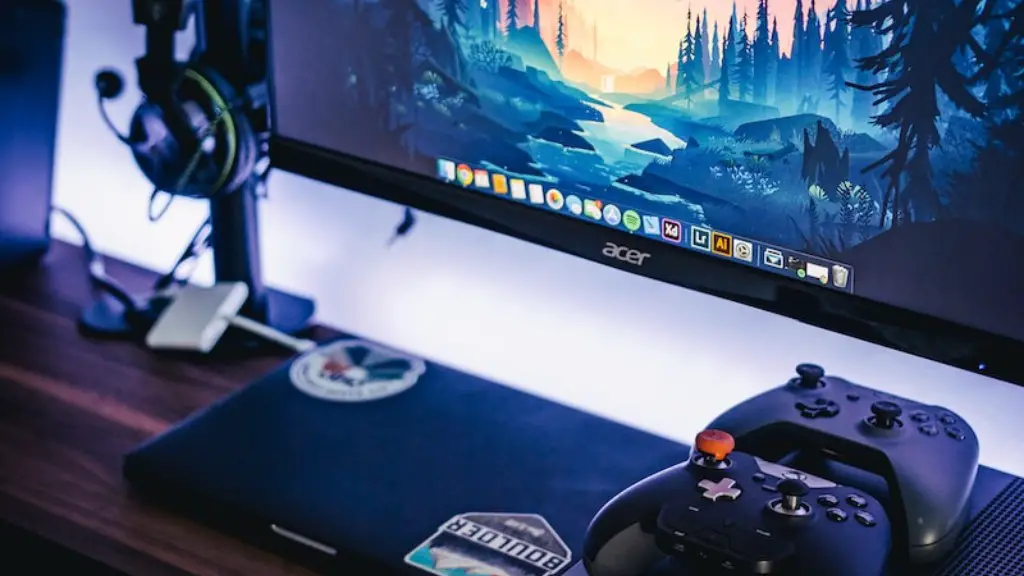
Using a TV as a gaming monitor also has a few drawbacks. Since TVs are typically not marketed as gaming products, they lack the features often found in gaming monitors, such as adaptive sync tech and support for advanced features like variable refresh rate (VRR) and auto low latency mode (ALLM). Moreover, TVs are typically not as reliable as specialist gaming monitors.
So, how do you best set up your gaming station? Firstly, your TV should be correctly calibrated. This means tweaking the settings to achieve a more natural-looking image. To do this, you may have to experiment with various settings such as brightness, contrast, and color. Secondly, you should properly mount your TV. If your TV is too close to the wall, you may experience screen tearing or obnoxious artifacts in some games. Lastly, you should optimize your sound if you’re listening through an external source.
TV Refresh Rate
When considering whether to use your TV as a gaming monitor, refresh rate is an important factor. While a TV with a lower refresh rate can still be used for gaming, its response times may be sluggish and juddery, hampering the overall gaming experience. Look for a TV with a refresh rate of at least 120 Hz or greater to ensure smooth, crisp performance. If your budget allows, you may want to consider a model with a refresh rate of up to 240 Hz.
Furthermore, newer TVs may support adaptive sync tech, such as Nvidia G-Sync or AMD FreeSync. This is designed to reduce input lag and screen tearing for a smoother, more responsive gaming experience. If you’re planning to use your TV for high-end gaming, make sure it’s certified to support one of these technologies.
Image Resolution
The image resolution of your TV can greatly affect your gaming experience. A low resolution may make games look blurry, while a higher resolution will generally produce a sharper image. Most TVs will come with a range of resolutions, from 720P all the way up to 4K. A 1080P resolution is often considered the best balance between performance and clarity – however, unless your system and components can support it, 4K may be out of reach.
You may also find TVs with Ultra HD resolution or HDR (high dynamic range). Ultra HD TVs offer an even higher resolution than 4K, making them ideal for displaying detailed images and vivid colors. HDR technology also adds value, deploying dynamic contrasts and bolder, more accurate colors to enhance your gaming visuals.
Input Lag
Input lag is another key factor to consider when using your TV as a gaming monitor. This refers to the time between a controller input and the action on screen. If the input lag is too high, your gaming experience may suffer as a result. Look for a TV with a low input lag, ideally no more than 20ms for optimum responsiveness.
Furthermore, if you’re looking for a more high-end experience, you may want to opt for a TV with “game mode”. This is a feature specifically designed to reduce input lag, providing a much smoother gaming experience. However, it may also reduce picture quality and color accuracy, so pay close attention to reviews before investing.
Connectors
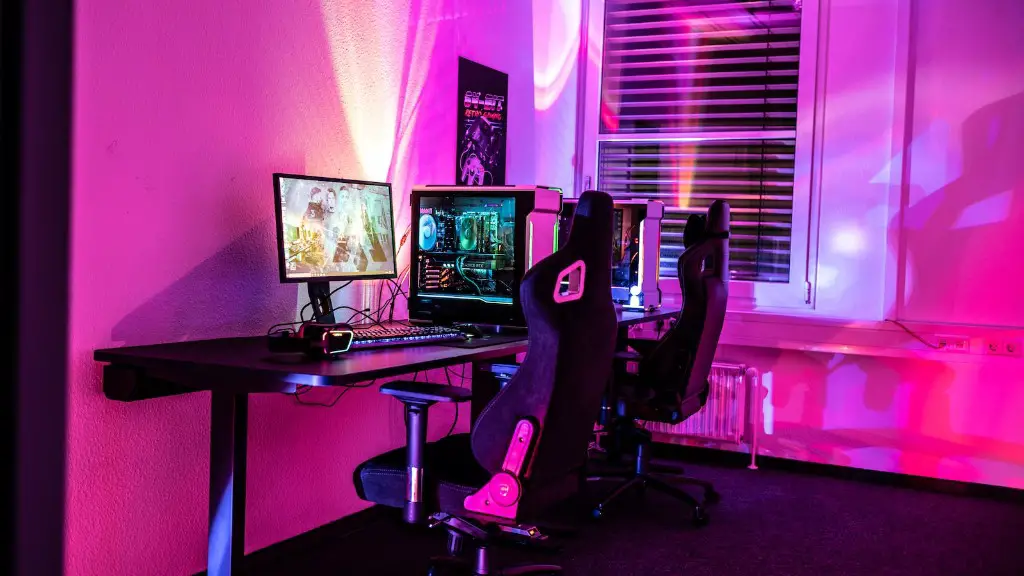
Make sure your gaming components are compatible with your TV’s connectors. Many modern TVs come with several ports and inputs for connecting a variety of devices. Some HDMI ports may have limited capacities, so check to make sure you have enough for all your gaming equipment. USB ports can also be useful for charging controllers and other accessories.
You may also have to pay attention to the type of connectors your components use. For example, if you are using a console and a gaming PC, check to make sure the TV offers enough HDMI ports for both. Similarly, any external audio such as surround sound speakers or a gaming headset should be compatible with the TV.
Screen Position & Size
Another important factor to consider when setting up your gaming station is the position and size of your TV. Firstly, ensure that your TV is properly mounted. Avoid positioning it too close to the wall or at awkward angles, as this can cause interruptions in viewing. Aim to keep your viewing distance at around twice the size of the TV, to avoid eye fatigue.
Secondly, pay particular attention to the size of the screen. A larger screen will provide an immersive gaming experience, but may limit your range of movement if the TV does not fit within your desired play area. Similarly, a smaller screen may be easier to set up, but may not provide the same level of immersion. The type of game you’ll be playing will also help dictate the size and position of the screen.
Software & Firmware Updates
Finally, make sure that your TV is up-to-date with the latest software and firmware. Updates may implement new features that can improve the performance of your TV, as well as reduce any potential risks of data loss or security breaches. You should check for updates regularly, as this can help ensure that your gaming experience is as smooth and custom as possible.
