What Does Hz Mean On A Gaming Monitor?
Hz, or Hertz, is a measure of frequency in a gaming monitor. It is the number of times per second that the monitor’s screen refreshes and displays a new image. A higher Hz number indicates a more responsive monitor. To experience a superior gaming experience with smooth graphics, most gamers prefer a monitor with a high Hz count. But to make a wise decision, it’s important to understand what Hz stands for and why Hz is important in gaming monitors.
First, Hz is the unit of frequency in physics, and is the number of times per second a repeating cycle occurs. In computer monitors, the cycle is the number of times per second the screen refreshes to redraw the images. The higher the Hz rate, the smoother a game’s graphics look. Any gaming monitor under 60 Hz is mediocre; a good gaming monitor reaches between 144-165 Hz, with the absolute highest on the market reaching an impressive 360 Hz.
The higher Hz count can give a huge advantage over opponents because the faster link to the game gives a millisecond edge. A higher Hz monitor has less of a lag and more responsiveness, resulting in a much smoother experience. A monitor with a lower Hz count, for example, a 60 Hz monitor, will not be able to keep up with fast-paced shooters. This won’t be beneficial for competitive gaming as it will cause lag and will be slower than opponents with higher Hz monitors.
It’s also important to consider the connection the monitor has. HDMI and DisplayPort connections help increase the Hz count by providing higher data speeds. One must also consider their GPU, as a monitor with a refresh rate higher than the GPU can generate can result in a waste of resources. Furthermore, the higher refresh rate is only beneficial for experienced gamers as the Hertz affects how fast the images are changed, not how colorful.
Finally, a monitor with an appropriate Hz rate is essential for a smooth and uncompromised gaming experience. Monitors with a higher Hz rate provide a faster response time and higher refresh rates, allowing gamers to see movements on their screen quicker, making a huge difference in the gaming world.
Factors Of A High Hz Monitor
Having a high Hz monitor is advantageous to gamers in terms of giving them a better gaming experience and a millisecond edge to their opponents. In order have a high Hz monitor, there are a few factors to consider, such as: the type of connection, such as HDMI or DisplayPort connections; the new specification USB-C; the GPU and its limitations; and type of panel.
HDMI and DisplayPort connections are the most common ways to connect a PC to a monitor, and these connections carry high data speeds to the monitor, helping to increase its Hz count. However, HDMI has a limitation at 60 Hz for it to output data quickly. Thus, when searching for the highest Hz rating, DisplayPort, USB-C and Mini DisplayPort are preferable.
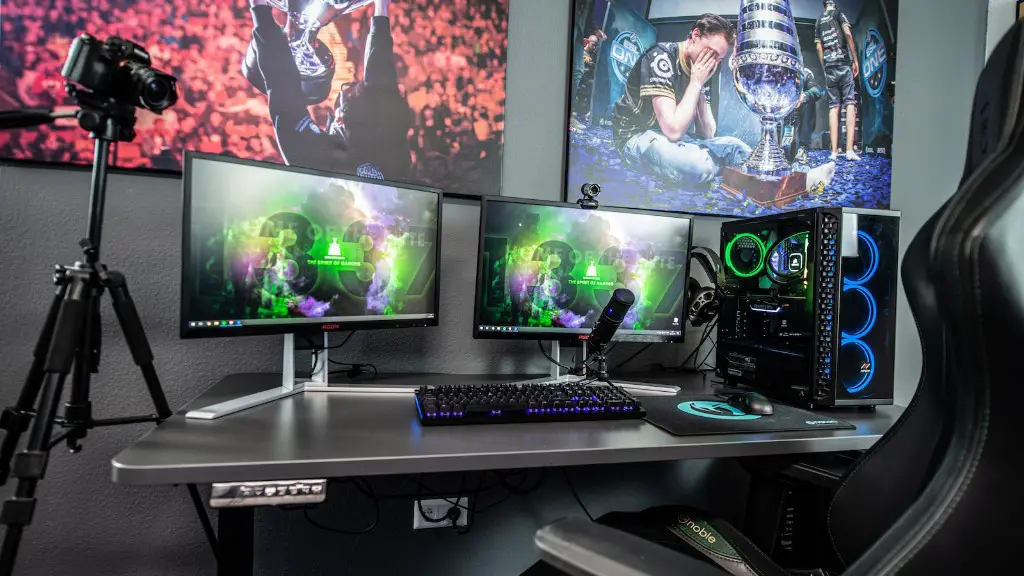
Also, another important factor would be the GPU, as if the GPU does not have enough power to generate the signal for the high Hz, then the monitor will still perform more slowly. This is why it’s important to look at the specs of the GPU when buying a new gaming monitor.
Lastly, the type of panel can also be an issue. A TN panel is considered the best panel for highest Hz ratings and response time, while an IPS panel is best for color accuracy and color preservation. It is important to understand what each panel is best for and which one is most suitable for a user’s needs. With these factors in mind, gamers will have a better idea of the best monitor suited for their gaming.
Does Higher Hz Mean Smoother Experience?
With the higher Hertz count and refresh rate on gaming monitors come the promise of more vivid and smoother experience for the player. However, many people are still unsure if a higher Hz count would actually improve their gameplay or not. The answer is that it really depends on their gaming needs and the type of games they are playing.
For FPS and action-packed games, a higher Hz monitor will definitely benefit the player. This is because a higher Hz count results in a quicker response time, which results in the player being able to see the movements on the screen quicker. This is also beneficial in competitive gaming, as the faster link to the game gives them a millisecond edge over their opponents.
On the other hand, for slower paced games and single-player games, a higher Hz monitor doesn’t really benefit the players as much due to the less fast-paced action. In this case, a midrange monitor with a 60-144 Hz refresh rate may still provide a satisfactory gaming experience. Thus, to decide between a high-end monitor and a midrange one, it is important for gamers to consider their needs and the type of games they play.
Does Hz Affect Color Accuracy?
Many people often confuse Hz with color accuracy and contrast. It is important to understand that Hz on a gaming monitor is only related to the refresh rate and response time. Hz has nothing to do with contrast ratios, brightness levels, and color accuracy.
Color accuracy is mainly determined by the type of panel on a monitor. A TN panel is the most common type and is better suited for a faster Hz rate and quicker response time. The TN panel also comes at a lower price. On the other hand, an IPS panel offers better visuals and color accuracy, but it is more expensive and comes in at a lower Hz rate.
As such, depending on one’s gaming needs, he or she should consider what type of panel suits their needs best. As for contrast and brightness, this depends mainly on the monitor’s specifications. With so many gaming monitors out in the market, it is important for gamers to do their due diligence before making their purchase.
Are Higher Hz Expensive?
When considering buying a gaming monitor, one of the most important factors they should take into account is the price. With the wide range of gaming monitors out there, the cost can range from affordable to expensive. Generally, the higher the Hz count, the more expensive the gaming monitor is.
Typically, a midrange gaming monitor with a Hz count of around 60-75 will range from $100 to $500, while a gaming monitor with an Hz count of 144 or more can range anywhere from $400 to a few thousand dollars. A gaming monitor with an Hz count of 360 can cost up to almost $5,000. Thus, to find the best gaming monitor for one’s needs, it is important to weigh the pros and cons of each gaming monitor in terms of Hz, price and features.
Do Higher Hz Make A Difference?
With the introduction of higher Hz count on gaming monitors, there has been a lot of discussion on if the higher Hz count actually makes a difference. The answer to this is a definite yes. Higher Hz count on monitors results in a smoother gaming experience with a quicker link to the game.
As mentioned earlier, in fast-paced games and competitive gaming, a higher Hz monitor will be beneficial as it will give the player a millisecond edge over their opponents. Also, with a higher refresh rate, the monitor will be able to display the graphics quicker, thus giving a more realistic feel as the movements appear to be smoother.
However, it is important to remember that the graphics card must be able to handle and generate the signal to increase the Hz count, or else the monitor will not be able to reach its full potential. Thus, it is necessary for gamers to make sure their GPUs have adequate power when selecting their gaming monitor.
Are Hz and Frames Per Second (fps) The Same?
No, Hz and Frames Per Second (fps) are not the same. Hz refers to the refresh rate of a gaming monitor, while fps stands for Frames Per Second, which refers to the number of frames displayed onto the monitor each second. As such, fps is the number of images seen per second, while Hz is the number of times the screen refreshes in a second.
In order for the best gaming experience, gamers should aim for a monitor with a high Hz count as well as a maximal fps. This is because a higher Hz count will result in quicker response time and a smoother gaming experience, while a high fps count will result in more vibrant colors, smoother graphics and better visuals overall.
To find the best gaming experience, it is important for gamers to find the perfect balance between Hz and fps. Monitors usually come with a Hz count of 60-240, and with a graphics card that has enough power, gamers can reach a consistent fps rate of around 60 fps. This way, gamers can get the most out of their gaming experience.
