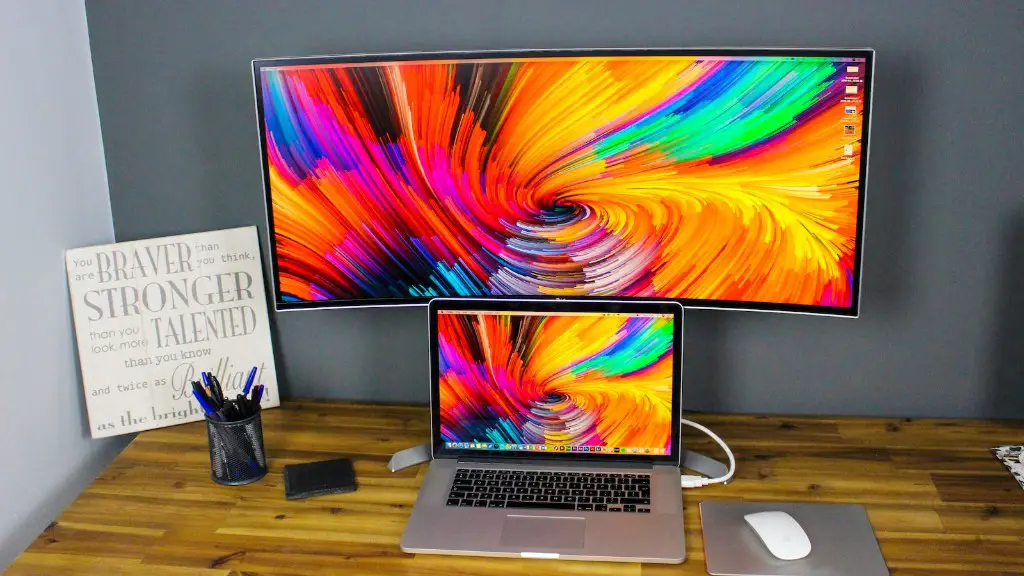
Which is cheaper, a gaming PC or laptop? It is a difficult question as each has its own set of pros and cons. However, there are some general factors which can help decide which one is cheaper. The most important factor here is the performance. A gaming laptop will always be able to outperform a budget gaming PC in terms of graphics, speed, and storage space, while the PC will always be able to outperform the laptop in terms of upgradability, raw power, and price. Additionally, laptops tend to have shorter product cycles and will require frequent upgrades, whereas PCs have typically have longer product cycles, meaning that upgrading is not as frequent.
A gaming laptop also requires a larger initial cost due to the high-end components used, such as processors and GPUs, which will put an additional financial burden on the consumer. On the other hand, a gaming PC can often be constructed on a budget and with second-hand parts, making it significantly cheaper in the long run. Moreover, the cost of running a laptop over a PC can also be much higher. For example, laptop batteries tend to need replacing more often than a PC, and their fans will more often require replacement due to their short lifespans.
Moreover, another factor to consider when deciding which is cheaper, a gaming PC or laptop, is portability. Laptops are more portable than PCs as they are designed for maneuverability and can be taken almost anywhere. On the other hand, PCs are less portable and require cables and peripherals to work. As a result, laptops are desirable for gamers who often travel and do not want the hassle of setting up a PC every time they move.
Finally, it is important to consider the Resale Value of the device when deciding which is cheaper. PCs have a much higher resell value than laptops due to their upgradability, which makes them a much better financial decision if you are considering long-term value. On the other hand, laptops will depreciate faster and hold almost no resale value after a few years.
Costs Of Upgrading
The cost of upgrading a gaming PC or laptop will vary depending on the type of parts required. Upgrading the components on a laptop can be expensive and not worth the outlay in order to gain performance. Additionally, laptop components tend to be far more expensive than those for a PC, meaning that upgrading a laptop will tend to be much more costly than upgrading a PC. On the flip side, upgrading a PC is often far more cost-effective, as the components required are relatively inexpensive and will improve the performance significantly.
Furthermore, when it comes to component selection, PCs have a much wider selection than laptops, meaning that a user has much more freedom with regards to choosing their parts. This added flexibility allows users to pick components that fit the performance they desire while also being within their budget. Laptops, however, are limited due to their size and form factor, which makes it difficult to upgrade certain components, thus further increasing the cost of doing so.
Finally, GPUs are an important component to consider when it comes to video performance, and one of the main differences between PCs and laptops is the type of GPUs they can support. The larger form factor of a PC allows for the installation of powerful GPUs, such as the GeForce GTX series, that cannot fit in laptops, meaning that the laptop will need to make use of mobile versions, such as the GeForce MX series, resulting in comparatively poorer performance.
Heat Dissipation
Heat dissipation is an important factor to consider when deciding whether a gaming PC or laptop is cheaper. Since laptops are much smaller than PCs, there is less room for ventilation, making them more susceptible to thermal throttling and potentially shorter lives. PCs, however, can be equipped with high-end cooling systems such as liquid-cooling, resulting in better thermal performance and longer component life.
In addition, laptops will typically have smaller fans than those found in a PC, which means that laptop components will have a much higher chance of overheating due to the lack of airflow. On the other hand, PCs have a much larger internal space which allows for larger fans, resulting in better cooling and performance.
Finally, laptops tend to be far noisier than PCs due to the smaller components used in them. Smaller fans will generate more noise at the same speed than a larger fan, resulting in higher sound output from the laptop. PCs, however, can often be configured with larger than average fans and water-cooling, resulting in much quieter operation.
Connectivity
When deciding which is cheaper, a gaming PC or laptop, it is important to consider the connectivity of each. Laptops typically have fewer ports than those found on a PC, making it necessary to use a USB hub or adapter to connect peripherals. In terms of wireless connectivity, laptops tend to be better than PCs, as they are more flexible and can be used with less wires.

Moreover, laptops often come with Bluetooth built-in, allowing for a wide range of wireless peripherals, such as gaming controllers and headsets, to be used. On the other hand, PCs typically require an additional Bluetooth adapter for connectivity, which adds to the overall cost. Finally, laptops typically have a range of integrated ports, such as an SD card reader and an HDMI port, which makes them more suitable for use when travelling.
Customization
When comparing gaming PCs to laptops, one of the most noticeable differences between the two is their level of customization. PCs are far more customizable due to the large range of components available to them. As such, a PC user has much more freedom when it comes to building their own rig and can choose any combination of components to make their own custom gaming PC.
Laptops, however, are far less customizable as they require all components to be purchased as one package, meaning that a user has no freedom in terms of what components are used. Additionally, laptops are not easily upgradable and the components used may not be as powerful as those used in a custom PC. As a result, laptops are more limited in terms of customization compared to PCs.
Cost vs Performance
When deciding which is cheaper, a gaming PC or laptop, it is important to consider the cost vs performance ratio that each provides. PCs tend to offer the highest performance for the lowest cost, as components can be purchased individually and upgraded incrementally for a lower overall cost. Additionally, PCs have the ability to perform better than laptops due to their higher degree of customization and upgradability, meaning that the performance can be increased without costing an arm and a leg.
On the other hand, laptops offer less performance than PCs due to their small form factor, meaning that they cannot accommodate certain components. Furthermore, laptops are often more expensive than PCs due to their higher upfront costs and their inability to be upgraded easily. As a result, laptops have a much lower cost to performance ratio than PCs.
Conclusion
Overall, PCs are often cheaper than laptops, both in terms of upfront costs and long-term use. PCs offer better performance than laptops due to their larger form factor and greater degree of customization, allowing them to be more powerful and upgradable than laptops. Furthermore, PCs also offer a far better cost to performance ratio than laptops, meaning that users can get more performance for their money. As such, PCs are the better option for gamers who are looking for the most powerful machines for the best price.
