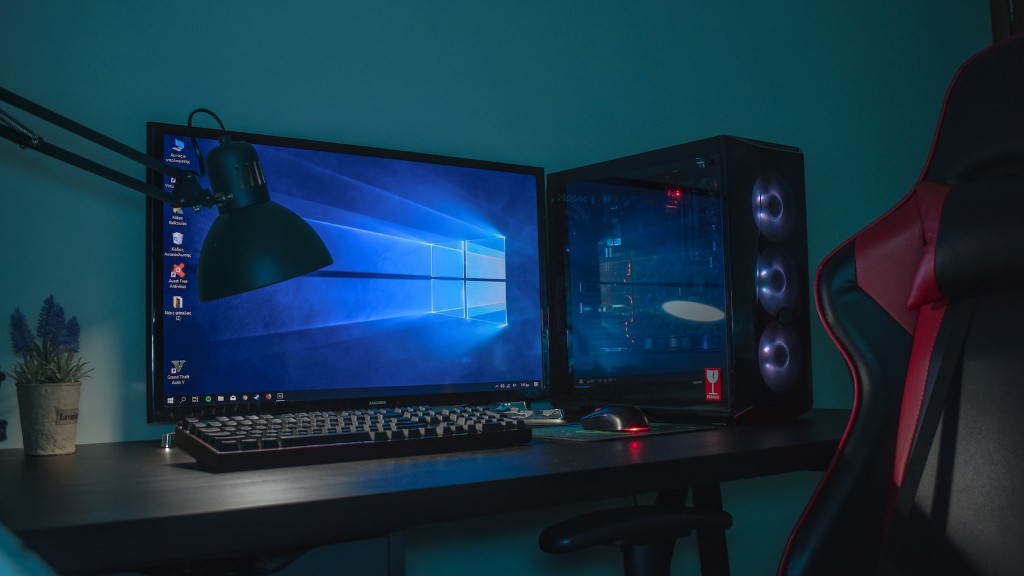
Gaming Pc has become a household name in the gaming world since its introduction in early 2000s, but who invented Gaming Pc? It was IBM, who, in August 1981, introduced their first official Personal Computer (PC) for office and home use.
However, their PC wasn’t designed to satisfy the needs of gamers until the arrival of the famous 486 series. Around the same time, Intel’s 586 series started to dominate the market and its improved technology gave birth to the first gaming PCs.
A combination of affordability, powerful processors and efficient graphical chips made it easier for developers to create powerful gaming PCs. IBM released their first PC specifically designed for gaming in 1993. It ran on powerful software that could support high-end gaming. After that, IBM kept improving their gaming PCs with every passing generation. Their latest model boasts one of the highest levels of performance amongst PCs in the market.
To maintain the gaming PC’s high performance, developers integrated gaming features such as colored lights, mouse pads and other gaming related peripherals into the PC. This made gaming PCs more powerful and user-friendly. Today’s gaming PCs feature some of the advanced technologies available for gaming. It also supports various customisations which allow users to tailor their gaming PCs to perform better.
Nowadays, gaming PCs are widely available from many retailers as gamers demand higher performance from their PCs. As a result, gaming PCs have become more accessible to the general public. While there are many manufacturers competing in the gaming PC market, IBM has maintained its position as leader over the years.
History of the Gaming Pc
The gaming PC industry started to gain momentum in the early 2000s as gaming PC began to emerge. Prior to this, gaming PCs existed but a few factors constrained the gaming experience on these computers. At the time, most of the gaming PCs on the market were expensive, bulky and lacked storage capacity. This made gaming PCs inaccessible to many gamers.
In the early 2000s, the gaming PC industry changed dramatically as more powerful components such as processors, RAM and storage started to become cheaper. This made the development of gaming PCs more feasible and game developers started to create more powerful games that could utilize the improved hardware. As a result, the gaming industry experienced a surge in interest with growing demand for gaming PCs.
In the present day, gaming PCs are capable of running complex games with graphics quality that rivals current-generation consoles. Developers have also created online gaming systems such as Steam, GOG and Origin to let gamers purchase, store and run games on their gaming PCs.
As technology continued to improve, gaming PCs got faster, smaller, cheaper and more powerful. This is why gaming PCs remain one of the most popular gaming devices in the market to date.
Benefits of Gaming Pc
The most obvious benefit of gaming PCs is the potential for better performance than any console. For example, gaming PCs are capable of running games at higher frames per second which can feel smoother than consoles. Additionally, many gaming PCs support higher resolution displays and better textures than consoles.
Another benefit of gaming PCs is the wide range of upgrade paths they offer. Due to its modular nature, gamers can upgrade different components of the gaming PC to boost performance. For example, they can install higher capacity RAMs or dedicated graphics cards to improve gaming performance.

Gamers also appreciate that gaming PCs are upgradable over time. As new technologies and games emerge, gaming PCs remain relevant by supporting the latest components and technologies. New components such as higher capacity RAMs, solid-state drives and powerful processors can keep a gaming PC running strong for many years.
Given its versatility, gaming PCs also provide an all-in-one solution for gamers. Unlike consoles which require multiple devices to operate, gaming PCs allow gamers to play games, chat with friends, watch movies and create content all with one device.
Finally, gamers can customize the appearance and performance of their gaming PCs to suit their own playing style. For example, gamers can customize fan speeds or the way individual components are arranged inside their PCs.
Advancements in Gaming Pc
The most obvious advancement in gaming PCs is that they are now much more powerful than consoles. This is due to the significantly more powerful processors and graphics cards which come with gaming PCs.

In addition to the hardware, software has drastically improved the performance of gaming PCs. Popular operating systems like Windows and Linux have been optimized to run games more efficiently and developers have created software that automatically downloads and installs the latest drivers and software updates.
Finally, game developers have created game streaming services that allow gamers to play high-end games on even low-end PCs. Services such as GeForce Now and Stadia have made gaming PCs more accessible to gamers who cannot afford a high-end PC but still want to enjoy the latest games.
The gaming PC industry will continue to improve and evolve as technology advances. More powerful components such as solid state drives, powerful processors and dedicated graphics cards will be introduced in the near future providing an even better gaming experience for gamers.
Gaming Pc Developments
Innovative technologies such as virtual reality (VR) and artificial intelligence (AI) are two of the most exciting developments in the gaming PC industry. Both of these technologies have the potential to revolutionize gaming in the near future.
VR has been around for a few years now but the technology is only beginning to realize its full potential. VR allows gamers to experience games in a more immersive way than ever before. It can also be used to provide gamers with an unparalleled level of control and customization.
Similarly, AI has the potential to make gaming even more realistic and immersive. Developers are already using AI to create complex AI bots that can adapt to a player’s playing style and provide a more challenging gaming experience.
Cloud gaming is also a major trend in the gaming PC industry. Services such as Google Stadia allow gamers to stream games directly from the cloud which eliminates the need for a powerful gaming PC. This reduces the cost of gaming and allows gamers to instantly access the latest games at any time.
Finally, developers are also working hard to bring their games to the world of handheld devices such as smartphones, tablets and portable gaming consoles. This will provide a convenient way for gamers to enjoy games on the go without the need for a full-fledged gaming PC.