Games and programming share many characteristics, but they differ in fundamental ways. Both require problem solving and coding, but the type of problem solved and the syntax of the code varies greatly. PCs are a popular choice for gaming due to the powerful hardware and software optimization available. This implies that gaming PC can also be an effective tool for programming, especially for more complex tasks.
Programming is an activity which requires a great deal of attention to detail. For example, a typo can cause an entire operation to fail. Developers often benefit from the extra processing speed, graphical output, and better viewable resolutions that are available on gaming PCs compared with other formats. Additionally, programmers with a gaming PCs are often able to run software applications or development tools that are critical for programming activities and utilise the advantages of dual processors, advanced graphics cards and fast hard drives.
Further, gaming PCs are also preferred for certain types of programming as writing code for 3D games requires a fast processor, an ample amount of RAM, and a good GPU. Also, the operating system on a gaming PC tends to be more stable and secure than other operating systems. This is important for those who often develop applications or websites, as such applications and websites need to be checked regularly for any issues or bugs.
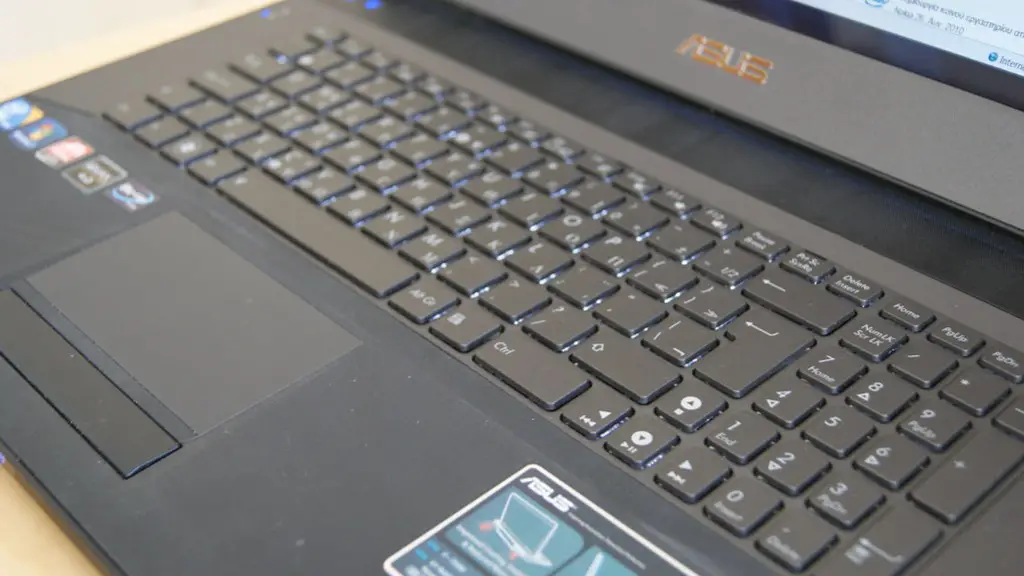
The advantage of using a gaming PC for programming activity is that it is highly efficient and can be more cost effective than buying a traditional programming machine. Additionally, the massive hard drive capacity makes it easy to store and access large amounts of data which is essential for complete and accurate results. Finally, the user interface of gaming PCs are usually more user-friendly, making it easier to navigate the various programming functions.
Benefits of Using a Gaming PC for Programming
There are numerous benefits of using a gaming PC for programming. The most important ones are related to speed and power. Gaming PCs provide faster speeds, improved graphical outputs and better display resolutions, which are essential for programming activities. Programming requires attention to detail, and a faster speed allows for more detailed work, as less time is required to complete an operation. Gaming PCs also offer the advantage of upgradeability if the processor and components become outdated. This allows for higher speeds and better graphic resolutions, staying ahead of the ever-evolving programming needs.
Gaming PCs are also used for certain types of programming activities, such as for 3D game development, as they can handle heavy graphical processes. Further, the powerful processers of gaming PCs make these machines highly efficient, allowing for multiple tasks to be processed simultaneously. This can help take the workload off individual machines, saving time and energy.
There are also technological advantages of using a gaming PC for programming. Gaming PCs are able to utilise the latest software applications and development tools that are important for programming, giving developers an edge in their work. The operating system of these PCs are also more stable, secure and user-friendly, making it easier to access programming activities. The large hard drive space of gaming PCs also offers advantages, as it makes it easy to store large amounts of data, allowing for larger and comprehensive programming projects.
Drawbacks of using a Gaming PC for Programming
Despite the advantages of using a gaming PC for programming activities, there are a few drawbacks as well. One of the most important is that a gaming PC tends to be more expensive than traditional programming machines, as these machines are optimized for gaming activities. Additionally, gaming PCs are generally more geared towards graphical and 3D tasks, which can limit its use for other types of programming activities.
Furthermore, some developers may find the gaming hardware and software challenging to work with for programming activities. For example, developers may find that the hardware and software are designed for gaming purposes, which can be difficult to modify for programming. Additionally, the operating system of gaming PCs may be too applicable for certain programming projects. As a result, developers might not be able to take full advantage of its power or utilise all of its features.
Finally, gaming PCs tend to have feature-laden hardware and software setups, making them more difficult to configure for certain programming activities. As these machines are more complex, it can be difficult for the user to understand the various technical aspects of the machines. Therefore, it is important for the user to be well-informed of the features and specifications of their gaming PC before attempting programming activities.
Conclusion
In conclusion, a gaming PC has several advantages and drawbacks when it comes to programming activities. On one hand, the powerful hardware, software and operating system of a gaming PC makes it a great tool for programming activities, as it is fast and efficient. Additionally, it offers a wide range of software applications and tools that can give developers an edge in their work. On the other hand, gaming PCs can be more expensive than traditional programming machines, and their setup can be more challenging for certain programming tasks.