It is no surprise that many gamers turn to TV sets as a gaming monitor alternative. After all, the televisions offer significantly larger screens than traditional monitors and many newer tv sets offer smooth, improved graphics. But given the advances in gaming tech in recent years, can you really use a television to enjoy a truly immersive gaming experience? The answer is yes, but with some caveats.
Contrary to popular belief, modern televisions can be quite suitable for gaming purposes. While they may lack the precise visuals of gaming monitors, TVs tend to have fewer input lag issues and will often have better refresh rates. This makes TVs perfect for ensuring smoother gameplay. As long as your TV has a high-quality screen and runs at least a 1080p resolution, you should have no problems whatsoever.
Though TVs are not limited to just gaming, they do tend to cost a bit more than traditional gaming monitors. This is because television sets often have features like HDR and 4K resolution, which can make them quite expensive. However, if you are looking to get the best out of your gaming setup and don’t mind the extra money, then a TV is probably the way to go.
One of the biggest advantages of using a TV for gaming is the sheer size of the screen. With a television, you can often get a significantly larger display than on a standard monitor. This means that you can easily fit more detailed and larger gaming environments on your screen without having to sacrifice frame rates and graphics.
Finally, it is also worth considering the fact that many TVs are also compatible with sound systems. This can make for an even more immersive gaming experience, especially if you want to get lost in your favourite game. Additionally, since many TVs come with built-in speakers, you will not have to worry about having to buy a separate sound system.
Gaming Performance and Recalibration
It is important to remember that when using a TV for gaming, the performance can be affected by various aspects. This can include the colour temperature and even the brightness of the display. Fortunately, this can be easily adjusted in most cases, though you may need to invest in a calibration tool for more complicated tasks.
The colour temperature, which is measured in Kelvin, defines how your screen will look when it’s set to a basic colour configuration. Different preset modes are usually available, but they may require manual configuration to get the best out of them. Depending on your gaming requirements, you may need a colder or warmer colour temperature to get the perfect performance.
In addition to the colour temperature, you will also have to pay attention to the display brightness. This setting is usually measured in nits and it can have a huge impact on your gaming performance. Generally speaking, a higher brightness setting can reduce the display clarity, whereas a lower setting can give you more detailed visuals. Depending on your game and the environment, you may need to adjust the display brightness.
Inputs, Response, and Refresh Rate
As mentioned before, one of the major advantages of using TV sets for gaming is the input lag. Most televisions are equipped with multiple inputs and ports for gaming peripherals, which can make the setup more convenient. Additionally, the response time of a television is usually very good, so you won’t have to wait too long for the signal from your controller to be processed by the console.
Finally, most TVs nowadays can provide up to 120hz of refresh rate. This means that the images on screen can be updated up to twice as fast as traditional gaming monitors. This can make for incredibly smooth gaming experiences and even enhance the viability of virtual reality headsets.
Though it is not recommended to use your normal viewing TV for gaming, modern gaming sets are incredibly suitable for gaming purposes. They tend to have better inputs and response time, they come with larger displays, and their refresh rates can provide an incredibly immersive experience. While they may cost more than traditional gaming monitors, the additional performance is often well worth the extra cost.
Connections, Audio Options and Technical Issues
It is also important to consider the connection options that your television has for gaming. Fortunately, most modern TVs will come with a range of ports and HDMI slots, allowing you to easily connect your console or PC directly to it. This makes for an incredibly convenient setup, with no additional hardware necessary.
Audio options are also an important aspect to consider when using a TV for gaming. Though most TVs will come with built-in speakers, some may not offer a good enough audio experience for gamers. Fortunately, most televisions will also have connections for external sound systems, allowing you to have a truly immersive experience.
Finally, it is also important to consider any potential technical issues that may arise. For example, some TVs may have inaccurate color displays or may have lag issues. If this is the case, you may have to invest in some additional hardware or services that can boost the performance of your TV.
Compatibility, Resolution and Price Considerations
When using a TV for gaming, it is essential to make sure that it is compatible with your console or PC. While most TVs will work just fine with most modern consoles and PCs, it is always advisable to do your research beforehand so that you don’t run into any compatibility issues. Additionally, it is also important to make sure that the resolution is sufficient for your needs.
Price is also an important consideration when using a TV for gaming. Though televisions may run more expensive than ordinary monitors, you should make sure that you are getting the performance that you need for the price. For instance, if you need a higher refresh rate, then it may be worth paying extra for a TV that supports this.
In conclusion, modern televisions are perfectly suitable for gaming, provided you have the right kind of setup. Although they may cost more than traditional monitors, the additional features and performance makes the extra money well worth the investment. Just make sure to do your research beforehand and you will be able to enjoy a truly immersive experience with your television.
External Monitors and Other Factors to Consider
Though TVs may offer better performance and larger screens than traditional gaming monitors, they are still not without their drawbacks. For instance, if you need additional performance, you may have to invest in an external monitor or two. This can add to the complexity of the setup, as well as the costs associated with it.
In addition to the hardware setup, you also need to consider other factors. This can include the viewing distance, as well as any potential glare that may be caused by both the television itself and the environment in which it is placed. This is why it is important to take all such factors into account before making a purchase.
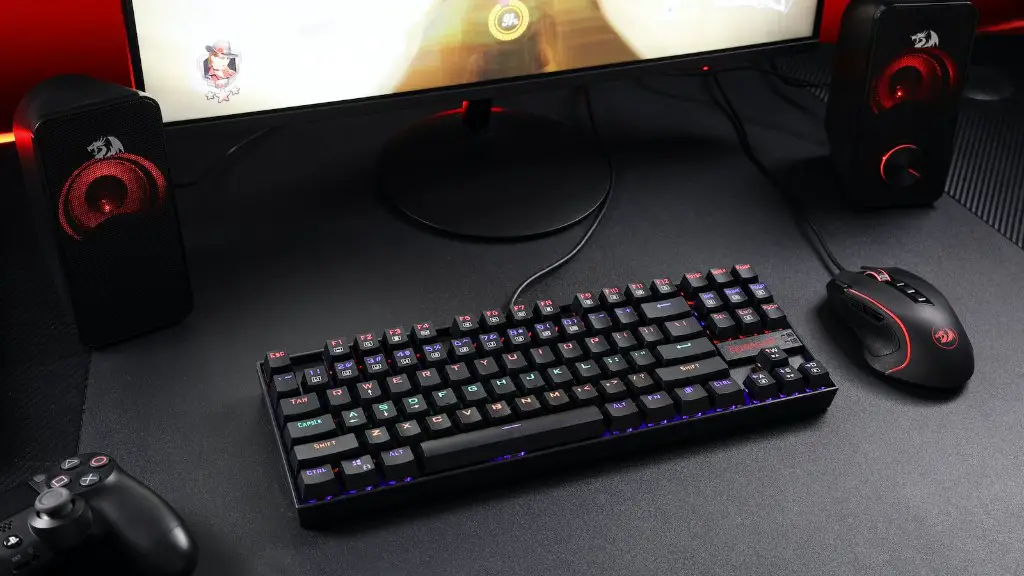
It is also important to remember that TVs are not the only option for gaming. Other types of gaming monitors may offer better visuals and better refresh rates than televisions can. Additionally, there are also other solutions such as curved gaming monitors, which can provide an even more immersive experience than a traditional flat panel TV.
Finally, it is also worth noting that some gaming monitors are more energy efficient than TVs. This can also help to reduce your energy bills in the long run, so it is worth considering if you are looking for the most cost-effective solutions.