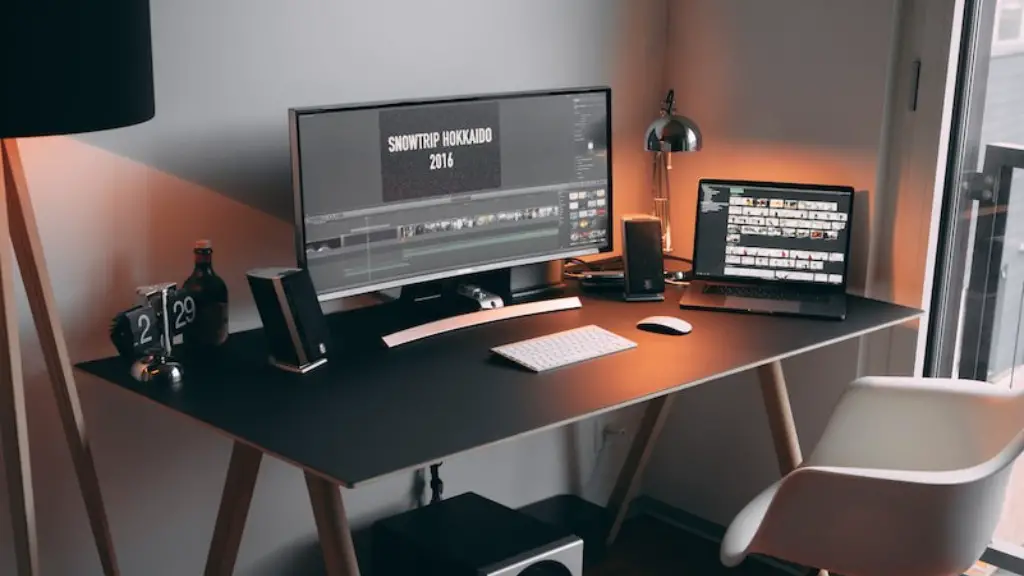
Building your own gaming PC can be an incredibly rewarding experience, as it allows you to customize your rig to perfectly fit your desired needs. However, if you’re on a tight budget, the process can seem a bit daunting. Luckily, it is possible to build a powerful gaming PC for under $800. Here’s a detailed guide on how to do it.
First, it is important to decide what components to buy. Consider researching which parts are currently offering the best value for budget builds. Make sure to pay special attention to the processor and graphics card. Finding the best Intel or AMD processor, along with the optimal graphics card for your budget, is absolutely essential for a successful build. With this in mind, it’s best to limit your budget to just those two components. You can always make upgrades later on.
Next, you should decide whether it is better to go for preassembled systems or to build your own. Pre-built systems offer convenience and usually save money, but will limit your choices as compared to individual pieces. It is important to remember to consider the branded systems on offer, which could also be an option if you are willing to accept fewer features.
Once you have decided on the main components, you will need to purchase all the extras. This includes additional peripherals such as a monitor or keyboard, as well as the necessary cables and adapters. When buying these, it is important to consider their quality as it will be beneficial in the long run.
Now you need to select the best case for your build. Cases usually come in either a mini tower or mid tower size, but other shapes and sizes such as full towers are also available. Before buying one, make sure to read reviews and research the overall design and cooling options. Finally, you will need to pick the right storage to prepare your dream gaming pc. Some people prefer the performance of a solid-state drive while others may opt for a larger but affordable hard drive.
Preparing Your Components For The Build
Now that you have all the components ready, it’s time to prepare them for the build. First you need to make sure your case is securely mounted. Afterwards, install the power supply and the processor. Make sure both those components are in the correct slots and the power supply has enough wattage for the components you’ve chosen. Next, attach the motherboard standoffs to the case.
Now it’s time to install the RAM. Make sure you choose the correct type for your motherboard. If you’re not sure, consult your motherboard’s manual to find out which type of RAM you need. Once you have all the correct RAM sticks, you can start to plug them into the motherboard slots. Remember, if you have more RAM slots than you have RAM sticks, make sure to leave the empty slots empty in order to air cool the sticks.

Tim the GPU follows. Before you insert the graphics card, make sure to double-check that the card is compatible with your motherboard. Also, attach the GPU cooling fan and locate the nearest PCI slots on the motherboard. Then connect the display monitor cable to the GPU.
Next, you need to connect the storage device. For this, you will need either a SATA data cable or an M.2 cable, depending on what your motherboard and storage device can accommodate. Once you’ve connected all the cables, connect your cables to the appropriate ports. Lastly, add any external drives and peripherals.
Installing The Operating System
Now it is time to install the operating system on your new gaming PC. This can be done using a USB drive or a CD. If using a CD, make sure you have the correct BIOS settings to allow your machine to boot from CD. If you’re using a USB drive, you will have to configure the BIOS to recognize the USB as a bootable drive.
Once you’ve successfully booted from the CD or USB, follow the on-screen instructions to install the operating system onto your PC. This will usually include downloading and installing the necessary drivers and software for your chosen OS. Once complete, you’re all set!
Testing The Rig
Once you’ve finished building your PC, it’s time to fire it up to see if all the components are working correctly. Make sure to double-check all the cables and connections, then press the power button. If all goes well, the lights on the motherboard should light up, signaling your computer is ready to boot.
Once the system has finished booting up, check that all your peripherals, such as the keyboard and mouse, are working correctly. Additionally, make sure the OS is running correctly. After that, run some performance tests to ensure everything is running optimally.
If all went well during the tests, it’s time to finally enjoy your new gaming rig. Install all the games you’ve been wanting to play, then sit back and enjoy. You can also begin to tweak the settings and make any necessary tweaks to get the best performance for it.
Overclocking Your System
Overclocking is a process that can dramatically improve performance on your gaming PC by pushing the components of the system to their highest possible capacity. Before attempting this, make sure you’re familiar with the basic how-to of overclocking, as there is a certain risk of damaging your PC. Start by researching overclocking your chosen processor, as well as graphics card. Make sure to double-check all the settings before you apply them to your system.
Once you’ve done your research, it’s time to start tweaking your gaming PC. Depending on your processor and the cooling system you have available, the way you overclock will vary. Usually, you will need to access the BIOS to make any necessary tweaks, such as increasing the voltage, raising the FSB, or disabling certain services. Again, follow the instructions carefully and remember to save your changes regularly.
Additionally, you will want to invest in a good CPU cooler. This will help lower the temperature of the processor, allowing you to push the components to the max without fear of causing any damage. It is also important to mention that while overclocking can unlock extra performance, it can also cause extreme damage to the system.
Once you have finished overclocking your rig, it’s time to test it out. Fire up the benchmark tools and see if you’ve achieved a noticeable improvement. If so, you’ll be ready to enjoy your new powerful gaming PC at an incredibly reasonable price.
Upgrading Your System
Another great way to improve your gaming PC is by making upgrades. If you are on a budget, you can start by replacing your hard drive with an SSD, which will significantly improve the system’s performance. Similarly, you can upgrade your graphics card, processor, or RAM for an increased gaming experience.
Alternatively, you can also invest in better peripherals for your gaming PC. A quality monitor or gaming mouse can further improve your gaming experience. Additionally, investing in a better power supply is a good way to remove any doubts about how well your system runs, as a quality PSU will ensure reliable power to all your components.
It is also worth noting that hardware components don’t last forever. As time passes, newer models are released which offer more features and better performance. If you’re looking to upgrade your system in the long run, make sure to keep an eye out for new releases and read reviews to make sure you’re getting the best bang for your buck.
Finally, don’t forget to use caution when making upgrades. Buy components that are compatible with your existing system and make sure to read the manual thoroughly before attempting to install them. Following these steps will ensure you get the most out of your budget gaming PC.