When selecting a gaming monitor, there are a few key features to consider. First, you should think about the panel type, size, display resolution, refresh rate, response time, brightness, contrast, and viewing angle. Each of these will affect the overall gaming performance in different ways, so you should consider these carefully. Additionally, you should make sure that you’re aware of any other hardware that you may need for your gaming setup, such as additional monitors, graphics cards, and sound systems.
One of the most important considerations when selecting a gaming monitor is the display resolution. This is a measure of the clarity of the image quality and the amount of detail that can be seen on the monitor. Common resolutions for gaming are 1920×1080 (Full HD) and 4K. If you are using a graphics card with multiple outputs, you may also be able to use a higher resolution than 4K. If you have a graphics card that supports high refresh rates, this is also something to consider.
Another important feature to consider when selecting a gaming monitor is the refresh rate. This refers to the number of times per second the monitor can update. Most gaming monitors provide a refresh rate of 60Hz, but some offer higher refresh rates such as 120Hz or 144Hz. This can help reduce motion blur and artifacts when gaming at higher framerates. For competitive gamers, a higher refresh rate may be a necessity.
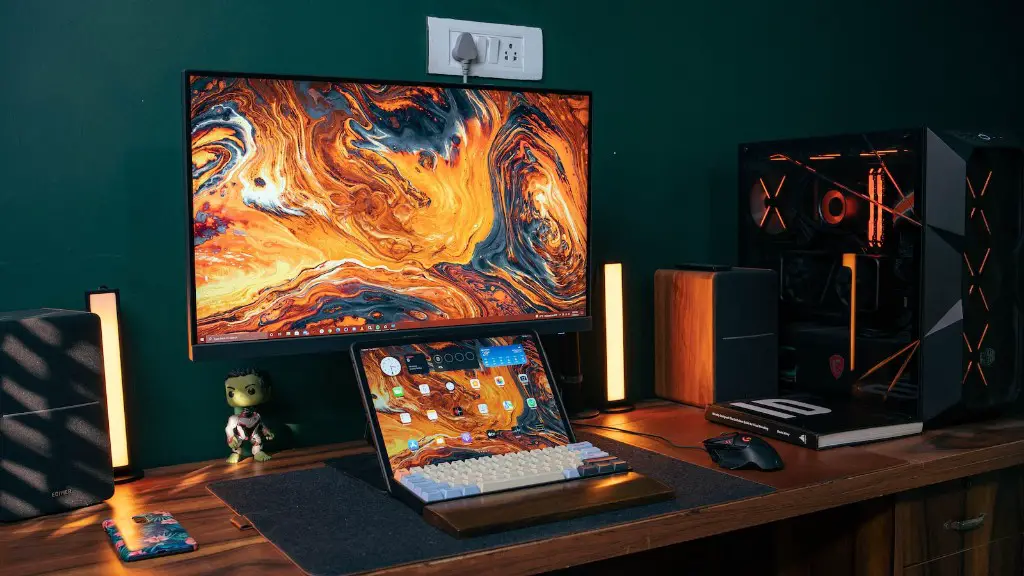
Response time is also an important consideration for a gaming monitor. This is the time it takes for the monitor to update after receiving visual information from the graphics card. Lower response times are desirable for gaming as they help to reduce motion blur and artifacts. However, it is important to note that this is not the only factor to consider when selecting a monitor, as refresh rate and display resolution also play an important role.
Finally, you should consider the brightness and contrast of the gaming monitor. Brightness is an important factor as it affects how easy it is to see game elements in different types of lighting. Contrast is also important, as it helps to make the colors of the game elements pop and stand out. The viewing angle is also a factor to consider, as it affects how clear the image looks from different viewing angles.
Panel Type
One of the first considerations when selecting a gaming monitor is the type of panel it uses. TN (Twisted Nematic) panels are the most common and offer good performance and affordability. IPS (In-Plane Switching) panels offer better color accuracy and viewing angles, and can be more suitable for certain types of games. VA (Vertical Alignment) panels offer good color accuracy and contrast, but they can have slow response times.
When choosing a gaming monitor, you should also consider the size of the panel. Larger panels provide a larger viewing area, but can be too large for some gamers. Smaller panels are more suitable for gaming in smaller spaces, but may not provide the same level of immersion as a larger panel. It’s important to consider the size of the room you are gaming in, as well as the size of the monitor.
The display resolution of the monitor is also important, as it affects the level of detail visible in games and movies. Common resolutions for gaming include 1080p (Full HD) and 4K, with some gamers opting for higher resolutions. You should also consider the refresh rate and the response time of the monitor when selecting a gaming monitor, as this can affect the overall gaming experience.
HDR Compatible
If you’re looking for the best gaming monitor, you may want to consider one that is HDR compatible. HDR (High Dynamic Range) displays have wider color gamuts and higher contrast ratios, which can make for a more immersive gaming experience. Many of the latest gaming monitors are either fully or partially HDR compatible, so if you want the best image quality, this is something to look for.
Another important factor in selecting a gaming monitor is the resolution. It is important to match the resolution of the monitor to the resolution of your gameplay. If you are playing a game at 1080p, then you want to make sure that your monitor is also at least 1080p. This helps to ensure the best possible gaming experience and image quality.
Another feature to look for in a gaming monitor is the panel type. IPS panels are typically more expensive than TN panels, but offer better color accuracy and viewing angles. VA panels have good contrast and image quality, but may suffer from slower response times. It is important to consider all of these factors when selecting a gaming monitor.
Finally, you should also consider the brightness and contrast of the monitor. Some gaming monitors have adjustable brightness and contrast settings, so you can tweak them to suit the environment where you are playing. Many monitors also have pre-calibrated gaming modes that can be used to optimize the picture quality for gaming.
Connectivity
When selecting a gaming monitor, it is important to consider the connectivity options. Usually, monitors offer one or more of the following ports: HDMI, DisplayPort, and DVI. Make sure that the monitor you select has the ports that your graphics card and other peripherals use.
Some gaming monitors also come with additional features such as USB ports, built-in speakers, and headphone jacks. While these are not essential, they can be useful if you want to connect additional peripherals or if you want to take advantage of the audio features.
It is also important to consider the cost of the gaming monitor. While it can be tempting to go for the cheapest option, it is important to consider the features that the monitor offers. Higher-end monitors may have better image quality and more features, but they will also cost more.
Finally, it is also worth considering the warranty and customer service offered by the manufacturer. Most gaming monitors come with a one-year warranty, but some may offer longer warranties and better customer service. This can be a deciding factor when making your purchase.
Accessories and Features
When selecting a gaming monitor, it is important to consider any additional accessories or features that the monitor may come with. Some gaming monitors come with special gaming-oriented features such as gaming modes and preset profiles. If you are looking for the best image quality and performance, these features can be very helpful.
Some monitors come with additional accessories such as limited-edition wall mounts and stands. While these accessories may not be essential for a gaming setup, they can be useful if you want a stylish and organized setup.
Some gaming monitors also come with extra features such as an anti-glare coating or viewing angle adjustments. These features can be useful if you need to position your monitor in an awkward location or in bright environments.
Finally, it is important to consider any special features that may be included with the monitor. Some monitors come with AMD FreeSync and NVIDIA G-SYNC support, which can help reduce screen tearing and stuttering when gaming with a compatible graphics card.
Conclusion
When selecting a gaming monitor, there are some key features to consider, such as the panel type, size, display resolution, refresh rate, response time, brightness, contrast, and viewing angle. Additionally, you should think about any other hardware that you may need for your gaming setup, such as additional monitors, graphics cards, and sound systems. Other factors to consider include HDR compatibility, the resolution of the monitor, the panel type, and the brightness and contrast. Finally, you should also look for any additional accessories and features, such as gaming modes and extra ports.
