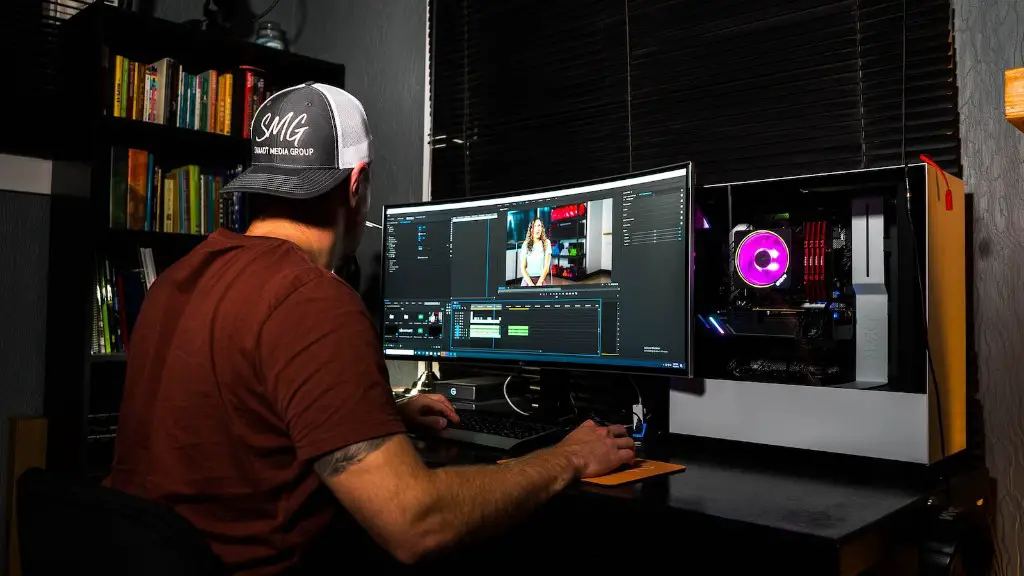
Are you a serious gamer? Are you constantly troubled by lag when gaming? Sluggish performance could take the fun out of your gaming experience. That’s why it’s important to take the necessary steps to speed up your gaming PC. Here are some useful tips that could help you restore the speed your gaming deserves.
The first step to speeding up a gaming PC is to make sure that it has the latest version of the system of the game you’re playing. Changing to a more updated version of the system may eliminate problems that could be causing lags. Therefore, it’s always smart to make sure that your game is always up-to-date.
You should also look into free remounting your system. Remounting means removing dust to the extent that it is possible, cleaning the fan and its slots, putting back into place the CPU, RAM and other important parts, and checking for malfunctioning parts. It is always recommended to have this done or have an expert do it for you.
Another way to speed up a gaming PC is to use game acceleration software. It allows you to run your game while in-game at a much faster rate than before. This can be great but be sure to locate reputable software that won’t make your system experience any malware.
Moreover, it could be useful to check the usage of RAM. It’s best for gamers to have more than 8GB RAM for an optimal gaming experience. Each application open takes up a certain amount of RAM, so it’s important to be vigilant of the applications occupying RAM and ensure that your RAM is not overworked.
Finally, you should look in to upgrading some parts. Upgrading the basic components such as RAM and GPU will definitely add some extra speed to your gaming PC. It may be expensive, but ultimately it is worth it for an improved gaming experience.
Optimizing the Settings
In addition to the above steps, you should also explore optimizing the settings of your game and graphical processor. Lowering the graphics settings can help boost performance if you don’t need all the details on a game. Even though game developers usually try to make most games run both smoothly and at a high-performance level, the fact is that there are always some games that just don’t run as well as we would like them to.
It’s a good practice to check the amount of frames per second (FPS) generated by the game. Ideally, you should be aiming at a minimum of 30 FPS on most games, however, it depends on the game and the type of card you have. You can check your FPS by using one of the monitoring apps.
Furthermore, you can also explore using overclocking to get the most out of your system. While it’s never recommended for novice gamers, experienced PC users can look into this option. Increasing the clock speed of certain components such as the CPU and GPU can provide noticeable performance gains.
Contrary to popular beliefs, many games can be overclocked without running into any issues, such as software crashes or damage to the hardware itself. It’s essential that you are well aware of the safety implications of overclocking and the potential risks associated with it.
Managing the Programs
It’s important to manage the programs running on your computer. Apart from the usual task of closing down additional programs running in the background, you should also consider turning off Windows updates, as they can put a heavy load on your system when it’s running a game. You can easily turn off Windows updates temporarily, but don’t forget to turn the feature back on once you finish gaming.
Additionally, you should try to keep the drive clean by deleting temporary files regularly and uninstall programs that you no longer use. Keeping your PC clutter-free will ensure that it’s running as efficiently as possible.
Using Drivers
It is essential for gamers to check periodically for the latest versions of drivers for their hardware. If a game starts to lag, it’s a good idea to update the drivers of the equipment, as this could help the gaming experience. For example, updating the graphics card drivers, the mouse driver, and the keyboard drivers, can provide sizable performance gains.
It’s also important to regularly update drivers found in a game. This is especially relevant for online games, as new drivers and scripts are released on a regular basis, and many of them are of great importance for better performance and lag-free gaming.
Using an SSD
If you want to speed up your game, investing in an SSD could be a good option. It’s much more reliable than a regular hard-drive, and can read data faster than normal hard-drives. This results in faster game loading times which could give you an edge.
However, you should also take into account whether you can afford the prices of an SSD. Prices have fallen over the years, but are still relatively expensive depending on the type and size of drive you require.
Using a Separate VPN
If you find yourself playing numerous online games, it may be a good idea to use a separate VPN for playing games. Using a separate VPN for gaming prevents others from viewing your gaming data and helps keep your gaming activities secure. In addition, it allows you to customize your online gaming experience, by specifying bandwidth priorities for gaming.
Moreover, it can help reduce lags that often occur when gamers are playing online. A VPN can also be used to bypass any restrictions that may be present on your game’s servers or to play games from other regions.