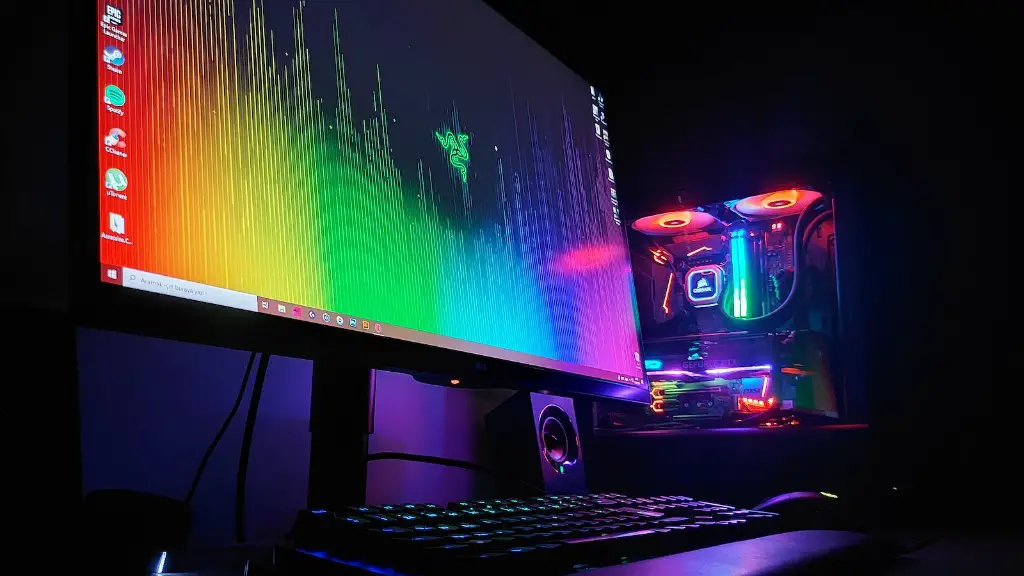
Many modern gamers may ask themselves if 2000 dollars is enough for a gaming PC. In short, the answer is yes. With a budget of this sort, gamers can get quite a lot of power for reasonably good gaming performance. In order to make the most of the budget, it’s important to understand the major components of a gaming PC and weigh them against one another.
The most important component is the CPU; the cost of this component typically ranges from 100-300 dollars, but for a budget of 2000, the best option is an i5 8400 with six processor cores. This processor is extremely powerful and capable of running any recent game without a hitch. For the graphics card, an AMD Radeon RX 580 is a great choice and can handle most graphically demanding games currently available with ease. With a budget of 2000, a 120GB SSD is a viable option for storing games and other applications, as well as a 1TB HDD for additional storage. In addition, 8GB of DDR4 RAM is usually adequate.
The overriding factor of the budget, however, is how much money one is willing to spend on other components such as the case, fans, CPU cooler, and other peripherals. A good gaming PC should have a case with efficient cooling, so that the hardware runs at optimal temperatures. Depending on the CPU, an appropriate CPU cooler might be necessary as well. As for fans, good quality cooling fans can keep noise levels to a minimum, and are essential for keeping the PC’s internal temperatures low.
A good gaming PC also needs an adequate power supply. If a budget of 2000 dollars is available, then a 700-750 watt fully modular power supply is appropriate. This will provide sufficient power to the build and all components, which is essential for reliable performance. Finally, peripherals are also necessary to complete the gaming setup, such as a monitor, keyboard, mouse, and headset. While these aren’t essential for a gaming PC, they greatly enhance the gaming experience.
Overall, building a gaming PC with a budget of 2000 dollars is certainly achievable. The major components can easily be purchased for an i5 8400 with an AMD Radeon RX 580, an SSD and HDD, 8GB of DDR4 RAM, and a 700-750 watt power supply. With these components, an excellent gaming PC build can be put together that is more than capable of running any modern game. On top of that, a few hundred dollars in peripherals can be added to complete the build.
Cooling and Noise Level
Cooling is essential for gaming PCs and good quality COOLING FANS can prevent not just heat related issues, but also reduce noise levels significantly. Fans that are good for cooling but low-noise operations will ensure a quiet gaming experience, especially when gaming for extended periods of time. It is possible to purchase a single fan that has both cooling and noise-reduction capabilities, which is ideal for gaming PCs.
In addition to cooling, adequate ventilation is also important. While most cases come with adequate ventilation, it is always good to add additional cooling fans. A side vent, for example, will provide additional air intake and cooling capability, especially if the case is equipped with multiple fans. It is important to strike a balance between cooling and noise level, as too much cooling can lead to excess noise, while not enough cooling can lead to overheating and other issues.

Cable management is another important consideration for gaming PCs. By reducing the number of cables and cables running to the components, as well as organizing the cables more neatly, cooling performance can be improved significantly. It is also important to make sure that the cooling fans are installed correctly, as incorrect installation can lead to issues such as dead spots and reduced cooling performance.
Overall, cooling and noise levels are extremely important for a gaming PC. It is essential to have reliable, efficient cooling fans that will provide adequate cooling while keeping noise levels low. On top of that, adequate ventilation and a neat cable management system are also essential for optimal gaming performance.
Power Requirements
For a gaming PC with a 2000 dollar budget, a power supply with 700-750 watts is usually appropriate. It is important to purchase one that is modular, as this will allow the user to customize the layout of the cables to their specifications. A semi-modular or non-modular power supply can still be used, but this limits the customization options and can lead to an untidy wiring situation.
The power supply must also meet certain requirements to ensure a reliable and safe gaming experience. It is important to purchase a power supply from a trusted manufacturer, such as Corsair or EVGA, to eliminate the possibility of any safety issues. It must also come with the relevant safety certifications, such as 80 Plus or 80 Plus Gold. Finally, the power supply should have a minimum of 5 year warranty, as this will provide peace of mind.

Once the power supply has been purchased, it is important to measure the wattage requirements of the components. The wattage of the CPU, graphics card, and other peripherals must be added together to determine the total wattage required. If the total wattage exceeds the power supply, then it might be necessary to purchase a more powerful one.
Overall, a power supply is an essential component for a gaming PC. It is important to purchase one from a trusted manufacturer with the appropriate certifications, as well as a minimum of 5 year warranty. Once purchased, the total wattage requirements of the components should be calculated and the power supply should meet or exceed these requirements.
Ram and Storage Requirements
Ram and storage are two of the most important components of a gaming PC. For a budget of 2000 dollars, 8GB of DDR4-2400MHz RAM is recommended. This is more than enough RAM for most games, and even if more is necessary, additional RAM can be added at a later date. For storage, a 120GB SSD is usually sufficient, and a 1TB HDD can be added for additional storage needs.
It is important to choose the right type of RAM for the setup. For example, if the processor supports higher speed RAM, it would be wise to purchase RAM that can take advantage of this. On the other hand, slower RAM is generally cheaper and can still provide adequate performance, so if budget is an issue, then this is a viable option. The same rule applies to storage; an SSD is generally much faster than a HDD, but it is expensive, so if budget is an issue, then a HDD is more appropriate.
Once the RAM and storage have been chosen, it is important to install them correctly. Installing the RAM is fairly straightforward; all the user needs to do is open up the case and insert the RAM into the appropriate slots. Similarly, SSDs can be installed with relative ease, and usually come with the appropriate cables and instructions. HDDs may require more effort, as the user will need to install a special type of cable for the hard drive, as well as mount the hard drive in the case.
Overall, RAM and storage are essential components for any gaming PC, and it is important to choose the right type for the system. 8GB of DDR4 RAM is recommended for most systems, and a 120GB SSD and 1TB HDD are also viable options. It is also important to install them correctly, as this will ensure optimal performance and reliability.
Cases and Peripherals
The case is an important component for any gaming PC, as it protects the components and provides efficient cooling. For a gaming PC with a 2000 dollar budget, a mid-tower case with multiple fans is recommended. The case should have good airflow and efficient cooling to ensure the components run at optimal temperatures. It is also important to choose a case that is attractive, as this will make it easier to match the gaming build to the user’s existing setup.
As for peripherals, this is an area that can really make or break the gaming experience. A gaming keyboard and mouse are essential, as they are designed to be fast and responsive. A gaming headset is also important, as it will provide clear audio for in game communication. A gaming monitor is also recommended, as it will allow the user to take full advantage of their gaming PC.

Furthermore, a gaming chair can make a huge difference in terms of comfort and ergonomics. While it is not essential for gaming, it is highly recommended for long gaming sessions. Finally, a good set of speakers can enhance the audio experience, but only if the gaming PC is powerful enough to support it.
Overall, the case and peripherals of a gaming PC can really enhance the gaming experience. It is important to choose a case with efficient cooling, as well as a good set of peripherals that are designed for gaming. A gaming chair, headset, and speakers can also be added, though this will depend on the user’s budget.
