Research indicates that with the advent of ultra-high definition (UHD) resolution, gaming monitors are taking center stage over television sets when it comes to selecting a screen for your gaming console. Even so, it’s important to note that there are certain differences between a gaming monitor and a TV that should be taken into consideration before making a decision. In this article, we’ll explore the pros and cons of each to determine which is better for gaming.
When comparing a TV to a gaming monitor, one of the first things to consider is the refresh rate. Generally speaking, a gaming monitor offers a higher refresh rate than a TV. This is because gaming monitors tend to use in-plane switching (IPS) technology that allows for more rapid response times. In contrast, televisions often use vertical alignment (VA) technology, which is not as responsive. This means that a gaming monitor can reduce some of the blur that comes with a TV when playing fast-paced games.
Another factor to think about is the resolution. The majority of TVs today come with 4K or 8K UHD resolution, which is greater than what the majority of gaming monitors offer. This means that with a TV, you’ll get greater detail when playing high-resolution video games. However, many gaming monitors have a better contrast ratio, meaning that black will be darker and white will be brighter, providing a more immersive gaming experience.

One of the advantages of using a gaming monitor is that it will usually be cheaper than a TV of similar quality. This is because gaming monitors are often more affordable than televisions, and they may come with features designed specifically for gaming, such as multiple inputs, a black frame insertion feature, and even built-in speakers. TVs, on the other hand, usually come with a single input, and their speakers are usually of poorer quality than those on a gaming monitor.
In terms of size, gaming monitors tend to be available in a much wider variety of sizes than televisions. This means that if you’re looking for a larger screen, say, for a multi-player game, a gaming monitor will be the better choice. On the other hand, if you’re looking for a smaller screen, a TV may be the better option.
Finally, another factor to consider is how much you’re willing to spend. In general, a gaming monitor will be more expensive than a television. This means that if you have a limited budget, a gaming monitor may not be the best option for you. However, if you’re willing to invest more money, a gaming monitor may be more satisfying in terms of performance and features.
Multi-Player Games
Multi-player gaming requires multiple players with multiple screens. When it comes to multi-player gaming, both gaming monitors and TVs offer distinct advantages. For example, with a gaming monitor, you’ll be able to sit closer to the screen, which will allow you to see more detail. On the other hand, with a TV, you’ll have a larger screen, which will allow for more players and a more immersive gaming experience.
Moreover, if you’re looking for frame rate and smoothness, a gaming monitor is the way to go. As previously mentioned, gaming monitors tend to have higher refresh rates than TVs, which will provide a more smooth gaming experience. TVs, on the other hand, tend to suffer from a higher input lag, meaning that there may be a delay between your inputs and what shows up on the screen.
In addition, gaming monitors often come with multiple inputs, allowing you to connect multiple players to the same monitor. This means that all the players can see the same image on the screen, which is great for multi-player gaming. On the other hand, TVs often come with a single input, meaning that you’ll have to manually switch between the different inputs.
Finally, gaming monitors are usually much cheaper than TVs of similar quality. This means that you’ll be able to purchase multiple gaming monitors to accommodate multiple players, as opposed to a single TV. In addition, you’ll likely get better picture quality with a gaming monitor than a TV, as most gaming monitors are designed for gaming.
Game Console Type
The type of game console you use is another factor to consider when deciding between a gaming monitor and a TV. Some of the most popular game consoles are the Xbox One and the PlayStation 4. If you’re using one of these consoles, a gaming monitor will likely be the better choice over a TV. This is because these consoles are designed for gaming, and gaming monitors are designed for gaming. This means that the response time and input lag of the monitor will be optimized for gaming, as opposed to a TV.
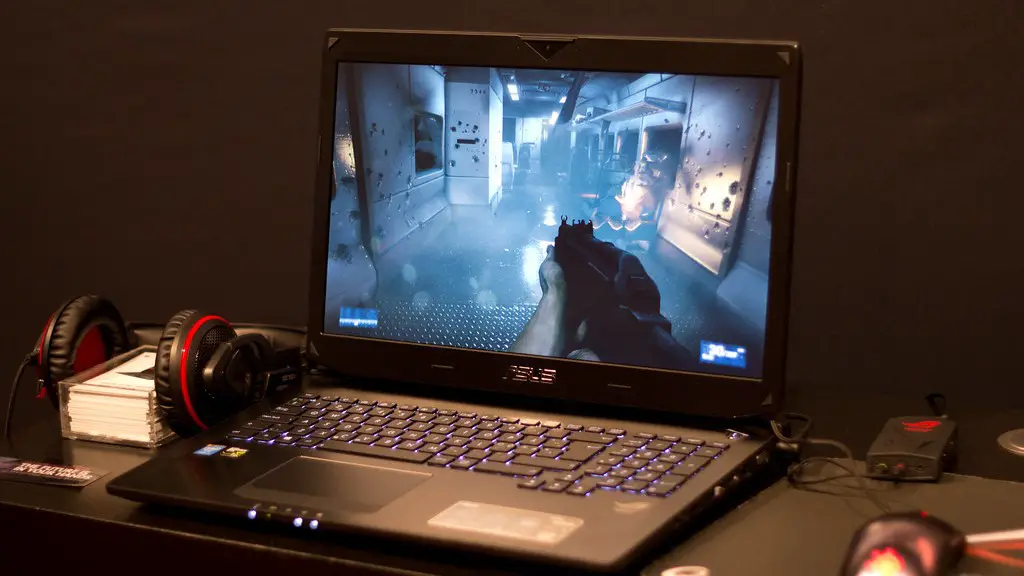
On the other hand, if you’re using a computer to play games, a TV may be the better purchase. This is because many of the newer PCs today are capable of 4K or 8K resolution. In addition, most PCs come with a graphics card that can support a much higher refresh rate than a gaming monitor. This means that a TV may be the better choice if you’re looking for the best picture quality.
Also, if you’re playing older console games, such as those on the Nintendo Switch, a TV will likely be the better choice. This is because these consoles are not designed for gaming and do not support high refresh rates. Therefore, a TV may be the better purchase if you’re looking for a more immersive gaming experience.
Finally, when it comes to console gaming, the size of the screen is another important factor. If you’re looking for a larger screen, a TV will likely be the better choice. However, if you’re looking for a smaller screen, a gaming monitor may be more suitable, as gaming monitors are usually available in a wider variety of sizes.
Form Factor & Versatility
The form factor and versatility are also key considerations when deciding between a gaming monitor and a TV. In this regard, gaming monitors tend to offer a more versatile experience than TVs. For example, gaming monitors often come with built-in speakers and multiple inputs, allowing you to easily switch between different players or different devices. On the other hand, TVs often come with a single input and poorer sound quality than what you’d find on a gaming monitor.

Another factor to consider is the size of the device. Gaming monitors tend to be available in a much wider variety of sizes than TVs. This means that you’ll be able to find a gaming monitor to fit your space, no matter what size it is. On the other hand, TVs usually come in a limited range of sizes, so you may have to compromise on size if you’re looking for a larger screen.
Furthermore, some gaming monitors come with a built-in headphone jack, which is great for those who want to listen to the game without disturbing others. In contrast, most TVs do not have this feature. Also, some gaming monitors come with adjustable stands, allowing you to customize the angle of the screen for the most comfortable viewing experience. TVs, on the other hand, typically come with a fixed stand that cannot be adjusted.
Lastly, if portability is a priority, then a gaming monitor is likely the better choice. This is because gaming monitors are often much lighter and more compact than TVs. This means that you’ll be able to move them around more easily and set them up in your desired location.
Conclusion
When it comes to deciding between a gaming monitor and a TV for gaming, there are several factors to consider. Some of the most important factors are the refresh rate, resolution, cost, size, and game console type. Generally speaking, gaming monitors offer faster response times and more versatility, while TVs tend to have a larger screen size and higher resolution. Ultimately, the choice between a gaming monitor and a TV depends on your individual needs and preferences.
