Thanks to the increasing popularity of gaming, monitors specifically tailored for gaming have come to the forefront in recent years. But is a gaming monitor good for office work? To answer that question, let’s take a look at what you should look for in a monitor when considering it for both gaming and office work.
1. Refresh Rate: The most important factor that must not be overlooked is refresh rate. It refers to how many times an image is updated per second on the screen. A gaming monitor can offer refresh rates of up to 144Hz or even higher, providing fluid actions during gaming, while an office monitor only provides up to 60Hz. Therefore, a gaming monitor offers better performance than an office monitor in this regard.
2. Input Lag: Input lag is the time it takes for a monitor to display the results of a user’s action. A gaming monitor has lower input lag since it is optimized for gaming. Therefore, it is preferred for office work as well since it offers faster response time.
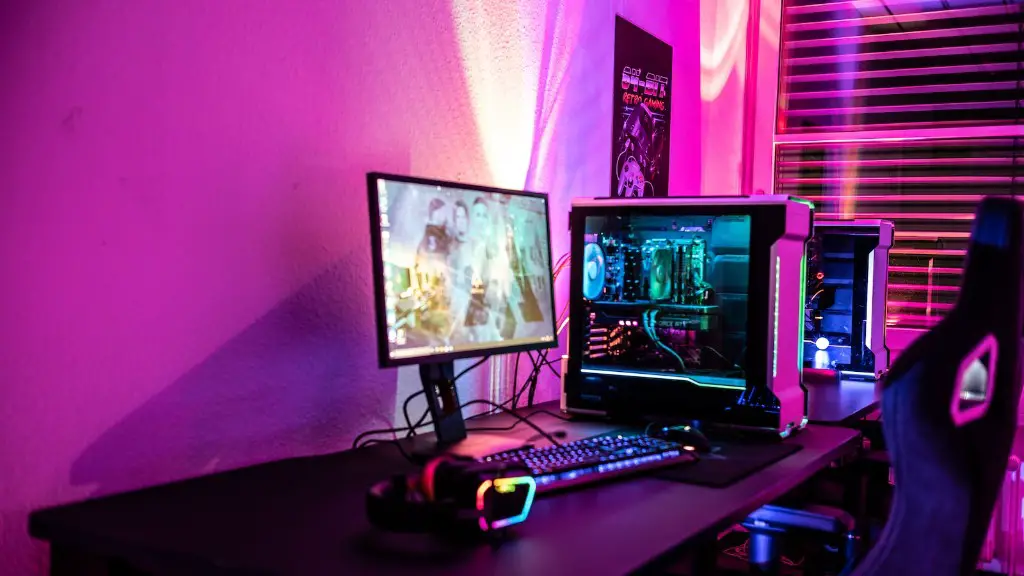
3. Color Accuracy: Another factor one should consider while buying a monitor is the level of color accuracy. A gaming monitor has better color accuracy than an office monitor, as it needs to display vibrant colors for an immersive gaming experience. Therefore, if you need to do any sort of color-sensitive work, then a gaming monitor is a better option.
4. Resolution: One of the main differences between a gaming and an office monitor is their resolution options. A gaming monitor usually offers better resolution options and some even offer as high as 4K resolution. Therefore, if you need to work on high-resolution images, a gaming monitor is a better option.
Panel Constancy
Another aspect to consider when evaluating whether a gaming monitor is good for office work is panel constancy. Panel constancy refers to how the colors on the monitor appear even if the viewing angle is changed. A gaming monitor needs to have good panel constancy since gamers often sit at an angle while playing. Therefore, a gaming monitor is generally better than an office monitor when it comes to panel constancy.
Connectivity
Finally, you also have to consider the connectivity options that the monitor provides. Most gaming monitors come with a range of connectivity options such as HDMI, DisplayPort and even USB-C. This can be extremely helpful for plugging in multiple devices at once and making your workspace much more organized. Therefore, a gaming monitor is definitely a better option for office work.
To conclude, a gaming monitor can be a good option for office work if you consider the above-mentioned factors. A gaming monitor offers better resolution, color accuracy, refresh rate, input lag and panel constancy than an office monitor. It also offers better connectivity options and a wide range of features that can help make your workspace more efficient and organized.
G-Sync/FreeSync
Another aspect to consider when selecting a monitor for both gaming and office work is whether it supports G-Sync or FreeSync technology. Both technologies are designed to eliminate screen tearing and stuttering. While G-Sync is only supported by NVIDIA GPUs, FreeSync works with both AMD and NVIDIA GPUs. Therefore, if you are looking for a monitor that offers better experience for both gaming and office work, then it’s better to opt for one with G-Sync or FreeSync technologies.
Price
Lastly, when buying a gaming monitor, you should also consider its price as it can be quite expensive compared to an office monitor. However, there are a few gaming monitors that offer good features at an affordable price point. Therefore, if you are on a budget and still want to get a gaming monitor, you should take a look at the budget options available.
Optimal Adjustability
In addition to the above-mentioned factors, a gaming monitor should also have good adjustability. This includes features like adjustable stand and ergonomic design. This will help you have a comfortable gaming and office experience even after long hours of use. Therefore, it’s important to check these features before buying a gaming monitor.
Response Time
The last factor to consider when choosing a gaming monitor for office work is its response time. Response time is the amount of time it takes for a monitor to switch from one frame to another. A gaming monitor usually has a lower response time compared to an office monitor, which can be beneficial for office work as it can help reduce eye strain and make the viewing experience more comfortable.
