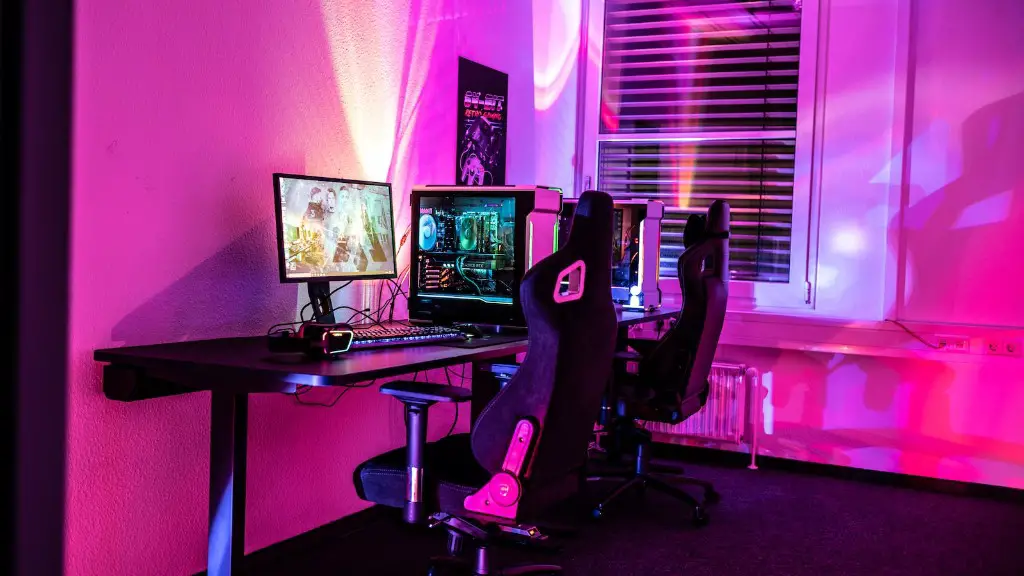
The debate of whether a gaming PC or laptop is superior when it comes to gaming is long-standing. Pro-gaming PCs promise serious performance for top-notch gaming, with their high-end specs and customizability, while laptops offer a convenient, portable option. Both have pros and cons that should be assessed before making a decision. This article aims to discuss the differences between gaming PCs and laptops to help gamers choose the one that suits their needs.
Portability Of A Laptop
One of the main advantages of laptops is they’re much easier to transport than gaming PCs. PC towers are bulky, and though their individual components are relatively lightweight, when combined they can be quite challenging to move. Furthermore, laptops come with their own batteries and can be used without needing to plug into a power source, making it far easier to take them on the go and play anywhere. On the other hand, gaming PCs need to be placed in a fixed location, as they require access to a stable power source.
Customizability Of A PC
Since PCs are composed of individual components all of which can be swapped and upgraded, they are much more customisable than laptops. Upgrading and replacing components like graphics cards, RAM or CPU will give your machine a serious performance boost – though it’s worth noting that this isn’t always the cheapest option. On the plus side, PC components are much more affordable than laptops, making PCs an attractive choice for gamers looking to tech out their setup. To customise a laptop you will need to upgrade the whole unit because of their single-unit nature.
Cost Of A Laptop

Though PCs are a more cost-effective option when it comes to the hardware itself, laptops provide convenience, portability and power-in-a-box. Budget laptops can be surprisingly powerful, while they remain compact enough to be comfortably carried around. Additionally, gaming laptops are generally more expensive than PCs, so it’s recommended that gamers save up and invest in a good-quality machine, as cheaps ones won’t perform as well.
Power Of A PC
For gamers looking for the most powerful machine, PCs are still the clear choice. With unparalleled power potential, PCs can handle any game you’d like to play, including ultra-high-definition AAA titles as well as esports titles. Some of the most powerful PCs can even achieve gaming speeds most laptops cannot. They’ll also be able to drive multiple monitors for a serious gaming setup.
Resolution Of A Laptop
Gaming laptops come up trumps when it comes to the display. Their compact design means they can fit large-screen displays in a frame only slightly bigger than a small PC processor case. However, gaming laptops also tend to have thicker bezels. This can be annoying when immersive gaming, but gamers won’t be disappointed at a laptop’s resolution when playing games.
Verdict
Despite their benefits, gaming laptops have trade-offs when compared to PCs. Laptops provide portability with serious power-in-a-box, but since customising them isn’t an option, gamers will need to invest in the highest specs their budget allows. On the other hand, PCs may lack portability, but they are highly customisable and powerful, making them the ideal choice for serious gamers. Ultimately, the decision comes down to preference and budget.
Compatibility Of A PC
Since PCs are made from individual components, finding compatible hardware is much easier than with laptops. All components must be compatible with each other, of course, but PCs tend to be more forgiving than laptops, as most PC components are compatible with a variety of other parts. Additionally, when upgrading components, certain functions may become unavailable – such as the ability to upgrade the graphics card – but the hardware itself is more forgiving than a laptop.
Lifespan Of A Laptop
When it comes to longevity, laptops typically outlast gaming PCs. Gaming PCs will need to have their parts upgraded occasionally as technology becomes more advanced and games require more processing power. However, laptops are designed to last, and it is fairly easy to upgrade components or even to replace individual parts with newer ones – provided the laptop is designed to be customised.
Cooling Of A PC
One of the key considerations for serious gamers is keeping their machine’s components cool. Due to their nature, PCs are more forgiving when it comes to cooling, as they can have more fans, larger heatsinks, liquid cooling systems and the like. This isn’t an option with laptops – and the overall space, heat and weight restrictions that come with laptops, mean that overheating can be an issue. For this reason, it’s important to check how well a laptop dissipates heat before buying.
Noise Of A Laptop
Gaming PCs tend to be much noisier than laptops, with fans running louder to keep the components at their optimal temperature. This can be very distracting for gamers, which means that for many, laptops are a better choice. Laptops are designed to be quiet and use only minimal fan speed to keep their components from overheating. Because laptops are smaller, however, they cannot always dissipate heat as quickly as PCs, so they may run hotter.
Accessories Of A PC
Another advantage of PCs is the ability to accessorise them. Everything from a gaming mouse, to a gaming headset and laptop, can be added to enhance the gaming experience. For those looking to create their ideal gaming space, PCs are definitely your best bet. However, some laptops have modular components that allow for customisation, such as external display connections and extra fans.
