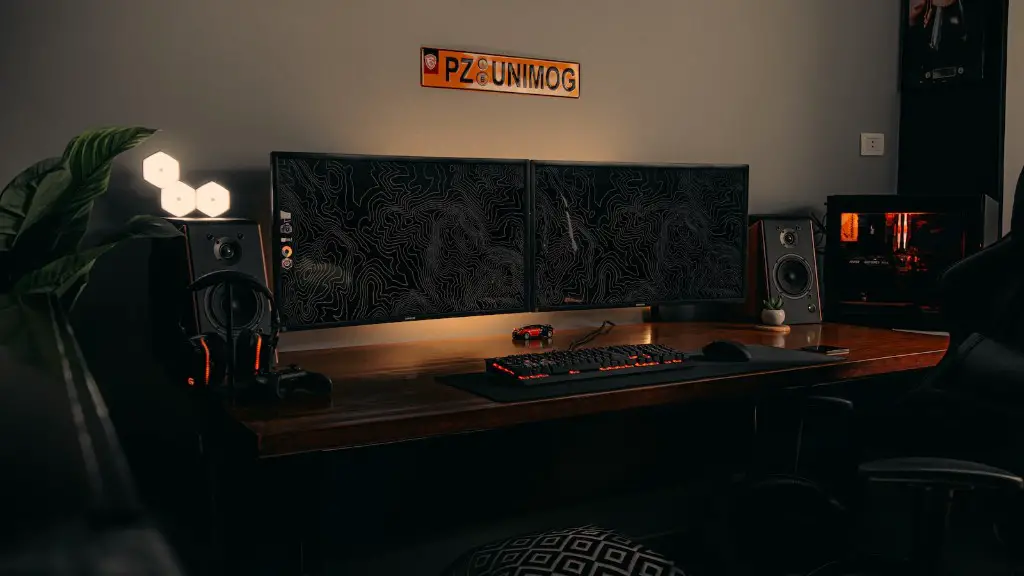
The average wattage of a gaming PC is something that many gamers want to know. It is important to understand that the power required to run any gaming PC is dependent on the individual components used. The amount of power will vary significantly depending on the type and number of items that are installed in a gaming PC.
CPUs and GPUs are the most power hungry components of a gaming PC. They are also the most important components when it comes to determining how powerful a gaming PC will be. The wattage of the CPU and GPU will determine how much wattage the whole system needs. Gaming PCs with high-end CPUs and GPUs will draw more power than those with a less powerful configuration.
Storage drives and RAM are the other components that consume a lot of power. The specific type of drives and amount of RAM installed will affect the amount of power needed to run a gaming PC. Moreover, the system fan will draw some power as well, though this is usually a minor factor in the power consumption of a gaming PC.

Finally, other miscellaneous components such as LED lighting, PCI Express cards, and even water cooling LEDs will draw some power as well. While these components might not make a huge difference in the wattage of the entire system, they do add up and should be taken into consideration.
In conclusion, the average wattage of a gaming PC will vary depending on the components installed in it. CPUs and GPUs are the two main components that will influence the power consumption. Also, storage drives, RAM, and the system fan will add to the power consumption. Lastly, other miscellaneous components can also influence the wattage.
Graphic Cards
Graphic cards are an integral component of a gaming PC, and they will draw a significant amount of power. When choosing a GPU, gamers must take into account the kind of power it will require. This is especially true for those who are buying high-end GPUs, as these will draw higher wattage. Generally, a gaming PC will require about 300 W for a mid-range GPU, and up to 500 W for a high-end GPU.
The wattage of the GPU will depend on both its performance and the type of technology used. For instance, most GPUs feature different kinds of technologies, such as GDDR5, HBM2, or GDDR6. These technologies are designed to improve the GPU’s performance, but they will also draw more power than other types of GPUs.
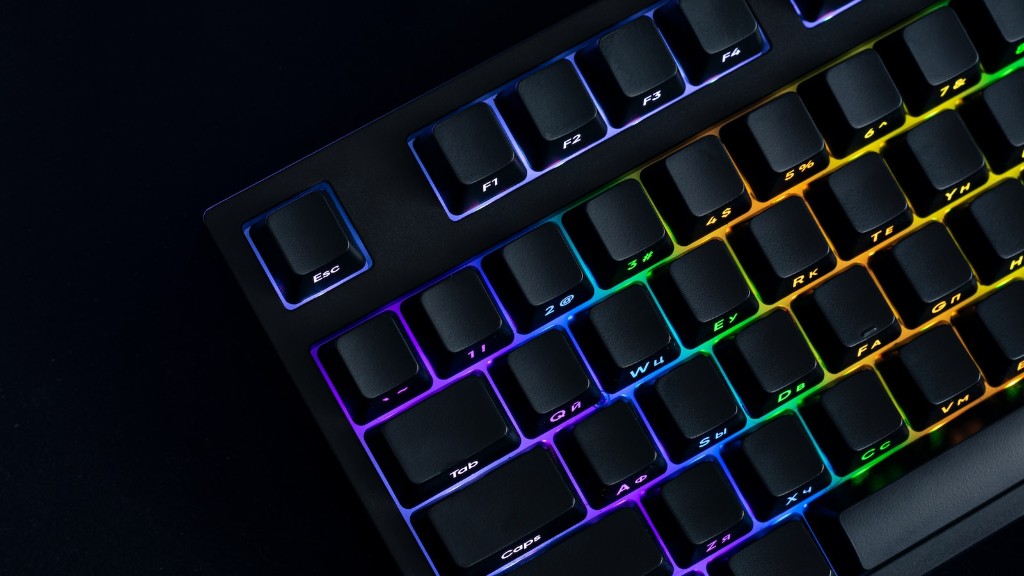
The amount of wattage a gaming PC needs will also depend on how many GPUs are installed. If there more than one GPUs in the system, the wattage will increase accordingly. Moreover, overclocking the GPU will also increase the wattage as it requires more power to run.
In conclusion, the wattage of a gaming PC will depend on the GPU installed in it. Mid-range GPUs will require around 300 W of power, while high-end GPUs may require up to 500 W. This number can increase, however, if there is more than one GPU installed in the system, or if the GPU is overclocked.
Motherboards
The motherboard is another important component of a gaming PC, and it will also affect its wattage. Good motherboards usually draw around 100-150 W, but this number can increase or decrease depending on the features included. Some motherboards have built-in features that generate more power, and ultimately, increase the wattage.
Apart from the power consumption, gamers must consider other factors when choosing a motherboard. For instance, the form factor of the motherboard should be taken into account, as mini ITX, micro ATX, or full ATX motherboards will vary in size and availability. Additionally, the type of CPUs the motherboard is compatible with should be considered as well.
The number of RAM sockets and PCI Express slots a motherboard has should also be taken into account when buying one. The more RAM sockets and PCI Express slots a motherboard has, the more components it can accommodate, and the higher wattage it might require.
Finally, gamers should consider the number of fans the motherboard has. Most motherboards have at least one fan, but some have more. Again, the more fans a motherboard has, the higher its wattage will be. In conclusion, the motherboard is an important component of a gaming PC, and its wattage will vary depending on its features.
PSU
The power supply unit (PSU) is the component that delivers the necessary power to all the other components. It is very important that gamers choose the right power supply, as it will ensure that the system works properly and doesn’t suffer from randomly shutting down or producing unexpected errors.
Generally, a gaming PC will require at least 500 W of power. This number will increase as the components installed in the system become more powerful or require more power. Moreover, some power supplies are rated for higher wattage than others, so gamers should be aware of what their system needs.

In conclusion, choosing the right PSU for a gaming PC is essential. Generally, gaming PCs will require around 500 W of power, though the wattage may increase depending on the type and number of components installed in the system. Moreover, some power supplies are rated for higher wattage than others, so gamers should take this into consideration when buying one.
Operating System
The operating system installed in a gaming PC will also affect its wattage. Generally, Windows 10 requires more wattage than macOS, as the former is a more demanding operating system. The wattage of the operating system will be significantly lower if the PC is using a Linux distribution.
Apart from Windows and macOS, there are a few other operating systems available for gaming PCs. AmigaOS is one of them, which is known for its low system requirements. This makes it a great choice for gamers who are running a system with low-end hardware.
Finally, gamers should keep in mind that the power consumption of the operating system will depend on the type of applications and games installed in it. When installing and running games, gamers should pay attention to the wattage it requires, and adjust the system accordingly.
In conclusion, the operating system installed in a gaming PC will have an effect on its power consumption. Generally, Windows 10 and macOS will require more wattage than other operating systems. Moreover, the wattage will vary depending on the type of applications and games installed in the system.
Other Components
Apart from the components mentioned before, there are other components that may affect a gaming PC’s wattage. These components include LEDs, fans, and external devices. LEDs are a popular choice for nice looking gaming rigs, but they also draw some power. Fans, on the other hand, are important to keep the system cool and will also draw some power. Lastly, external devices such as keyboards, mouses, and speakers will require some power as well.
In conclusion, a gaming PC’s wattage will be affected by other components such as LEDs, fans, and external devices. LEDs and fans are essential for properly functioning systems and will require a certain amount of wattage. External devices such as keyboards, mouses, and speakers will also require some power.
Conclusion
The wattage of a gaming PC is an important factor for gamers to consider. All the components in the system will have an influence on the wattage, although CPUs, GPUs, and the power supply unit (PSU) will be the most influential. Furthermore, other components such as storage drives and RAM, and even LEDs and fans will draw some power as well. Finally, the operating system installed in the system will also affect the wattage.
