The question of what processor to get for a gaming PC has become even more important due to the recent advances in processor technology. With more options on the market, it can be difficult to choose the right one for your gaming needs. This article will provide an overview of the processor technologies available and how they can affect gaming performance, so that you can make an informed decision on what processor to buy.
To start, let’s look at the main types of processor: Intel and AMD. Both manufacturers produce desktop processors for gaming, but each have distinct advantages for certain types of gaming. AMD Ryzen processors have more cores and threads than Intel processors, making them ideal for multi-tasking. Intel’s processors are generally better for high-end gaming, as they boast improved graphical performance.
When it comes to choosing a processor for a gaming PC, factors such as clock speed, core count and cooling capacity all need to be taken into account. Clock speed is a measure of how fast a processor is when it comes to computing, and having faster clock speeds can result in smoother gaming experiences. Core count is also important, as having more cores allows your PC to run more tasks faster. Finally, cooling capacity is important since gaming PCs are heavily taxed and having a large cooling system can ensure that your PC performs optimally in games.
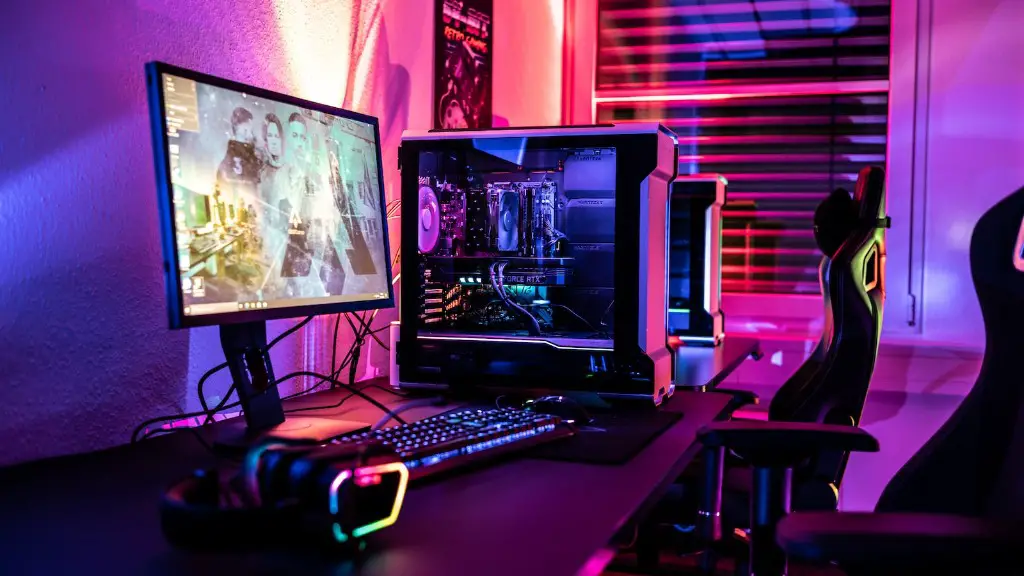
It’s also important to consider the motherboard when you’re selecting a processor, as certain models are designed to work with specific processors. For example, if you’re looking for a Ryzen 9 processor, then an AM4 or TR4 motherboard will be needed. It’s also a good idea to check whether the processor is compatible with any other components you plan to add to the PC, such as a graphics card or RAM sticks.
Finally, you should think about the budget you have available to purchase a processor. Processors can range in price from budget options up to top-end models; as such, it pays to research options in order to find the best combination of features at a price that you’re comfortable with. With the right choice, you can get a powerful processor to maximize your gaming performance at a reasonable cost.
Selecting a CPU for Budget Gaming Builds
When it comes to selecting a CPU for a budget gaming build, you have to be particularly mindful of your budget. Here, the focus should be on getting an affordable processor that’s still capable of providing good gaming performance. Intel’s i3 models are a good entry-level processor, as they provide a combination of good gaming performance and affordability. Core i5 processors are also well-suited for budget gaming, as they offer higher performance for only a slightly higher cost.
It’s also important to consider future upgrades here, as budget gaming builds may not have much in the way of upgradability. For this reason, it’s worth looking for models that support the latest technologies, such as DDR4 RAM or PCIe 4.0. This will ensure that the processor can still be used in the future, if you decide to upgrade your PC.
AMD’s Ryzen 3, 5 and 7 processors are also great budget choices, and they often offer better value than their Intel equivalents. The Ryzen 5 range is particularly good when it comes to budget gaming builds, as it offers better core performance than the Intel i3 range. However, if you plan on upgrading to higher-end components in the future, then an AMD Ryzen 7 processor might be a better choice.
Finally, the motherboard is almost as important as the processor when it comes to budget gaming builds – look for models that support a range of processors, such as AM4, TR4 or LGA 1151. This will ensure that you have enough room to upgrade the processor in the future.
Choosing a Processor for High End Gaming
When it comes to selecting a processor for high end gaming, the focus should be on getting the most powerful processor possible. Here, top of the range Intel Core i7 and AMD Ryzen 7 processors are the best choices, as they offer excellent performance at the highest speeds. Both offer a wide range of features and supporting technologies, such as PCIe 4.0, DDR4 RAM and multi-threading, which can contribute to better gaming performance.
For the ultimate gaming experience, Intel’s Core i9 and AMD’s Ryzen 9 processors are definitely worth considering. These high-end models offer the best performance available on the market and come with more cores than their lower-end counterparts. This can be useful for streaming, recording and for other demanding tasks, making them great for serious gamers who want the absolute best.
However, it’s important to consider the motherboard when choosing a processor for a high-end gaming PC. High-end processors often require a separate chipset or motherboard, so you’ll need to make sure that your chosen motherboard is compatible with the processor you’re looking at. Additionally, it’s beneficial to look for motherboards that support multiple types of RAM and have plenty of room for upgrades.
Overall, when choosing a processor for a gaming PC, it’s important to keep an eye on the clock speed, core count and cooling capacity, as these all have an effect on gaming performance. Additionally, you should consider the budget you have available, as well as the motherboard your processor needs. With the right information, you should be able to find the right processor to meet your gaming needs and get the best performance possible.
Consider Your Graphics Card
When it comes to selecting a processor for gaming, it’s important to consider your graphics card too. While a good processor will give your gaming PC a good base level of performance, it’s the GPU that will be the workhorse for the majority of your gaming needs. A powerful GPU is vital for high-end gaming, as it’s responsible for producing the frame rate and graphical fidelity that bring games to life.
If you’re looking for an all-encompassing gaming setup, then an AMD Radeon RX 5700 or Nvidia GeForce RTX 2080 would be the right sort of GPU to choose. However, if you’re on a tighter budget, then AMD’s Radeon RX 570 or Nvidia’s GeForce GTX 1650 are both good entry-level choices. For high-end gaming, a CPU and GPU combo such as the AMD Ryzen 5 3600 with a Radeon RX 5700 or the Intel Core i7 8700K with a GeForce RTX 2080 can provide powerful performance for a reasonable cost.

Of course, the specific GPU you need will also depend on the type of games you’re playing. If you’re playing high-end, graphically-intensive games, then you’ll need a powerful GPU. Conversely, if you’re playing older or less demanding games, then a lower-end GPU will be sufficient.
Ultimately, it’s important to consider your GPU when selecting a processor for a gaming PC. The two components work in tandem to provide a good gaming experience, so it pays to make sure that you have the right combination.
Cooling and Overclocking
When selecting a processor for a gaming PC, it’s also important to consider the cooling system. When gaming, the CPU and GPU are heavily taxed and they generate a lot of heat. Therefore, the cooling system needs to be able to effectively dissipate the heat to ensure that the PC runs at optimal performance. On-board cooling systems, liquid coolers and air coolers are all viable options, but these will depend on the type of processor you select.
If you’re looking to get the most out of your processor, then overclocking may also be an option. Overclocking involves running your processor at a faster speed than the manufacturer intended, usually resulting in a boost to gaming performance. This can be done manually, although you do run the risk of potential damage to the processor, so it’s not for the faint of heart. Alternatively, you can use automated overclocking settings on certain motherboards.

Finally, you should also keep an eye on the processor’s power consumption when considering overclocking. Some processors can be power-hungry, meaning that they’ll require additional cooling and power supply units to ensure that they stay within their safe operating limits. It’s important to ensure that your chosen components can handle the extra power, as this can lead to system instability or even component failure.
The Benefits of Upgrading
If your current processor isn’t cutting it, then upgrading may be a good option. Upgrading your processor can provide a significant boost in gaming performance and can also help future-proof your gaming setup. You’ll also be able to keep up with new technologies, as many games are becoming increasingly resource-intensive.
The cost of upgrading depends on a few factors: the type of processor you choose, the motherboard required and the cooling system you go for. As with the initial purchase, it pays to do your research in order to find the best combination of features for your needs. Additionally, you then need to factor in the cost of additional components, such as RAM, a graphics card and a power supply, that may be required.
One of the main benefits of upgrading your processor, however, is that you can also upgrade your other components. When upgrading the processor, it’s a good idea to also look at upgrading the graphics card, RAM and other components. This provides a more rounded and complete upgrade, allowing you to get the most out of your new processor. Additionally, this can help ensure that your gaming PC is future-proofed, so that you don’t need to upgrade again any time soon.
When Is An Upgrade Not Worth It?
Of course, not everyone needs to upgrade their processor. For example, if your current processor is adequate for your gaming needs, then there may be no need to upgrade. You should also consider whether upgrading your existing processor is cost effective; as mentioned above, upgrades can be expensive, so you need to make sure that you’re getting your money’s worth. Additionally, upgrading may be unnecessary if your current processor can still handle the games you’re playing.
Finally, you should think about what other upgrades you could do instead of replacing your processor. Upgrades such as adding more RAM or a better graphics card can help boost performance without the need to replace the entire processor. This can be a more cost-effective way of getting better performance, and it’s also easier to do than replacing a processor.
Overall, when selecting a processor for a gaming PC, it’s important to consider your budget, desired performance level and the type of games you’re playing. There are a range of choices available, from budget options to top-end processors, so you’re sure to find one that meets your needs. Additionally, it pays to consider other components, such as the motherboard and graphics card, when making your decision. With the right choice, you can maximize your gaming performance with the right processor.