The debate between gaming PCs and gaming laptops has raged ever since gamers were presented with the option of portability. Both sides hold strong opinions on the matter, particularly as modern technology continues to bridge the gap between the two. But what’s better: gaming PCs or gaming laptops? Let’s look at the differences between the two types of gaming machines to find out.
Firstly, gaming PCs are typically more powerful due to their larger form factor. With their ATX form factor, they can house much more hardware than laptops, allowing for higher specifications in processors, graphics cards, memory, and storage. This makes gaming PCs ideal for strong performance and stunning visuals. On the other hand, gaming laptops can have their hardware limited due to both size and heating constraints.
Moreover, gaming PCs offer greater upgradability in comparison to gaming laptops. Aftermarket CPU and GPU coolers, fans, and water cooling systems are ideal for gaming PC builds, as they allow gamers to improve performance by reducing the temperature of their components. Meanwhile, with laptops, upgrading is much more difficult as they don’t offer such flexibility. They also tend to be more expensive due to their limited upgradability.
Another point to consider is portability. Gaming laptops are designed to be taken on the go, with powerful components all built into a much smaller form factor. This makes them ideal for LAN gaming events as well, which are perfect for tournaments. However, gaming PCs can also offer great portability with the introduction of Mini-ITX building, which use even smaller form factors but still offer powerful performance, allowing gamers to take their rigs to gaming events with ease.
Finally, cost is certainly an important factor for gamers to weigh up between gaming PCs and laptops. Gaming laptops tend to offer weaker specifications for often much higher prices, making them less cost-effective for gamers. Although Gaming PCs can also become pretty pricey due to the larger form factor, it doesn’t involve any additional cost for portability, making them far more cost-effective.
Build Cost
When looking at gaming PCs and laptops, build cost is a major factor. PCs usually cost less due to the availability of cheap components, whereas laptops are often more expensive and don’t offer as much flexibility. With a more restricted range of components, laptop prices can increase quickly. In contrast, gaming PCs can be built with tailored components, allowing gamers to get the best performance at a reasonable price. This is especially true for Mini-ITX builds, which offer superior performance while still remaining small in size.
Also, building a gaming PC yourself often increases the value of your build as it saves money that would have been wasted on unnecessary parts and services. Since laptops have their components pre-assembled, building them yourself would be difficult, thus limiting their upgradability, cost-effectiveness, and performance.
Moreover, gaming PCs can be overclocked, allowing for improved performance and efficiency, further enhancing the value of the build. This is much harder to do with gaming laptops due to their size and heat production constraints, despite the implementation of overclocking software, which often only gives minor tweaks. Thus gaming PCs offer greater potential for customization and cost-effectiveness than gaming laptops.
On the other hand, gaming laptops usually carry outshadow gaming PCs in build quality. This is due to the fact that laptop components work more reliably when assembled and tested on-site, ensuring superior performance compared to off-the-shelf PC components.
Performance and Visuals
Performance and visuals are two of the most important factors when considering gaming PCs and laptops. CPUs and graphics cards are the main components responsible for performance, and both gaming PCs and laptops can offer great performance. PCs can provide higher specs, allowing for increased frame rates and improved visuals, especially when paired with higher end GPU’s such as RTX 20XX series or the new AMD 5700 series.
With laptops, however, their smaller form factor can limit the hardware that can be used, such as limited GPU power, or lower clock speeds or RAM capacity. As a result, laptops are often limited in reaching optimal performance. This can also lead to bottlenecking as the processor can’t keep up with the GPU.
Furthermore, due to their size and power, gaming PCs can support popular technologies like G-Sync and FreeSync. This technology provides gamers with a much more responsive and smooth gaming experience by synchronizing the refresh rate of their monitor to the GPU’s output. However, these technologies are usually not available to laptops, due to their limited hardware.
Furthermore, support for high-resolution gaming is another pro for gaming PCs. As resolutions increase, laptops have a much harder time keeping up with their limited graphics cards, even with increased clock speeds. In contrast, gaming PCs can handle high-resolution gaming with ease, due to their larger form factor and internal cooling capabilities, allowing for cooler and quieter gaming.
Power Consumption
Another important factor between gaming PCs and laptops is power consumption. By nature, laptops are much more energy efficient than gaming PCs, due to their low power components and small form factor. Many gaming laptops nowadays also offer hybrid power modes, limiting the performance of the machine when on battery power. This means the machine will usually consume very little energy while still providing great performance, perfect for those on-the-go gaming sessions.
Gaming PCs, however, can consume large amounts of energy, as their powerful components require more power and cooling. Power-efficient gaming PCs are still possible with the introduction of using power-efficient processors and GPUs. And undervolting is also a great way to reduce power consumption, allowing for greater power efficiency without compromising performance.
Additionally, large gaming PCs offer a much better and more effective cooling system than laptops. As such, gaming PCs are more capable of reaching higher clock speeds, reducing power consumption and allowing for better performance.
Aesthetics
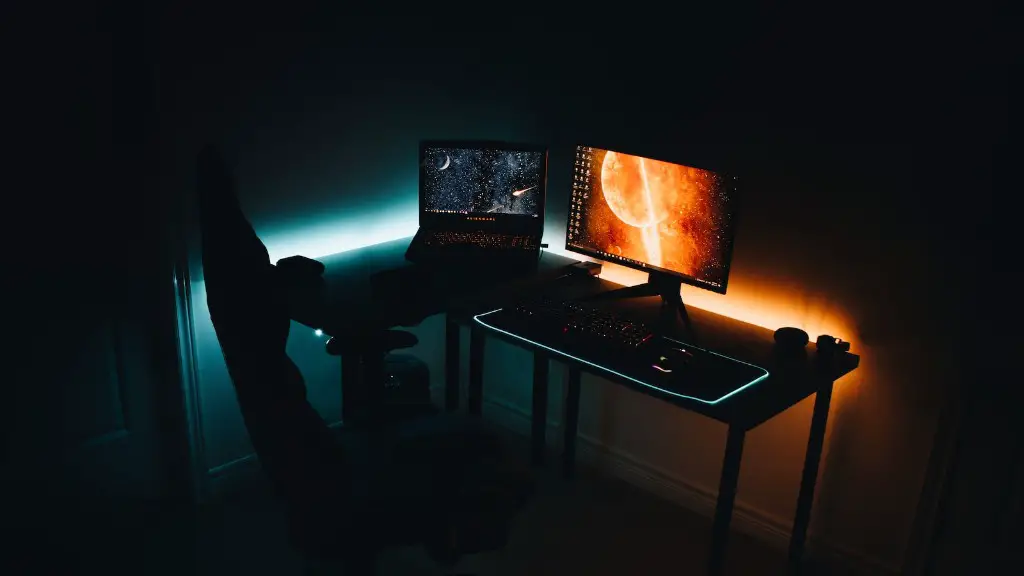
Aesthetics are also a major factor between gaming PCs and laptops, which affects which type of gaming rig will often be chosen. Gaming PCs usually offer more customization, as gamers are able to choose custom PC cases, cooling solutions, and lighting effects. This allows gamers to make their PC truly unique to them with different colors, shapes, and textures.
In comparison, gaming laptops are typically plain and simple, offering very little in terms of customizability. But this can also be a pro too, as the laptop’s aesthetic won’t clash with other interior designs. Also, some top-end gaming laptops like the Asus ROG series and Alienware series offer unique customization options such as RGB lighting, allowing users to customize the aesthetics of their laptop to their taste.
Conclusion
When it all comes down to it, it really depends on what you want from your gaming rig. Gaming PCs can offer better performance and visuals, a much greater potential for upgrading, and higher power efficiency, but often lack in aesthetics and portability. Gaming Laptops on the other hand are more aesthetically pleasing, offer great performance, and are ideal for LAN gaming events, but at a much higher cost. Hopefully, this article has been able to help you make up your mind on which would be the better choice for you.