When it comes to streaming video games and enjoying them to their fullest potential, it is important to understand the differences between a gaming monitor and a TV. Gaming monitors have been designed with the most advanced technology, to ensure the best gaming experience. In comparison, traditional televisions have remained largely unchanged, with only minor improvements made during the last few decades.
A gaming monitor can offer the most immersive gaming experience. As they are smaller and not as bulky as traditional TVs, they provide players with a better view of the action and can be moved or adjusted more easily. But their main benefit lies in their faster refresh rates and response times when compared to TVs. These features allow for a smoother and more precise gaming experience.
Gaming monitors also come with a range of features that are designed to enhance the gaming experience further. These include a range of preset modes to adjust the colour, contrast and brightness of the image, as well as various inputs allowing for easy connections with other gaming accessories such as controllers and headsets.

On the other hand, traditional TVs are designed for use with a variety of different video content, not just for video games. As such, they are built with a better range of features than a gaming monitor. This includes features such as PVR (personal video recorder) enabling users to record and play back live TV, as well as a range of picture modes to enhance the viewing experience.
In terms of affordability, both gaming monitors and TVs provide great value for money. Gaming monitors are cheaper than TVs, and often come with greater features making them a better option for gamers on a limited budget. On the other hand, TVs generally offer a larger and more immersive picture which makes them the go-to choice for bigger living rooms.
Lastly, it is important to consider the amount of time the user is planning to spend playing video games. For those who only plan to play for a few hours a week, then a gaming monitor is the perfect choice. However, for those who plan to spend a significant amount of time playing video games, then a TV will provide a superior viewing experience.
LED and OLED Technology
Both gaming monitors and TVs come equipped with the latest technology, including LCD, LED and OLED. LCD displays are the oldest type of display technology and are still used today in some TVs. LED displays are the newer technology, and offer more brightness and contrast than LCD, as well as consuming less power. OLED displays are the latest, and most advanced type of display, providing the best image and performance available.
LED technology is found in both gaming monitors and TVs, as it is the most cost-effective and best performing technology available. LED monitors generally offer a higher refresh rate and faster response times, making them ideal for fast-paced gaming. OLED displays are the most advanced technology found in both monitors and TVs, providing deep and intense colours with outstanding picture quality.
OLED gaming monitors, however, generally offer a higher contrast ratio and even faster response times, making them the go-to choice for serious gamers who are looking for the best visual performance available. OLED TVs offer the richest, deepest and most vibrant colours available, as well as broader viewing angles.
The choice between a gaming monitor and a TV ultimately comes down to person’s needs, such as budget, gaming experience and viewing preferences. Both offer great options and come with a range of features and capabilities, so it’s important to compare all the options and choose the one that offers the best value for money.
Price
Gaming monitors usually cost less than traditional TVs and may come with a range of features that make them better suited for video games. However, TVs often provide a larger display for a wider viewing angle, and come with features such as PVR which are ideal for those who want to watch regular television.
Ultimately, the choice between a gaming monitor and a TV boils down to price. Gaming monitors offer great features for a reasonable price, providing a great option for those on a tight budget. However, for those looking for the best viewing experience, then a TV provides larger, more immersive displays with a range of features that are tailored towards general entertainment content.
Screen Size and Resolution
The size of a gaming monitor or TV is an important factor when it comes to choosing the right one. Gaming monitors generally come in sizes ranging from 24” up to 33”, and have Full HD or Ultra High Definition resolution. On the other hand, TVs generally come larger in size, ranging from 32” up to 65”, and offer either 4K or 8K resolution.
When it comes to video games, screen size is generally less important than for watching movies and streaming content. However, for some genres of games, like racing and flight simulation games, a larger monitor can offer a more immersive gaming experience. 4K and 8K resolution is also important for gaming, as it allows for more details to be seen clearly.
For those who plan to use their monitor or TV for both gaming and watching movies, then a larger size and higher resolution will generally provide the best experience. However, for those looking for the best gaming experience possible, then a gaming monitor should be the obvious choice.
Inputs
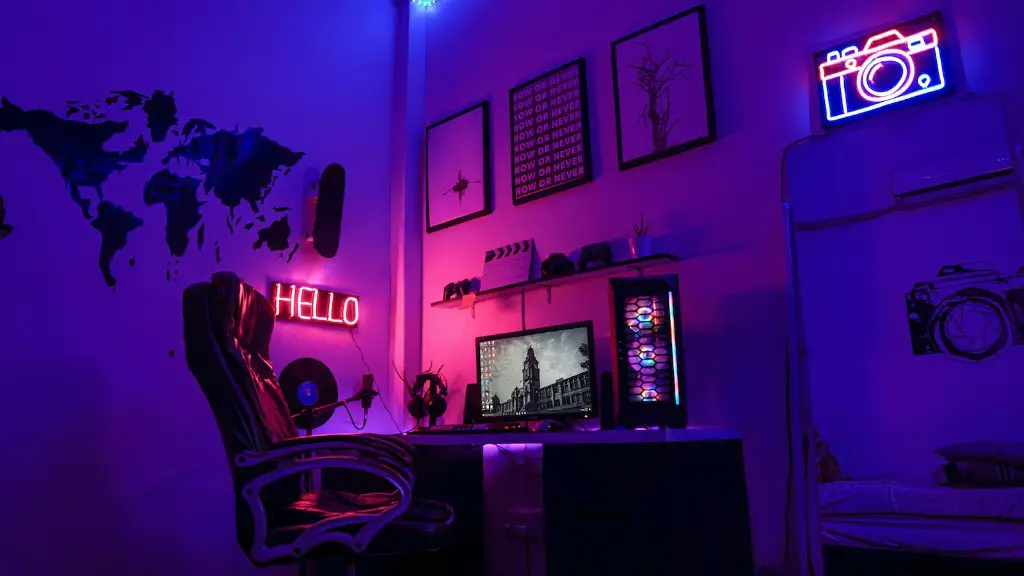
Both gaming monitors and TVs come equipped with multiple inputs, allowing for greater versatility when connecting to external devices. Gaming monitors have been designed with multiple inputs to allow gamers to connect their gaming accessories and take advantage of their fast response times. TVs, on the other hand, come with multiple inputs to allow users to easily switch between different sources, such as DVD/Blu-ray players and streaming boxes.
For those who plan to use their monitor or TV for both gaming and regular entertainment content, then it is important to make sure that it has the correct inputs for their devices. This is especially important for those who might want to switch between using the monitor for gaming and using it for watching movies or playing console games.
Connectivity
In addition to the inputs for connecting to external devices, both gaming monitors and TVs also come equipped with various connectivity options such as Wi-Fi, Ethernet and Bluetooth. For those who plan to use their device wirelessly, then Wi-Fi and Bluetooth are essential. Wi-Fi provides fast and reliable connection to the internet, allowing for streaming of online content and access to online gaming services.
Ethernet, on the other hand, is better suited for those who plan to use their monitor or TV for high-speed gaming. With the right gaming router, an ethernet connection can offer the fastest speeds possible, and is the best option for those who are serious about gaming.
When it comes to connectivity, gaming monitors and TVs offer great options. Wi-Fi and Bluetooth are essential for wireless gaming and streaming of online content, while Ethernet offers unbeatable speeds for those who need it. In the end, the choice of connection will all depend on the user’s needs and preferences.