Gaming PCs are some of the most expensive PCs to purchase. The reasons for their higher prices are varied and multifaceted. Firstly, for intensive gaming or higher-performance purposes, some extra features need to be included in the PC, like high-end processors and graphics cards, along with memory and storage. These components tend to have higher prices than their counterparts for use in everyday PCs. Additionally, Gaming PCs are designed to meet the gaming industry’s needs, and so they require frequent updates in order to keep up with the latest advancements in games and technology. Thus, the manufacturers of Gaming PCs have to shoulder extra costs in order to ensure that their products remain competitive.
Secondly, the displays that come with Gaming PCs come with higher resolutions and high refresh rates, which means they use more energy than their regular counterparts, increasing the cost further. The interactive gaming experience they enable requires the components to be properly calibrated in order to guarantee smooth and precise gaming performance. This adds to the cost as well, as Gaming PCs come with special cooling systems to ensure that the components don’t overheat.
Thirdly, gaming PCs need to be more powerful than regular PCs in order to run the latest titles and support high-resolution gaming monitors and other peripherals. This means that Gaming PCs must have the latest components, such as powerful processors and dedicated graphics cards, notwithstanding the need for more memory and storage, as well as up-to-date software to run the games. All of this comes at an additional cost.
Fourthly, as Gaming PCs are created for a certain purpose, they often contain components not found in regular PCs or laptops. For instance, some Gaming PCs come with extra lighting and sound cards, as well as specific accessories designed for gaming, such as gaming controllers. These additional features tend to add up to the cost of the PC, as they are not necessary for regular computing tasks.
Fifthly, apart from the components, the actual chassis of a Gaming PC tends to be far more sophisticated than that of a regular PC. This is because Gaming PCs must be able to withstand the rigours of intensive gaming, and so these PCs usually come with heavy-duty cases and robust cooling systems, such as high-end fans and pipes for efficient heat dissipation.
Lastly, other factors, such as the after-sales services offered by manufacturers, can also have an impact on the purchase price. Gaming PC manufacturers often offer exceptional customer service and repairs that cater to the more intricate aspects of gaming PCs. Perhaps more crucially, they also provide guarantees over the lifespan of the product, often with extended warranties.
Impact on Prices of Other PCs
The higher prices of gaming PCs also have an impact on the prices of other components and PCs in general. The cost of components intended for use in gaming PCs is often higher than that of other components. For instance, while typical laptop processors may cost around $100, gaming laptop processors can cost anywhere between $250 and $400. Likewise, graphics cards tend to cost significantly more for gaming PCs than regular PCs. Thus, as gaming PCs have become popular, so has the cost of components that can be used for gaming.
These higher costs impact the prices for other types of PCs as well. As the prices of gaming components have gone up, the cost of assembling a regular PC has also gone up. In fact, in many cases, the components used to build a Gaming PCcan be used to build a regular PC, except for certain features like the cooling systems and the graphics cards. Thus, the increased cost of gaming components has led to an overall increase in the cost of other PCs as well.
Another factor is the competition between gaming and regular PCs. Because gaming PCs come with more powerful components and better features, they are more likely to be chosen over regular PCs in terms of performance. As a result, regular PCs have had to focus more on adding features and becoming more attractive in terms of price, which has had an impact on their costs as well.
In addition, because of their higher prices, gaming PCs have become more attractive to manufacturers and retailers, who often offer discounts and other incentives to customers in order to make them more competitive. This, in turn, pushes up the prices for regular PCs, as manufacturers and retailers must recoup their costs in order to remain competitive.
Finally, because gaming PC components are in higher demand, the manufacturers of these components have been able to keep their prices higher. This has had a domino effect on the prices of other components, which have gradually gone up due to the rising costs of gaming components.
Impact on Performance
The higher cost of gaming PCs also comes with increased performance. Gaming PCs are built to deliver faster and more powerful performance than regular PCs, often by utilizing components that are not available in regular PCs. For instance, while regular PCs may have a limited amount of memory and CPU cores, gaming PCs typically come with higher amounts of both, which can result in better graphics performance and faster loading speeds.
In addition, Gaming PCs are designed to handle much more intensive tasks than regular PCs. For instance, gaming PCs are capable of running the latest and most demanding games, as well as other applications, without any issues. This means that gamers do not need to upgrade their PCs as often, saving them both time and money.
Similarly, the advanced cooling systems found in gaming PCs are designed to keep them running at optimal temperatures even during long gaming sessions, as well as during high-end tasks such as video editing or 3D rendering. This means that gamers can use their PCs for a variety of tasks without having to worry about overheating.
Furthermore, gaming PCs are designed to meet the latest standards in gaming, such as 4K and 8K resolutions, as well as virtual reality. This means that gamers can experience the best gaming experience possible without having to compromise on performance.

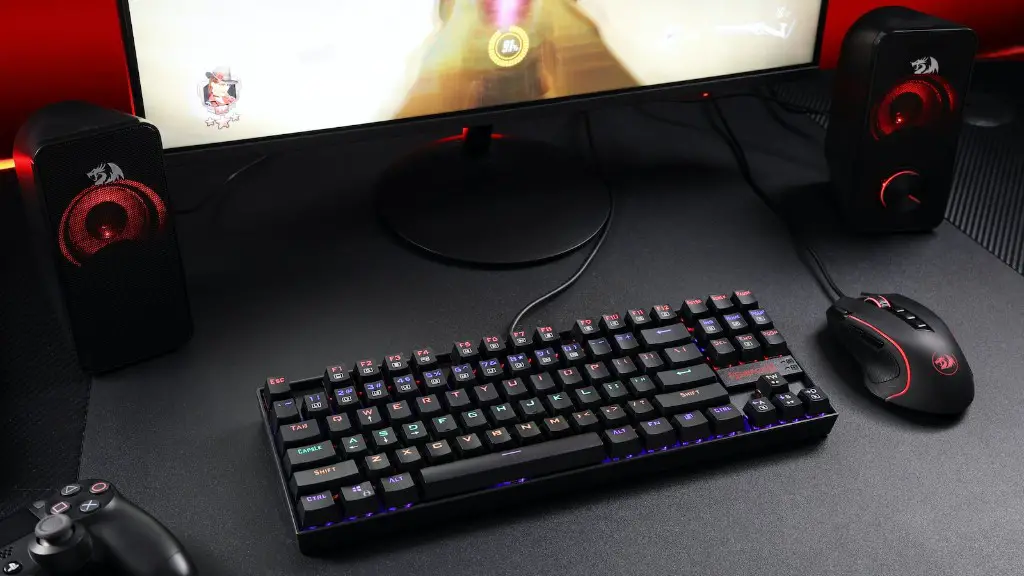
Finally, gaming PCs are more likely to come with high-end accessories, such as gaming controllers, specialized gaming monitors and other gaming-specific peripherals. This means that gamers can get the most out of their PCs and maximize their gaming experience.
Impact on the Gaming Industry
The increased cost of gaming PCs has also had an impact on the gaming industry. Firstly, because of their higher costs, gaming PCs are far less likely to be sold in large numbers than their cheaper counterparts, and so designers must focus more on creating titles that look and perform well on high-end PCs. This means that games on gaming PCs often look and play better than their counterparts on regular PCs, giving gamers an incentive to invest in powerful gaming rigs.
Furthermore, the high cost of gaming PCs also means that gaming companies must focus more on creating titles with longer lifespans in order to make sure that gamers can get their money’s worth. This has led to the emergence of more complex and immersive games, which are often seen as more enjoyable and rewarding than more casual titles.
Additionally, the increased cost of gaming PCs has made the development of virtual reality technologies more feasible. Virtual reality brings a whole new level of immersion to gaming, with higher-end PCs being capable of running VR titles at their fullest potential. Of course, this has also led to the rise of VR peripherals, which further increase the costs for gamers who wish to experience virtual reality.
Finally, the increased cost of gaming PCs has also impacted the software side of gaming. For instance, most gaming titles have become more expensive due to the need to constantly update them in order to keep up with the advancements in technology, resulting in gamers having to pay more for the latest titles.
Conclusion
Gaming PCs are some of the most expensive PCs to purchase due to their higher-end components and sophisticated cooling systems. Their cost also affects the prices of other components and PCs, and their performance can be far superior to regular PCs. Moreover, their high cost has had an impact on the gaming industry, as designers must focus on creating longer-lasting games, and software companies must update their titles to keep up with the rising costs. All in all, Gaming PCs provide an all-around superior experience, with the cost reflecting the many benefits that these PCs offer.