As gaming PCs become more sophisticated, so do the stats needed for optimal performance. Knowing which stats to look for when building or buying a gaming PC can make all the difference between a flawless gaming experience and one plagued with annoying lags or poor graphics. With this guide to the components that make up good stats for a gaming PC, anyone can be better informed on what they should be looking for.
A good CPU is the first consideration when it comes to gaming performance. Meeting the recommended specs of the game you’ll be playing is important, and looking out for the latest generations of Intel and AMD CPUs with the latest 6 or 8-core designs is a must. CPUs like the Intel i9 and Ryzen 5 offer strong gaming performance and can ensure a smooth response time.
Next, a good GPU will help get the most out of your gaming PC. High-end GPUs from NVIDIA and AMD, such as the RTX 3090 or RX 5700 XT can help output maximum smooth gaming at higher-end resolutions. Look out for dedicated hardware for ray tracing or AI, as this will ensure the most epic gaming experience available.
Thirdly is RAM, which should be the right balance of fast performance and enough capacity. This means looking out for 16GB DDR4 or DDR5 RAM at its appropriate speed. RAM plays an important role in game resource management and their access times, so not settling for RAM that isn’t fast enough can put a significant limitation on game performance.
And fourthly, a good cooling setup is also essential for high end gaming performance. Making sure that the Case you buy is equipped with the right amount of fans to cool the system components is essential, while liquid cooling can be beneficial if you’re overclocking your PC.
Last but not least, a good PSU can be the difference between a gaming PC that’s always running optimally and one that’s constantly crashing or throttling. Typical high-end gaming PCs should have at least 650 watts of power, and look for the 80 Plus Label for efficiency.
CPU
A good CPU is the heart and soul of any gaming computer and is essential for gamers who want to get the most performance possible from their system. Look for the latest and greatest processors from Intel and AMD, such as the Intel i9 or Ryzen 5, that have at least 4-8 cores and a good clock speed. Other things to look out for are the cache size, which controls how quickly a CPU can access data and instructions, and thermal design power (TDP), the maximum amount of power the processor requires.

When it comes to CPUs in gaming systems, gamers should also look at Intel’s Hyper-Threading Technology (HTT) and AMD’s Simultaneous Multithreading Technology (SMT). Hyper-Threading and SMT allow two threads to run at once, making the gaming computer more efficient. Combined with a good CPU, these technologies can result in better performance and reduced loading times.
Most modern CPUs have integrated graphics, and while dedicated GPUs are still typically the better option for gaming performance, integrated graphics can still offer some advantages such as lower power consumption, improved battery life, and lower cost for some applications.
Intel’s Iris Plus series and AMD’s Ryzen graphics are among the top integrated graphics options for gamers and can offer reasonable gaming performance for less demanding titles. Additionally, Intel’s Tiger Lake series and AMD’s A-series are good choices for gamers who want to combine good performance with integrated graphics.
When it comes to gaming PCs, having the right CPU can make all the difference. By looking out for the latest and greatest CPUs with good core counts, clock speeds, and TDP ratings, gamers can get the most out of their gaming experience.
GPU
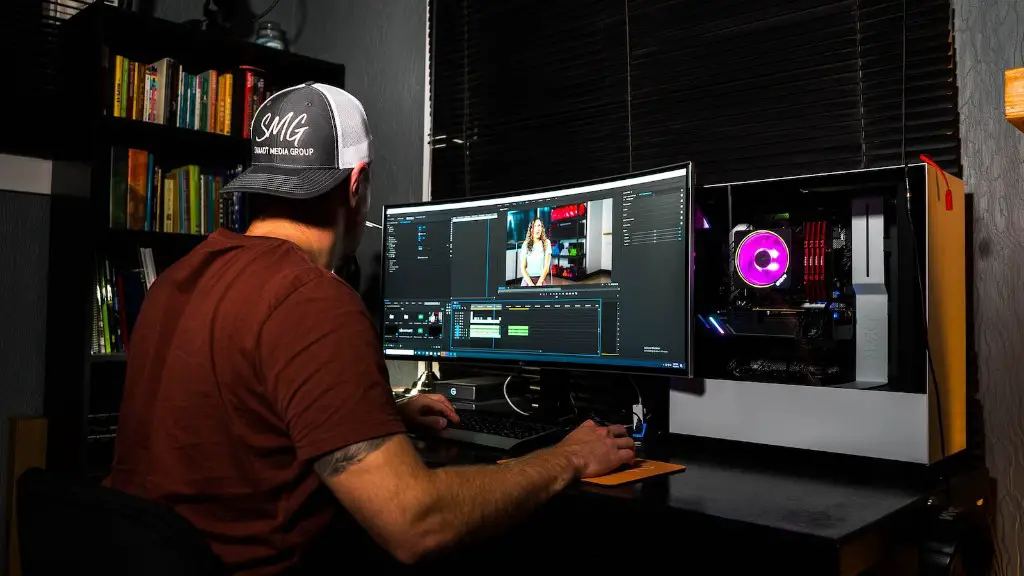
The graphics processing unit (GPU) is the most important piece of hardware in any gaming computer. GPUs are responsible for producing the images and rendering the 3D models in games, and having a powerful GPU is essential for gamers who want to play at the highest settings. Look for GPUs such as the ones from NVIDIA and AMD that offer the latest technologies such as ray tracing and AI to get the most out of your gaming experience.
Gaming cards from NVIDIA’s GeForce RTX line and AMD’s Radeon RX line are among the best options for gaming PCs. These cards have dedicated hardware for ray tracing and AI which can provide an improved gaming experience. High-end GPUs such as the RTX 3090 and the RX 5700 XT can help gamers output maximum smooth gaming at higher-end resolutions.
Another thing to consider when looking for a GPU for a gaming PC is the level of VRAM, or video RAM, the GPU has. VRAM is important for gaming performance since it helps render the high-resolution textures of games and speeds up overall performance. Most gaming cards nowadays come with 8 GB of VRAM, though some high-end cards like the GTX 2080 Ti have 11 GB of VRAM.
When it comes to choosing the right GPU for a gaming PC, gamers should make sure their GPU has the latest technologies such as ray tracing and AI, as well as enough VRAM for their needs. That way, gamers can ensure they get the most out of their gaming experience.
RAM
Random Access Memory (RAM) is essential to gaming performance, as it helps manage a game’s resources and access times. Look out for 16GB DDR4 or DDR5 RAM as it’s the most suitable option for gaming machines. RAM speed is also important, as faster RAM will generally result in better gaming performance.
Since RAM capacity can affect how many applications a gaming PC can run at once, having more RAM can help a gaming machine run more efficiently. However, gamers also have to take into account the size and speed of the RAM. Make sure that the RAM used has a speed compatible with the CPU, as some CPUs work better with faster RAM. This way, gamers can ensure their gaming PC is running at peak performance.
A good idea for gamers who want to upgrade their RAM is to go for a kit that matches their motherboard’s specifications. That way, the RAM and the motherboard will work better together, resulting in peak performance. Additionally, look out for error-correction codes (ECCs) as they help reduce system errors and can prevent crashes.
RAM plays an important role in a gaming PC, and gamers should make sure to get the right amount of RAM with an appropriate speed to ensure peak performance. Going for 16GB DDR4 or DDR5 RAM is usually a good idea if you want to get the most out of your gaming computer.
Cooling
Cooling is an essential component of any gaming machine, as overheating components can result in poor gaming performance and damage to the system. To prevent this, gamers should make sure to get a good cooling system for their gaming PC. The type of cooling system you choose will depend on the components in the PC and your needs.
If you’re looking for cooling on a budget, air cooling is your best option as it typically costs less than liquid cooling. Additionally, it offers a good amount of cooling for the system. However, liquid cooling is often more effective and can provide a significant performance boost, especially if you’re looking to overclock your PC.
When it comes to choosing the right cooling setup, gamers should make sure to choose one that is appropriate for their needs. For instance, if you have a small form factor case and want to overclock your PC, then liquid cooling might be the best option. On the other hand, if you have a larger case and don’t plan on overclocking, air cooling may be sufficient.
Cooling is an important component of any gaming PC, and gamers should make sure to get a good cooling system for their system. Doing so can ensure that their gaming PC stays running optimally and won’t suffer from any performance issues due to overheating.
Power Supply
As the last component in any gaming PC is the power supply, it is essential to make sure it can handle the load of the components. A good gaming PC should have at least 650 watts of power, and look out for the 80 Plus label to ensure the PSU is an efficient model.
The size of the PSU is also important, as having too small of a power supply can limit the performance of the system due to insufficient power. In addition, the type of PSU can make a difference, as some PSUs are designed to be more efficient than others. For example, modular power supplies, which allow users to only use the cables they need for their system, can be more efficient than traditional power supplies.
Lastly, look out for the Quality of Protection (QoP) ratings when buying a power supply. QoP ratings tell you how well a PSU can protect itself from power surges and voltage spikes, which can cause damage to the components in your PC.
A good power supply is essential for any gaming PC, and gamers should make sure to get a PSU with enough power and the right type for their needs. Additionally, look out for 80 Plus and QoP ratings to ensure a more efficient and protected power supply.