For individuals looking for the most high-end gaming experience that money can buy, then a 4K TV is a great choice for a gaming monitor. The question of whether a 4K TV can be used as a gaming monitor is a valid one. It is important to consider the practicality of this option before making any decisions. In this article we will look at the pros and cons of using a 4K TV as a gaming monitor and how to ensure a smooth gaming experience.
The most obvious pro to using a 4K TV as a gaming monitor is that 4K resolution provides higher detail and sharper images than standard HD. 4K TVs also provide additional features such as HDR and improved color accuracy that can significantly improve the gaming experience. These features, in turn, can increase immersion and provide the most realistic and enjoyable experience possible.
The main con to using a 4K TV as a gaming monitor is that it can be expensive. However, it may be possible to find a 4K TV with gaming capabilities at a reasonable price. Additionally, some 4K TVs do not offer any gaming features, making them unsuitable for gaming. It is important to research the 4K TVs before purchasing to make sure it is compatible with any gaming console that is being used.
When using a 4K TV as a gaming monitor, there are certain steps that must be taken to ensure a smooth gaming experience. First and foremost, the connection between the 4K TV and the gaming console must be configured properly. This means setting the correct display mode, and making sure the resolution is set to at least 4K. Furthermore, it is important to enable any gaming specific features that the TV may provide.
Overall, it is perfectly viable to use a 4K TV as a gaming monitor. With the proper setup and configuration, the experience of gaming on a 4K resolution television can be much more immersive and enjoyable. While it can be expensive, a 4K TV may also be more affordable than purchasing a dedicated gaming monitor, making it a viable option for those looking to upgrade their gaming setup.
What Kind Of Games Can I Play On 4k TVs?
When it comes to gaming on 4K TVs, the types of games that can be played largely depend on the console that is being used. Most modern gaming consoles, such as the Xbox One X and PlayStation 4 Pro, are fully capable of displaying graphics in 4K resolution, meaning they can handle graphic-intensive games such as first-person shooters and open-world adventure games. Older consoles, however, may not be able to handle these types of games in 4K.
In addition to the games that can be handled in 4K resolution, most 4K TVs come with a variety of gaming-specific features. This includes features such as High Dynamic Range (HDR), which can greatly improve the visuals of certain games, as well as motion interpolation, which reduces motion blur and makes action-packed combat smoother.
Some 4K TVs also offer low input lag, which can be beneficial for certain types of games. Low input lag reduces the amount of time it takes for the TV to display a button press. This is especially important for games that require fast reflexes, such as fighting games and platformers. This feature can also make gaming on a 4K TV more pleasant, since actions are responded to faster.
Ultimately, the types of games that can be played on 4K TVs are largely dependent on the console that is being used. Most modern consoles should have no problem displaying games in 4K resolution, while older consoles may struggle. Furthermore, 4K TVs come with a variety of gaming-specific features that can enhance the gaming experience.
Which Is Better for Gaming, 4K TVs Or Dedicated Gaming Monitors?
When it comes to gaming, the debate of whether to use 4K TVs or dedicated gaming monitors is often a contentious one. There are benefits and drawbacks to both, and ultimately the decision comes down to the individual’s preferences and needs. For instance, 4K TVs are typically much bigger than gaming monitors, making them better suited for larger gaming spaces. On the other hand, gaming monitors typically offer much lower input lag, meaning they can sometimes be preferable for competitive gaming.
Price is also an important factor when considering 4K TVs or gaming monitors. 4K TVs, while typically more expensive than standard HD TVs, can be considerably cheaper than dedicated gaming monitors. This makes them an attractive option for individuals looking for a high-end gaming experience without breaking the bank. Dedicated gaming monitors, however, may be more suitable for those looking for the absolute best performance for fast-paced gaming.
Another important factor to consider is the aesthetic of the TV or monitor. Gaming monitors are typically much more sleek and streamlined, providing a modern look to any gaming setup. 4K TVs, on the other hand, tend to be thicker and more bulky, which can sometimes be unsightly. This may be an important factor for those looking to create a more aesthetically pleasing gaming setup.
In conclusion, there is no one definitive answer as to which type of display is better for gaming. Both 4K TVs and dedicated gaming monitors offer advantages and drawbacks that must be carefully considered depending on the individual’s needs and preferences.
What Other Features Should I Look For In A 4K TV For Gaming?
When shopping for a 4K TV specifically for gaming, there are certain features that should be considered. The first and most important is the input lag, which is the amount of time it takes for the TV to display a button press from a controller. Low input lag is critical for those playing fast-paced games such as fighting games or racing games.
HDR is another important feature to look for in a 4K TV for gaming. HDR stands for High Dynamic Range and can dramatically improve the visuals of certain games by displaying more vibrant colors and increased contrast. Additionally, many 4K TVs come with motion interpolation technology, which reduces motion blur and can make action scenes smoother.
It is also important to consider the ports that the 4K TV has available. Many gaming consoles require multiple HDMI ports, so it is important to make sure that the TV has sufficient ports. Some 4K TVs may also offer additional ports, such as USB, which can be helpful for things such as connecting gaming headsets.
Finally, it is important to research the gaming features that the TV offers. Some 4K TVs offer additional features such as built-in game consoles or game modes, which can improve the overall gaming experience. It is important to make sure the TV is compatible with any gaming system that is being used, as well as any gaming-specific features it may offer.
Do I Need A Special Gaming Monitor For 4K?
When it comes to gaming in 4K resolution, special gaming monitors are not necessarily required. 4K TVs are well suited for gaming and can provide the same level of performance as a dedicated gaming monitor. It is important, however, to make sure that the connections between the 4K TV and gaming console are configured properly, as well as making sure any gaming-specific features are enabled.
That being said, some gamers may find that a dedicated gaming monitor is better suited for playing in 4K. This is especially true for gamers playing competitively, as some gaming monitors offer features such as low input lag and faster refresh rates that can give them an edge.
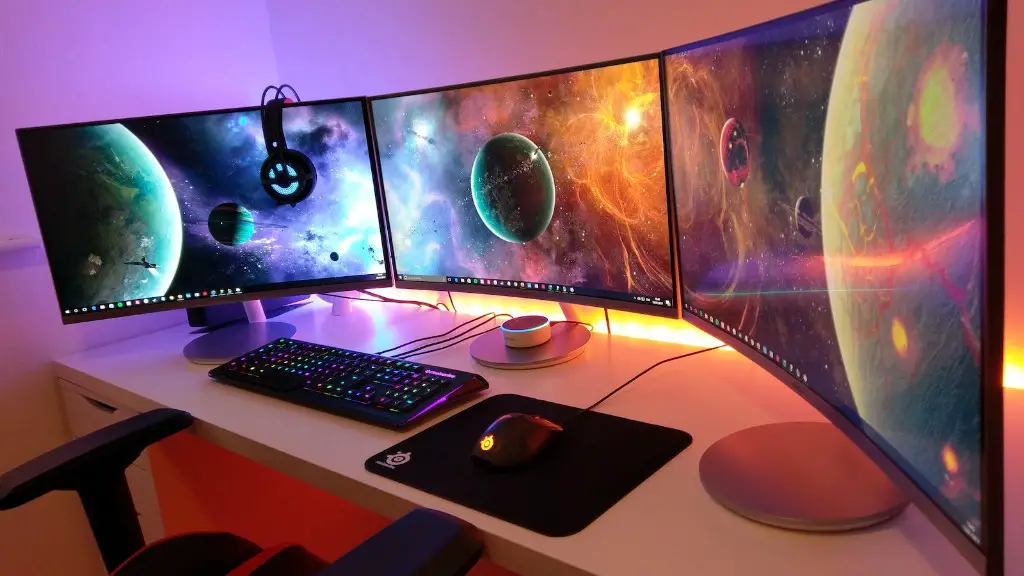
Furthermore, some gamers may prefer the aesthetics of a dedicated gaming monitor over a 4K TV. Gaming monitors are typically much smaller and more streamlined than 4K TVs, making them preferable for those looking to achieve a more modern and minimalist gaming setup.
Ultimately, it is up to the individual to decide whether they need a dedicated gaming monitor for gaming in 4K. 4K TVs are often more affordable and can provide the same level of performance as a gaming monitor, but some gamers may find that a gaming monitor is better suited for their needs.
What Is Input Lag And How Does It Affect Gaming?
Input lag is the amount of time it takes for a gaming console or PC to register a button press from a controller or mouse. This can be an important factor to consider when using a 4K TV as a gaming monitor, as some TV models may have higher input lag than dedicated gaming monitors. Higher input lag can be an issue for those playing fast-paced action games, as the TV may be slow to register inputs, resulting in sluggish and unresponsive gameplay.
Fortunately, many 4K TVs come with low input lag technology, which can significantly reduce the amount of time it takes for the TV to display a button press. This is especially beneficial for those playing fast-paced games, as the TV can more quickly respond to inputs, resulting in smoother and more enjoyable gameplay.
It is also important to note that input lag can be affected by the type of connection between the 4K TV and the gaming console. For instance, using an HDMI cable is preferable over using a composite or component connection, as HDMI is capable of transmitting data faster, resulting in lower input lag. Additionally, some 4K TVs may come with dedicated gaming modes such as “Game Mode” or “PC Mode”, which can further reduce input lag.
In conclusion, input lag can be an important factor to consider when using a 4K TV as a gaming monitor. Fortunately, many 4K TVs come with low input lag technology, as well as features such as motion interpolation, which can significantly improve the gaming experience.
