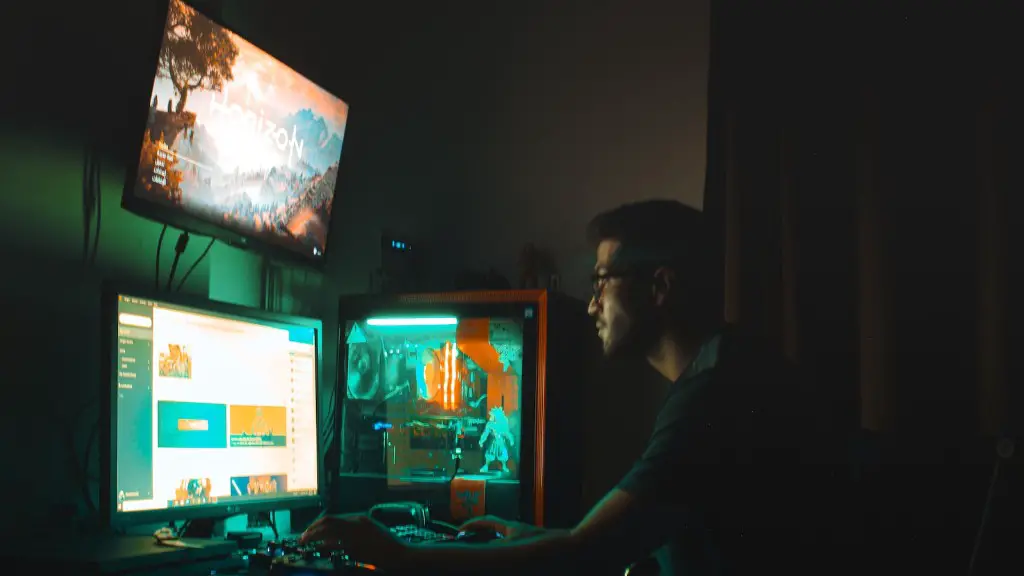
Building a gaming PC requires careful attention to detail and the right selection of hardware. To help you get started, here are some components and steps to consider when creating your own gaming PC:
First off, choose the right CPU. The best choice for gaming depends on your budget, but Intel’s Core i5 and Ryzen 7 CPUs are great options to consider. Next, select the GPU. You’ll want at least an Nvidia GTX 1060 or an AMD Radeon RX 570 so you can run most games at 1080p and 60 frames per second. If you want 4K or higher frame rates, consider an RTX 2070 or RX Vega 64.
When it comes to RAM, 8GB is the minimum amount you’ll need for gaming, although 16GB is ideal. It’s better to go with faster memory, such as DDR4-3000 or higher. As for the motherboard, you’ll want one with enough slots for your parts, as well as features such as overclock support and USB ports for your peripherals.
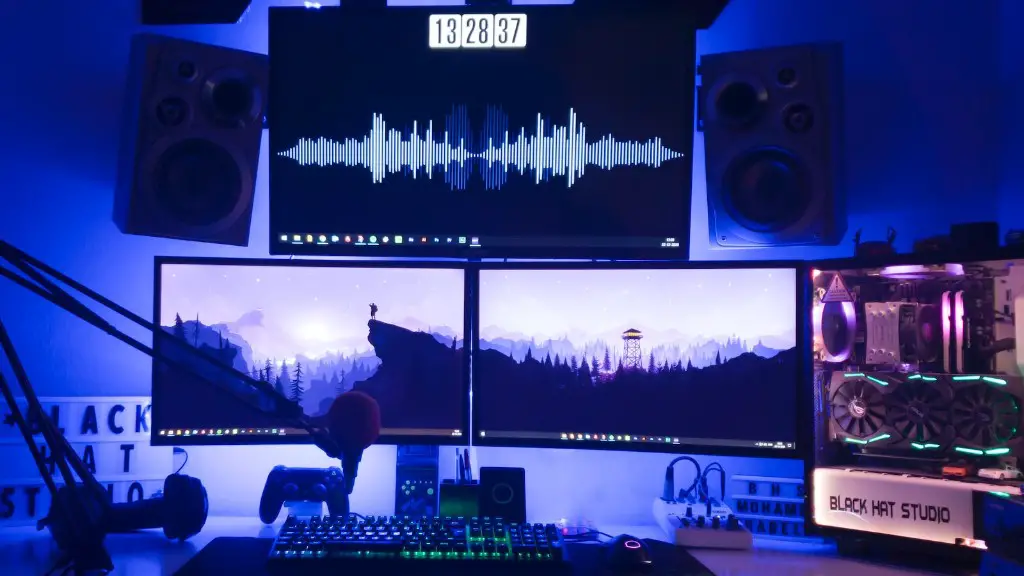
Pick a storage drive to complete your build. Solid-state drives (SSDs) are faster and better for gaming than hard drives, so you’ll want an SSD for your operating system and your games. Your games will require more space, so figure out how much you need and opt for a larger size if necessary. You also may want to add additional hard drives for storing your data.
When it comes to cases, pick one that fits your budget and has plenty of cooling options. You’ll also need a power supply unit (PSU) with enough wattage to support all your components, as well as a monitor to display it all. Finally, the last step is to assemble the components, add your operating system, and then enjoy the fruits of your labour.
Choose the Right CPU
When building a gaming PC, your choice of CPU can make or break your experience. You’ll want to choose the best CPU you can afford that also fits your desired gaming capabilities. Intel’s 8th and 9th Generation Core i7 and Core i9 processors are excellent for gaming, as is AMD’s Ryzen 7 3800X. These CPUs are designed for gaming, so they can handle all the latest titles.
Make sure to check the reviews of the CPU and do research to ensure you’re choosing the model that will help you reach your gaming goals. Modern games are all about performance, so great graphics and an amazing game experience are dependent on having the right processor in your build.
Finally, bear in mind that if you’re on a limited budget, an Intel Core i5 processor is perfectly capable of running contemporary games, and a Ryzen 5 processor is better still.
Select a Graphics Card
The graphics card is another key component of a gaming PC. You’ll want one that will perform well with the games you want to play, as well as one that fits your budget. For example, if you plan on gaming at 1080p, an Nvidia GTX 1060 or an AMD RX 580 will give you great performance in most games. For 4K or high frame rates, a GTX 1070 or RX Vega 64 is a better choice.
It’s also important to keep in mind that as games become more demanding, GPUs also become more powerful and expensive. If you’re looking to save some money, you can always opt for an older card instead. They are generally still powerful enough to run modern games at 1080p. AMD’s RX 570 and RX 580 are great budget cards if you need to keep costs down.
You also need to consider what type of graphics card you want: integrated or dedicated graphics. A dedicated graphics card will give you better performance, but it’s also more expensive. An integrated GPU is cheaper and may be good enough for less demanding games. For example, Intel’s integrated graphics can handle Minecraft and other casual titles.
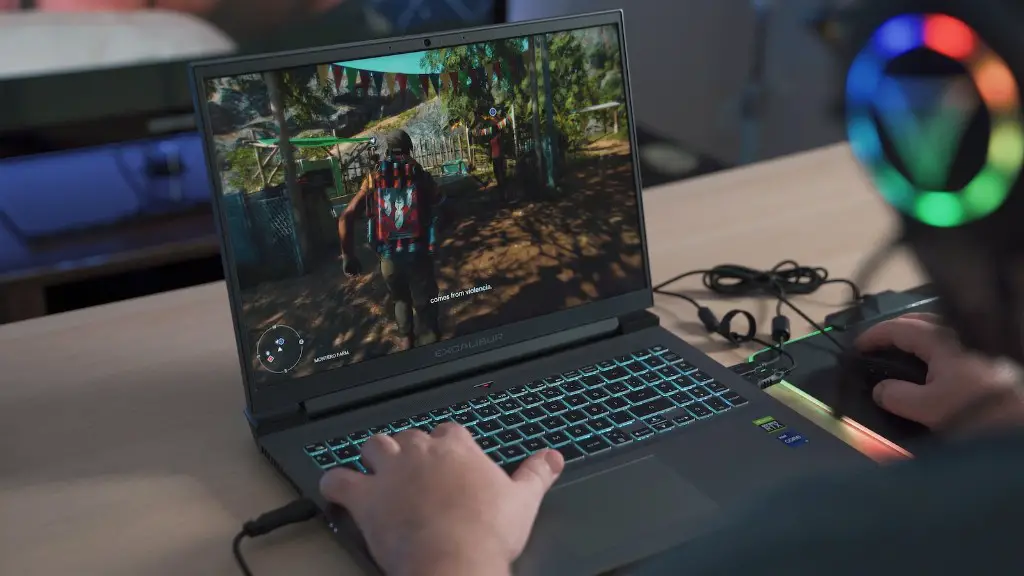
Ultimately, the choice of a graphics card is up to you and your budget. Do your research and make sure you’re getting the best card for your needs.
Choose the Right RAM
RAM is another critical component of any gaming PC. You’ll want to make sure you have at least 8GB of RAM, but 16GB is better, particularly if you’re running games on a higher resolution or with a faster frame rate.
You’ll also want to make sure the RAM you select is fast enough so it doesn’t bottleneck your system. Look for DDR4 RAM that is rated at 3000MHz or higher. Just keep in mind that faster RAM will cost more money.
Finally, it’s important to consider the size of the RAM. If you’re building a budget machine, 8GB may be enough, but if you plan to run more demanding games, 16GB will be a better choice. If you can afford it, 32GB of RAM won’t be a wasted purchase, either.
Choose the Right Storage Drive
Storage is another important component for a gaming PC. You’ll want to make sure you’re getting enough space for your games as well as an efficient type of drive. Solid-state drives (SSD) are faster and better for gaming than hard drives, so you’ll want an SSD for your operating system and your games.
If you can afford it, opt for an NVMe drive. These are the fastest type of SSDs and will perform better than traditional SATA drives. You’ll also want to consider how much storage you need. The size of some games can be quite large, so don’t forget to account for that when choosing your drive.
For maximum storage and the best speed, you’ll want to opt for an SSD and a hard drive. This way, you’ll have plenty of space for your games as well as a speedy drive for them to run on. You can also get a mid-sized SSD and then add an external hard drive for additional storage if needed.
Pick the Perfect Power Supply Unit (PSU)
A good power supply unit (PSU) is essential for any gaming PC. Your PSU needs to provide enough juice to power all of your components. Most modern gaming PCs need at least a 500W power supply, but you may need more if you’re running multiple graphics cards.
You should also consider the type of connection your power supply has. The most common connection is the ATX connection. This offers the best efficiency and performance, but some other connections are available as well. It’s also important to look for a PSU that is certified by 80 Plus, which means it is 80% efficient or better.
When shopping for a PSU, make sure to read the reviews and build quality is an important consideration, as bad components can lead to an unreliable system. Also, don’t forget to pick a PSU that comes with all the cables and connectors that you need to power your PC.
Assemble the Components and Enjoy!
Now, it’s time to assemble your components. Make sure all your components fit in the case and that they have the necessary cooling to prevent overheating. Refer to the manual to make sure all the cables are correctly connected and that everything is in the right place.
Next, you’ll want to install your operating system. Windows 10 is the most popular gaming OS, but Linux and MacOS are also viable options if you prefer them. Lastly, install your desired games and drivers and you should be good to go. With the right components and a bit of time and patience, you can build your own gaming PC and enjoy it for years to come.
